Monthly Archives: January 2025

Article: Photography, Media Uses and Emotions during the Italo-Turkish War in Tripolitania (1911–12)

Pierre Schill, The Brutalised Bodies of a Colonial Conquest Before the Court of Global Opinion: Photography, Media Uses and Emotions during the Italo-Turkish War in Tripolitania (1911–12). History of Photography 47 (2023), pp. 315-343
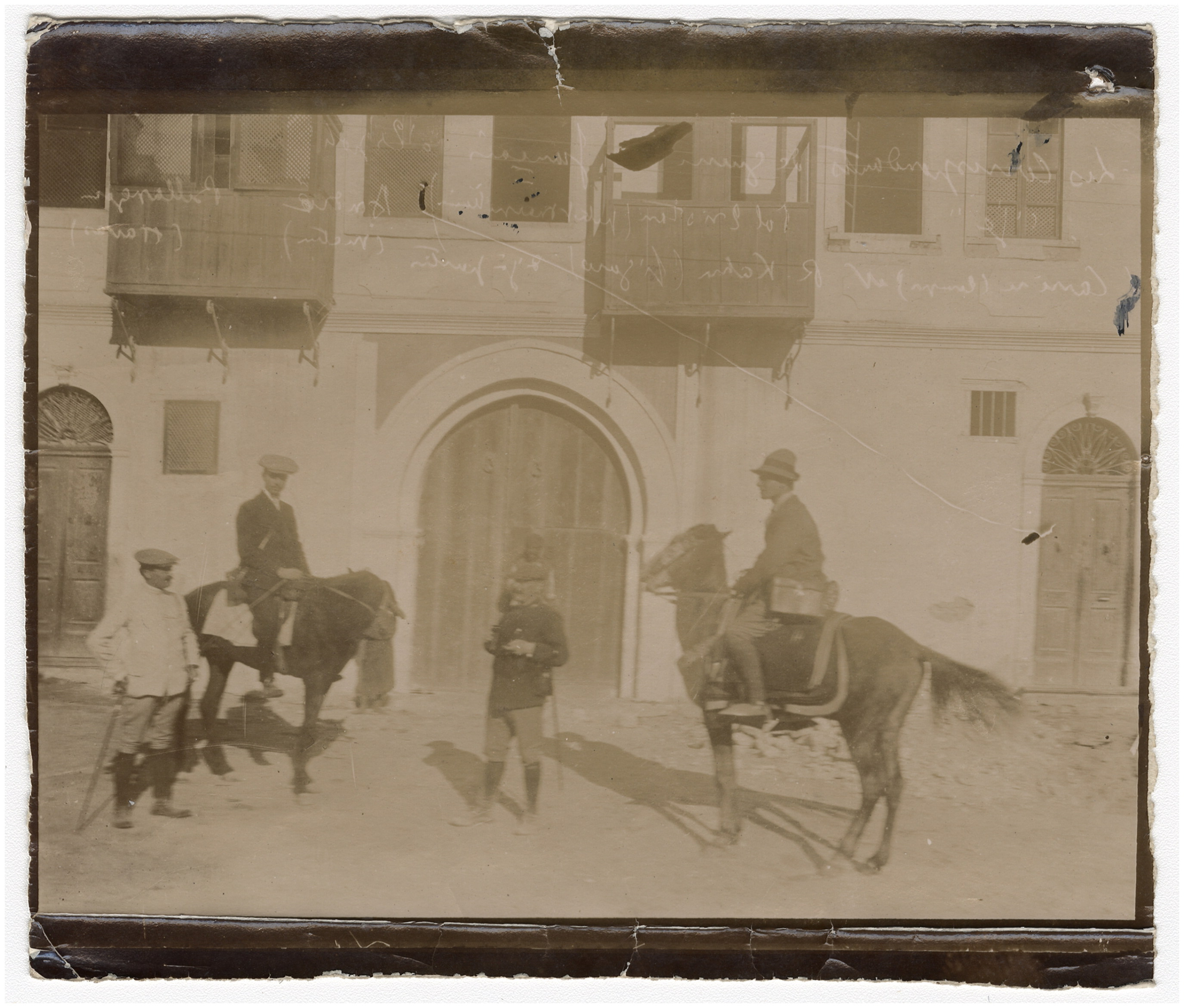
Photographer unknown, ‘French War Reporters in Tripoli’, 23 October 1911 (Montpellier, archives départementales de l’Hérault (Vigné d’Octon papers), 1 E 1149). See the article for full details.
This article analyses the global circulation of around fifty photographs taken at the end of October 1911 at Shar al-Shatt, near Tripoli, by journalists documenting the mass execution of civilians by Italian soldiers. By attending to the interaction of text and image, and to the layouts of visual spreads in the global press, the article demonstrates how photographs of these dead bodies were imbued with a range of political meanings, variously protesting and legitimising such forms of extreme violence. The article explains how the emotions aroused worldwide by these images prompted the Italian authorities to create a visual counter-narrative by publicising photographs of the bodies of their own soldiers mutilated by a ‘bestialised’ enemy. The dissemination of visual evidence of brutality committed by both sides constitutes an early example of a ‘contest of images’ whereby press photography was used to mobilise antagonistic affective communities: variously pan-Islamic, anti-colonial, and trans-imperial. The diversity and inventiveness of the visual politics of persuasion implemented during the conquest of Tripolitania and the intensity of the reactions that this imagery produced reveal the emerging centrality of photojournalists in bearing witness to mass violence in the twentieth century.

Essay: Ein Meer überreifer Kirschen

A nice essay on observing the Libyan revolution entitled “Ein Meer überreifer Kirschen [A Sea of Overripe Cherries]” by Ghady Kafala appeared, translated from Arabic to German, in the collected volume In der Zukunft schwelgen: Von Würde und Gerechtigkeit und dem Arabischen Frühling. Essays aus Nahost und Nordafrika [To bask in the future: Of Dignity and Justice and the Arab Spring. Essays from the Near East and North Africa], edited and translated by Sandra Hetzl (transcript verlag, 2022) The whole volume is freely accessible online.

Excerpt: Seltsam, dieses Libyen. Alle Krankheiten der Welt gibt es dort und jedes Heilmittel dagegen. Hormongesteuert ist es, launisch, da sind wir einander ähnlich.Keiner weiß, was von ihm als Nächstes zu erwarten ist. Etwas Wunderbares, etwas Schlimmes Libyen zu verfluchen oder zu hassen ist schier unmöglich. Seine Sturheit schwächt uns, aber seine Hybris verleiht uns Stärke.

Hessa6’s collaborative new album “Unimported Disc”

The project Hessa6 (حصة سادسة) is “dedicated to unlocking the power of art to bring about social change through a range of activities that include researching, archiving, producing and promoting Libyan art.” With support from the Arab Fund for Culture and Arts, Hessa6 has released a new album entitled دسكة غير مستوردة “Unimported Disc” (click here to listen on Spotify). Described as “an electrifying musical project that brings together an eclectic mix of artists, rappers, and bands from across Libya”, the new album presents diverse, homegrown sounds in multiple genres, with lyrics in Arabic and Amazigh varieties, and incredible cover art for the album and for each track by Moneer Alwerfally.

The tracks and their descriptions as provided by Hessa6 on their Instagram page are below:

Continue reading

Book: Jewelry and Adornment of Libya

Hala Ghellali’s long-awaited book on Libyan jewelry is finally in print! An account based on the author’s own collections and her long personal experience and interaction with artisans of bygone generations, this will be the resource on the topic for a long time. Cover photo by Sasi Harib.

Publisher’s description: Hala Ghellali was eighteen years old when her father first took her to the suq to buy her first silver bracelets. They visited traditional jewelers in the madina al-qadima, the old walled city of Tripoli. This single event in 1975, ignited her lifelong passion for traditional jewelry and costume items and she has been collecting objects and stories ever since. Her unique stories, personal observations, research and firsthand information about jewelry design and silversmithing fill this book. ‘Jewelry and Adornment of Libya’ aims to share with its readers a lifetime passion for the jewelry made in Tripoli. It includes a section dedicated solely to the role of jewelry and costume in Tripoli with narratives of traditional weddings, and traditions linked to jewelry gifting in the city. The book is dedicated to the local jewelers and masters of weaving and embroidery who have almost all disappeared, their art and skills not being passed on to the present generation.