Monthly Archives: February 2025

Article: Italy, Libya and the EU: Co-dependent systems and interweaving imperial interests at the Mediterranean border

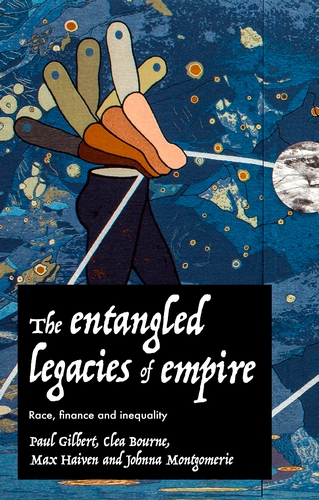
Alessandra Ferrini, “Italy, Libya and the EU: Co-dependent systems and interweaving imperial interests at the Mediterranean border”, in The Entangled legacies of empire Race, finance and inequality, edited by Paul Gilbert, Clea Bourne, Max Haiven & Johnna Montgomerie (Manchester University Press, 2023), 197–207. Open Access.
Abstract: The picture at the opening of the chapter portrays former Italian Prime Minister Silvio Berlusconi greeting Libyan President Muammar Gaddafi as he arrives in Rome in 2009. The meeting celebrated the Treaty on Friendship, Partnership and Cooperation between Italy and Libya and the signing of the Bilateral Agreements that have led to the current racialization of the Mediterranean border (through Italy’s right to send migrants arriving by sea back to Libya, where they are incarcerated in detention camps that severely violate human rights). Pinned to Gaddafi’s chest was a photograph of the Libyan anticolonial leader Omar al-Mukhtar in chains, taken before he was executed by Mussolini’s army in 1931. This gesture sparked outrage in Italy, as it was perceived as a mockery of Berlusconi’s earlier visits to Libya where he presented formal apologies and reparations for the Italian occupation of Libya (1911–43) as part of the Treaty. Yet, Berlusconi’s politics of apology was motivated by Italy’s need to reach agreements with Gaddafi on the control of migration across the Mediterranean, as well as agreements on commercial deals – from the supply of oil and gas to the creation of a free market zone in Libya for Italian companies. Thus, colonial reparations were accompanied by a reinforcement of neocolonial relations.
Book: Confronting the Archive of Coloniality Across Italy and Libya

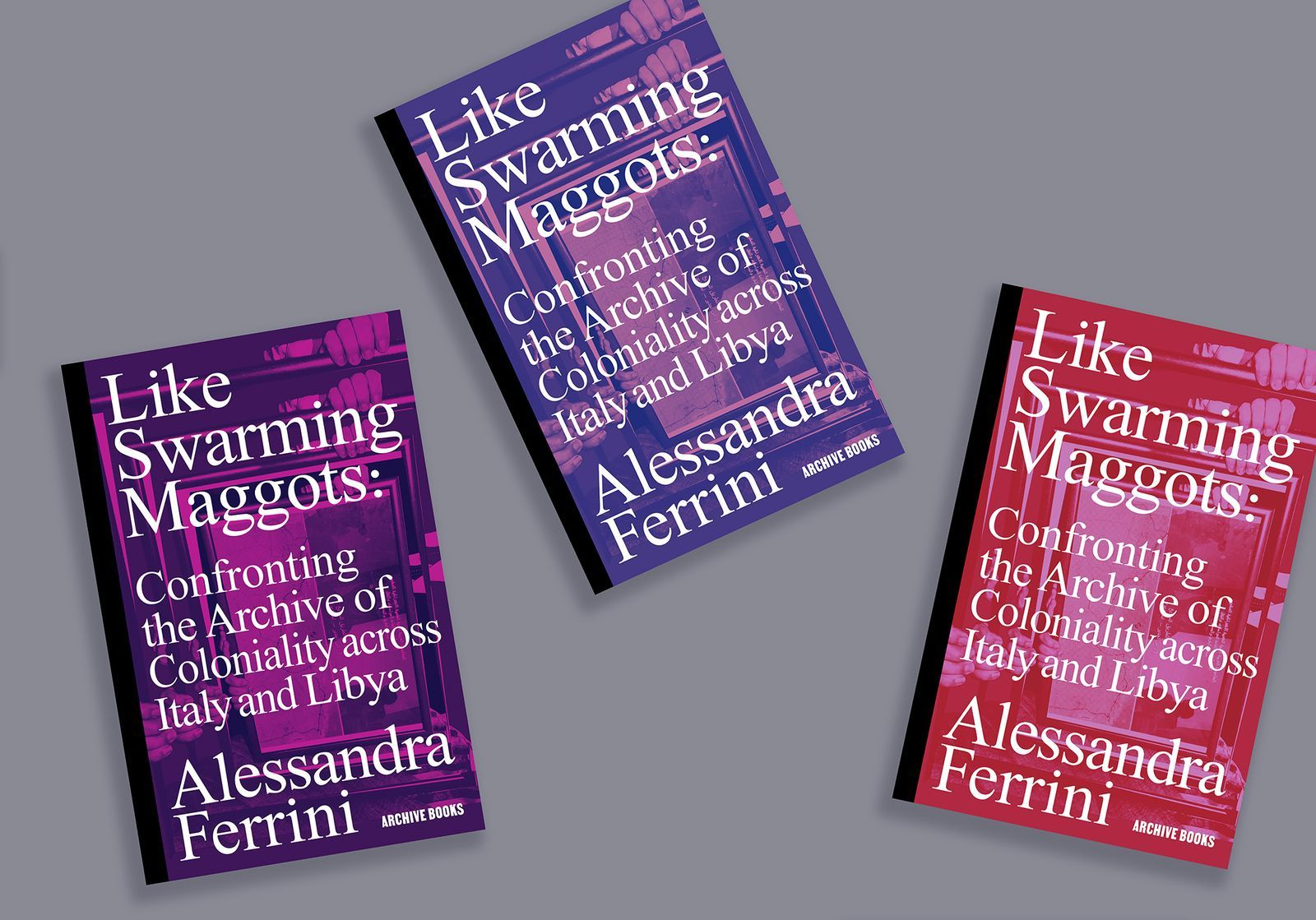
A new book by artist Alessandra Ferrini, entitled Like Swarming Maggots: Confronting the Archive of Coloniality Across Italy and Libya with contributions from a number of artists and writers (including yours truly), has just been published by Berlin-based Archive Books.

Featuring Ferrini’s long-term research on the colonial and neo-colonial relations between Italy and Libya through a critical engagement with the Italian ‘archive of coloniality’ and its structural violence. The book includes documentation of Ferrini’s major project Gaddafi in Rome, whose last iteration is currently exhibited at the 60th International Art Exhibition of La Biennale di Venezia curated by Adriano Pedrosa, as well as a series of works reflecting on positionality, censorship, and the erasure of the genocide perpetrated by the Italians in Libya.

Building on the artist’s interest in writing, translation, and collaboration as forms of resistance practice, it brings together different voices and visual materials, putting forward a reflection on the ethical dimension of cultural work. As a result, the book includes original contributions, reprints, and translations by writers, scholars, curators, and practitioners pivotal to the development of Ferrini’s work and thinking.

Like Swarming Maggots: Confronting the Archive of Coloniality Across Italy and Libya includes a preface by Bassam El Baroni and contributions by: Tewa Barnosa, Adam Benkato, NiccolòAcram Cappelletto, Chiara Cartuccia, Sarri Elfaitouri, Amalie Elfallah, Khaled Mattawa, Maaza Mengiste, Barbara Spadaro, Daphne Vitali.

Article: The Emancipatory Strategies of Black Tunisians and Libyans

Houda Mzioudet, “Yearning for Freedom, Reclaiming Agency: The Emancipatory Strategies of Black Tunisians and Libyans” in Mediterranean Mobilities: Between Migrations and Colonialism ed. Gabriele Montalbano (viella, 2024), pp. 175–184

The history of Black people in Libya and Tunisia remain shrouded in mystery and historical ambiguity; little is know with regards to their origin, movement and settlement in North Africa, and the slavery connection remains the quintessentially legitimate historical reason for this settlement. While more anthropological and historical work has been done since the 1980s by scholars such as Jouili, Bahri, Mrad-Dali, Montana, Jankowsky and Taleb on slavery and post-slave Libyan and Tunisian societies, numerous murky areas remain in the narratives of disenfranchised Blacks, alongside a lack of accounts where Blacks are no longer mere recipients, passive actors who lacked agency in building a Black North African history. In this chapter, I attempt to weave my arguments around Mrad-Dali and Montalbano’s historical and anthropological research on Libyan immigrants to Tunisia and enslaved Black Libyans who developed a web of solidarity to escape slavery in eastern and western Libya, all while stressing these marginalised groups’ activity as agents of change and of self-emancipatory action.

Archive: British Institute for Libyan and Northern African Studies

The British Institute for Libyan and Northern African Studies (BILNAS), formerly known as the Society for Libyan Studies from 1969 to 2022, supports research, scholarship, and collaboration relating to the history, archaeology, culture, art, and literature of Libya and Northern Africa.

The BILNAS Archive. Photograph by Design Services, University of Leicester.

The BILNAS Archive has been housed at the University of Leicester since 2012. It holds a number of documents, photographs, drawings, maps, plans, and a great deal of unpublished data relating to archaeological projects in Libya from the early 20th century onwards undertaken mainly by British scholars, sometimes in collaboration with Libyan colleagues, in sites such as Sabratha, Lepcis Magna, Ghirza, the Fezzan, Tocra, Cyrene, Sidi Khrebish, and El Merj. The archive can be browsed online, where it is mostly organized by person or by excavation. Materials can be consulted in-person at the University of Leicester.

The materials from some of the major excavations are regularly being digitized and made openly available via Archaeology Data Service. So far, material from the Sabratha excavations of 1948-51 are online.

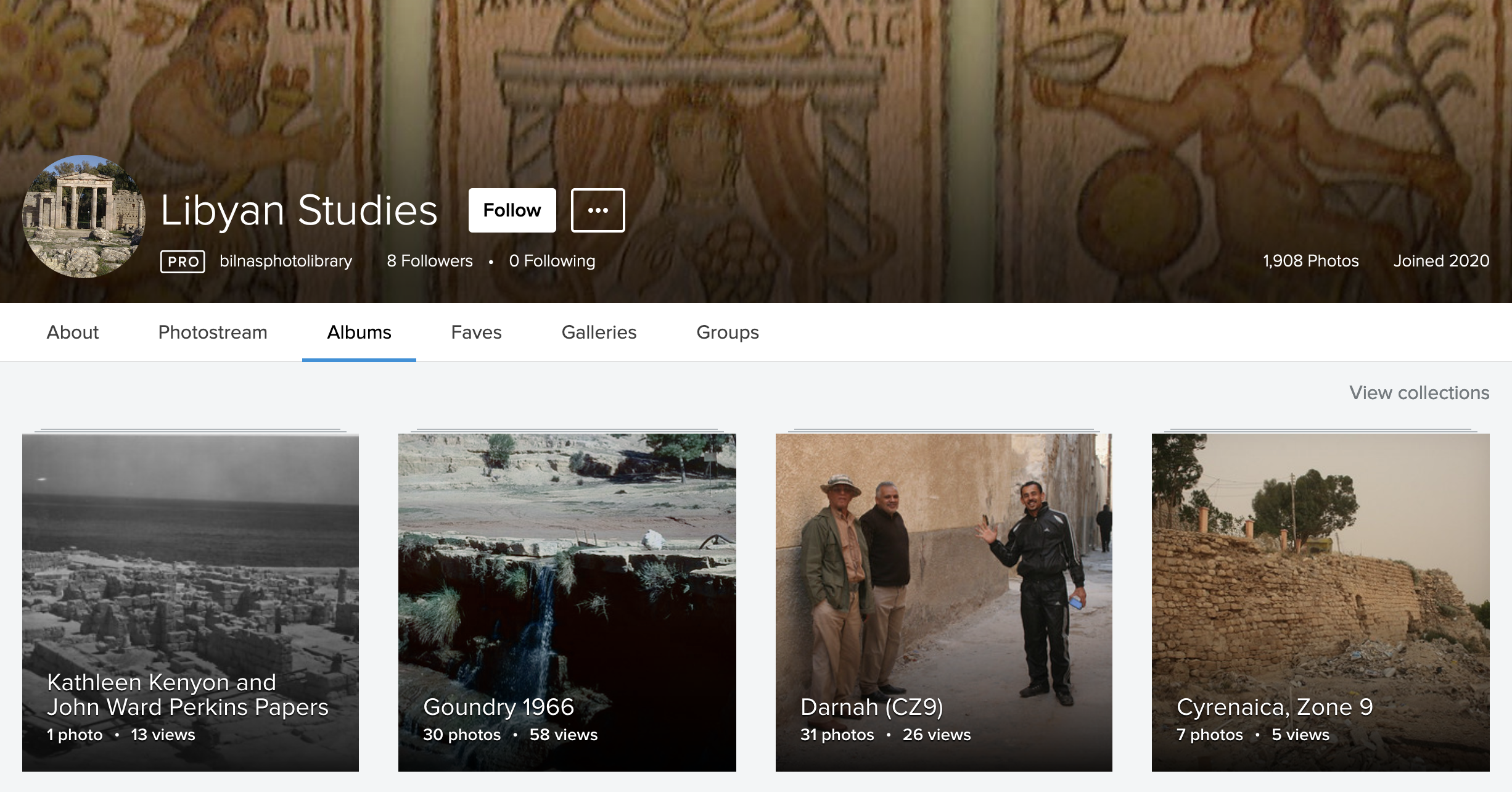
BILNAS has also made an extensive collection of photographs from its archives available online at FLICKR. The photos are historical as well as more recent.