Category Archives: Resources

PhD Thesis: Tripolitanian traditional song 1960-2010

Another PhD thesis by a Libyan student has come to our attention, this time in the field of musicology. It can be accessed online at the following link.

Abdelmonam Ben Hamed, La tradition citadine libyenne et son acculturation: Etude du chant tripolitain (1960-2010) [The urban Libyan tradition and its acculturation: study of Tripolitanian singing (1960-2010)]. PhD thesis, Université de Nice Sophia Antipolis, 2014.

Abstract: “The goal of this thesis is to study in particular the repertoire of Tripolitanian traditional song at the core of the Libyan musical tradition with a method that brings to light both the melodic and rhythmic models which characterize this singing as well as the compositional structures which they exemplify. Specific attention is given to the evolution / acculturation of Tripolitanian traditional song.”


Book: The Ibadite Mosques of Jabal Nafusa

The newest publication of the Society for Libyan Studies’ monograph series is a much-anticipated study of the Ibadite mosques in the Nafusa mountains of western Libya by Virginie Prevost, a scholar of the Ibadites in North Africa.

Virginie Prevost (2016) Les mosquées ibadites du Djebel Nafūsa: Architecture, histoire et religions du nord-ouest de la Libye (VIIe-XIIIe siècle). [The Ibadite Mosques of the Jabal Nafūsa: Architecture, history and religion of North West Libya (7th-13th centuries)]. London.

From the publisher’s description: “The mosques of the Djebel Nafūsa, little known and under threat, personify the continuity of traditions and faith of the Ibadites, who have retained their grip over the centuries on this rugged landscape, despite their many trials and tribulations. This book is the result of a mission carried out in 2010 with the photographer Axel Derriks and examines twenty or so mosques, bringing to light their architectural features and linking them to medieval Ibadite texts.” The book features over 150 full-color photographs, maps, and plans.

Article: La transformation administrative des espaces septentrionaux Libyens

With apologies for the long silence on this blog, we get back on track with this article:

Tomaso Palmieri, “La transformation administrative des espaces septentrionaux Libyens au lendemain de la répression de l’Italie fasciste (1934-1940)” [The administrative transformation of the northern Libyan spaces on the eve of the fascist Italian repression], In Le rôle des villes littorales du Maghreb dans l’histoire, RM2E – Revue de la Méditerranée édition électronique 3/1 (2016), pp. 101–114.

Happily, the article (in French) is freely available online at the following link: http://www.revuedelamediterranee.org/index_htm_files/Palmieri_2016-III-1.pdf

Book: Benghazi Through the Ages | بنغازي عبر التاريخ

The Libyan historian Hadi Bulugma produced a series of books in Arabic on the history of Benghazi entitled بنغازي عبر التاريخ. He also made an abbreviated English version, the first volume of which (I am not sure that the second and third volumes were ever finished) concentrates on the geography and geographical history of the city. Here is a PDF of the book.

Bulugma, Hadi. 1968. Benghazi through the Ages. Volume I. Dar Maktabat al-Fikr, Tripoli.

Book: A Bibliography of Libyan Sociologists

As a research aid, the Libyan sociologist Mustafa al-Tir (مصتفى عمر التير) published a bilingual English-Arabic bio-bibliography of sociologists and anthropologists in Libya in the early 1980s. In it, he writes:

“Producing bibliographies and indexes, whether general or specialised, is an important concern of those organising or propagating knowledge in society…Bibliographies and indexes are, of course, essential for the development of scientific research…

I have noticed on more than one occasion that many Libyan planners and scholars ignore sociological studies which have been carried out in their own society…and that some planners seek the help of specialised experts in social sciences from abroad while native experts, no less competent and probably much more so, because of their knowledge of the language, values and systems of this society, are available…The wrong lies in their complete negligence of the works of their native colleagues.

I believe that the negligence on the part of many students, planners and specialists of the works of Libyan researchers in social sciences is due, partly at least, to their failure to recognise the availability of local experience and their ignorance of the works of Libyan researchers.”

Attir, Mustafa O. 1980(?). The Libyan Sociologists, anthropologists and social works and their scientific research. Arab Development Institute: Tripoli.

 مصتفى عمر التير. 1980. المتخصصون الليبيون في علوم الاجتماع و الانسان و الخدمة الاجتماعية و نشاطهم العلمي. معهد الانماء العربي: طرابلس

A PDF of the work can be found here.

Book: Libyan Fairytales | خراريف ليبية

Perhaps the only such collection to be published in Libya in recent years, خراريف ليبية (Libyan Fairytales) is an anthology of fairytales collected in the Jabal Akhdar region of eastern Libya by the folklorist and short-story writer Ahmad Yusuf ‘Agila.

The book presents thirty-four fairytales, many of which— such as ام بسيسي or نقارش or عويشة بنت السلطان—are well-known to Libyans. ‘Agila also includes a lexicon of the more unusual words used in the tales; some are truly uncommon, while some (such as شرز for سرج ‘saddle’) are simply the local pronunciation of a common word.

Many younger-generation Libyans, or those who grew up in the diaspora, may not have heard many fairytales as children. This book is particularly useful for those groups, who may want to familiarize themselves with the tales their parents grew up hearing but no longer remember. Also, because ‘Agila attempts to render the eastern Libyan dialect as accurately as possible, the tales can be read aloud to friends and family members—thus keeping at least some Libyan fairytales alive.

‘Agila’s introduction to the book, as well as samples of some of the fairytales can be found at this link.

Article: Attrition and revival in Awjila Berber

Marijn van Putten & Lameen Souag, “Attrition and revival in Awjila Berber”, Corpus 14 (2015), pp. 23-58.

Abstract: Awjila Berber is a highly endangered Berber variety spoken in the East of Libya. Only minimal material is available on the language. This is unfortunate, as that material reveals that the language is in some respects very archaic and in others grammatically unique, and as such is of particular comparative and historical interest. Fieldwork has been impossible for decades due to the political situation, leading to uncertainty about whether the language was even still spoken. With the rising popularity of Facebook, however, more and more Berber speakers are taking to Facebook to converse in their own language. Several inhabitants of Awjila have accordingly set up a Facebook page Ašal=ənnax “our village” where they communicate with one another in the Awjila language. The authors have collected a corpus of the conversations on this Facebook page, which have been transcribed and translated. Analysis of this corpus adds substantially to our knowledge of Awjili and its situation. The posters’ discussion of their motivations for using the language cast light on the language’s prospects for survival, while the posts themselves yield many previously unattested words. At the same time, the corpus provides a case study in language contact. Examination of the grammatical and lexical features of this “Facebook-Awjili” language reveals that these speakers’ usage is heavily influenced by Arabic, showing extensive language attrition absent from earlier data. The resulting constructions show parallels with other contact-heavy varieties, notably Siwi. In both respects, this study casts light upon the uses and limits of social media as a source of linguistic material.

The article is not yet available online, only in the print version, but we will link to a PDF as soon as one is available.

Poetry of Khaled Mattawa | دواوين شعر خالد مطاوع

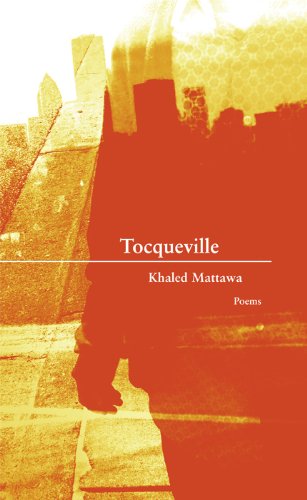
Khaled Mattawa is a renowned Libyan-American poet, in addition to being a prolific translator of Arabic poetry into English and scholar of Arabic literature. He is a member of the American Academy of Poets and was recently in the news for being named a recipient of the MacArthur “genius grant” fellowship. Mattawa has published four books of his poetry in English:

Tocqueville (2010)

Amorisco (2008)

Zodiac of Echoes (2003)

Ismailia Eclipse (1995)

In the aftermath of killing of Libya’s former dictator, he wrote the  poem, “After 42 Years”. You can listen to him reading it here.

Article: Italian colonial rule and Muslim elites in Libya

Here, an article analyzing Muslim elites in Libya during the colonial period:

Baldinetti, Anna, “Italian colonial rule and Muslim elites in Libya: a relationship of antagonism and collaboration”, in ‘Ulama’ in the Middle East, edited by M. Hatina (Brill, 2009).

Abstract: “In Libya, under Italian rule, ‘ulama’ (علماء), Sufi shaykhs and other religious dignitaries played an important role, as Islam not only legitimated the resistance but also became a fundamental element in colonial policies. However, the relationships between the colonial authorities and the religious elites, beyond what the colonial laws prescribed, have as yet not been examined, except for the Sanusiyya order. This paper aims to fill this research gap, focusing mainly on the region of Tripolitania.”

The conclusion reads: “Islam constituted an important element in Italian colonial policy in Libya, and the colonial authorities always paid particular attention to indigenous Muslim elites. However, the “politics of chiefs,” which was based mainly on an exaggerated patronage polìcy, did not help to overcome sectarian, tribal and regional divisions.

The Italian colonial authorities did not develop a well-defined educational policy aimed at modernizing the traditional elites or forming a new “evolués” elite useful for meeting administrative and economic needs. As noted, the —the institution charged with reforming the local elite—was established only in the mid-1930s, in the closing phase of colonial rule. Even then, its impact on the emergence of new elites was negligible, due to the small number of students admitted each year. Moreover, the Institute of Islamic Studies in Tripoli (المدرسة الاسلامية العليا) was not very popular among native circles because its educational program was perceived as too “Westernized.” Hence the Italian administration did not significantly alter or influence the structure of the Muslim elites in Libya, nor did it contribute to the emergence of new ones.”

As always, those who are interested in reading the piece can drop me a line.

Book: The Arabic dialect of Tripoli | لهجة طرابلس العربية

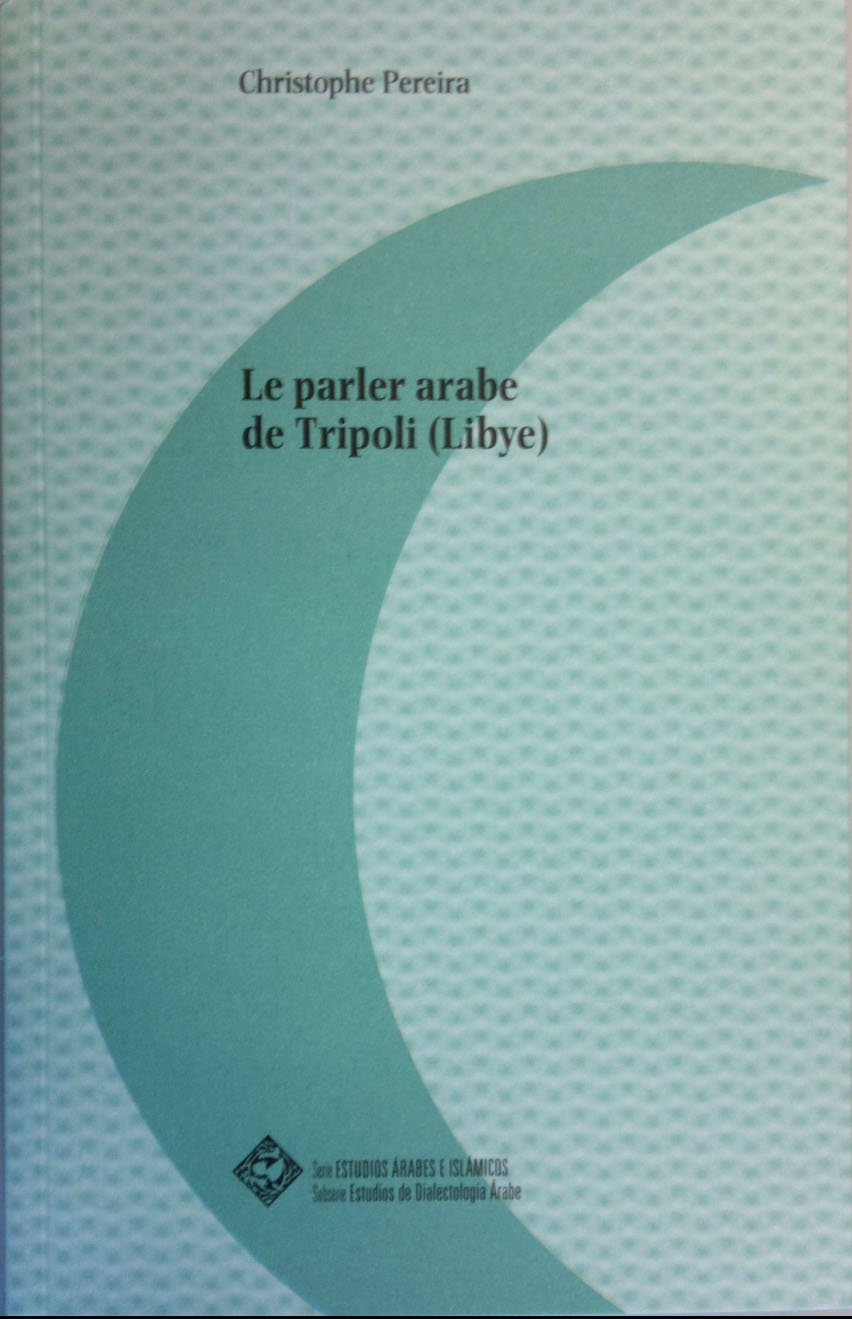
pereira-parler-arabePereira, Christophe. 2010. Le parler arabe de Tripoli (Libye) | لهجة طرابلس العربية. Estudios de Dialectología Árabe 4. Zaragoza.

This book is the most recent linguistic description of the Arabic dialect spoken in Libya’s capital, Tripoli. Based on fieldwork over the course of several years, it provides a detailed look at the dialect of Tripoli from the viewpoint of Arabic dialectology, but goes beyond the usual approaches in including a thorough description of syntax. Furthermore, it is the only book to be written on a variety of Arabic in Libya since the early 1980s. Christophe Pereira is a Maître de Conférences at INALCO in Paris.