Tag Archives: books

The oldest book printed in Libya?

Thanks to a social media post by Baddredin Mukhtar I came across a source previously unknown to me: the Swedish diplomat Jacob Gråberg’s eyewitness account of the Austrian siege of French-occupied Genoa in 1800. Apparently published in Tripoli in 1828, it is certainly one of the oldest books printed in Libya. Though it is quite hard to know if it is the oldest, it is, as Mukhtar proposes, so far the oldest we have a clear evidence for.

Gråberg (1776–1847) was a Swedish scholar and diplomat who served as consul in Tripoli from 1823 to 1828, and had previously held positions in Genoa and Tangiers. He observed and wrote copiously throughout his travels, for example, a report on the 1818 plague epidemic in Morocco or notes on the language of Ghadames.

The book in question, Dag-bok öfver blockaden af Genua år 1800 (Diary on the Siege of Genoa in 1800), was published in 1828 at the press of Mohhammed Es-Swid in “Tripoli I Vester”, that is, Trâblus Gârb (طرابلس الغرب) in Ottoman nomenclature.

The contents have nothing to do with “Tripoli I Vester” at all, but rather are Gråberg’s observations of the Austrian siege of French-occupied Genoa in spring and summer 1800, when he was an officer in the Genoa National Guard after having held bureaucratic roles at the Swedish mission in the then-Ligurian Republic. It seems he only got around to publishing them almost three decades later, and published them wherever he was at the time—in this case, Tripoli—as he did with many of his other writings. The diary was later, in the 1890s, translated into Italian by a historian of Liguria (G. Roberti, “Due diari inediti dell’assedio di Genova nel MDCCC”, Atti della Società Ligure di Storia Patria, 1890 No. XXIII).

As for the press itself, so far I know nothing about “Mohhammed Es-Swid”. It bears remarking that during this period European/Christian converts to Islam, whether as hostages, or conscripts, or other, often simply took (or were referred to using) their country of origin as a family name—e.g. the notable and still extant Libyan family الصويد, which may well be connected with the Mohhammed Es-Swid of our early 19th-century press.

But whether his press printed any other books is not known, and so Gråberg’s Genoese diary may or may not have been the first. Still, I know of no Ottoman or Jewish press operating in Tripoli at this time. The Ottoman newspapers published in Libya got started a bit later, around the mid-1800s. A French newspaper (called المنقب الافريقي) was apparently published in Tripoli in 1827, although I can find no real information about it so far. Jewish presses, publishing both religious texts and newspapers, seem to have gotten going around the end of the 19th century (e.g. the houses of Abraham Tesciuba, Clementi Zard, or Solomon Tesciuba that continued into the colonial period); earlier, the Jewish community seems to have printed predominantly in Livorno or other locations outside of what is now Libya.

More information would be appreciated!
Book: La politica berbera nella Libia coloniale

Chiara Pagano, La politica berbera nella Libia coloniale. Identità, reti e conflitti (1835-1924) (Carocci, 2025).

“A seguito del crollo del regime di Gheddafi l’etnicità berbera/amazigh ha fornito un efficace dispositivo di affermazione politica ad alcuni gruppi libici che si sono mobilitati in aperta polemica con il paradigma panarabo dominante. L’attivismo amazigh ha ricercato nel passato gli argomenti per legittimarsi nel presente, riaffermando un legame originario con il territorio per rivendicare il riconoscimento come popolo indigeno, più che come minoranza. Eppure, come l’identità nazionale, anche l’identità etnica è un prodotto storico contingente, plasmato da specifici processi politici. Il volume ricostruisce in chiave critica la (ri)produzione dell’etnicità amazigh nella storia della Libia contemporanea, focalizzandosi sul periodo tra la metà dell’Ottocento e l’avvento del fascismo. Vengono così analizzate le rivendicazioni avanzate da attori locali definiti come “berberi” nei confronti delle autorità ottomane prima e coloniali poi. Da queste emerge come la politica berbera promossa dalle autorità italiane, e fatta propria da alcuni notabili tripolitani, individuò nell’etnicità uno strumento privilegiato per l’organizzazione gerarchica della società coloniale. Fu allora che vennero poste le basi delle dinamiche identitarie che, ancora oggi, naturalizzano l’opposizione tra gruppi arabi e berberi proiettandone le origini in un passato indefinito.”

Book: Confronting the Archive of Coloniality Across Italy and Libya

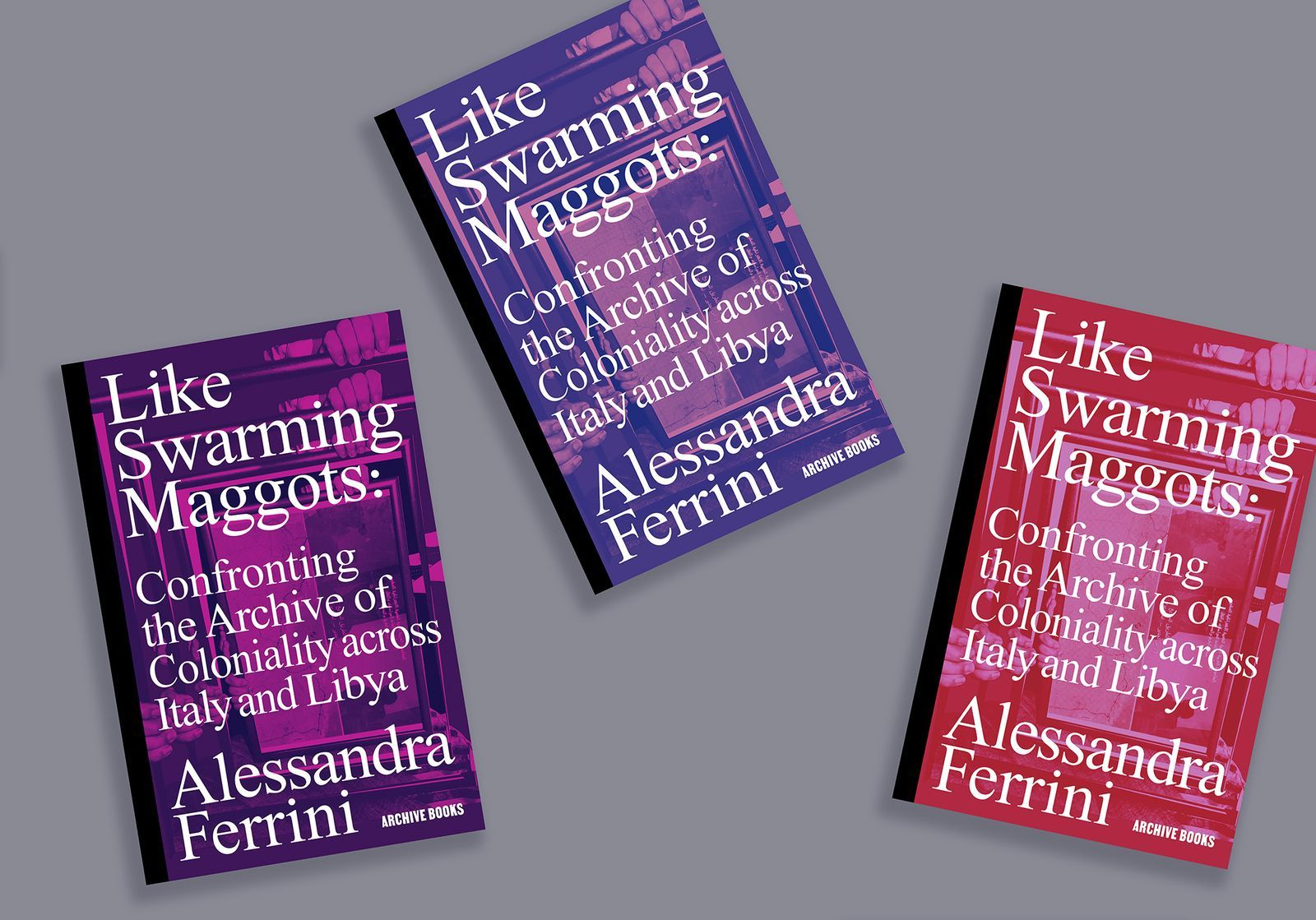
A new book by artist Alessandra Ferrini, entitled Like Swarming Maggots: Confronting the Archive of Coloniality Across Italy and Libya with contributions from a number of artists and writers (including yours truly), has just been published by Berlin-based Archive Books.

Featuring Ferrini’s long-term research on the colonial and neo-colonial relations between Italy and Libya through a critical engagement with the Italian ‘archive of coloniality’ and its structural violence. The book includes documentation of Ferrini’s major project Gaddafi in Rome, whose last iteration is currently exhibited at the 60th International Art Exhibition of La Biennale di Venezia curated by Adriano Pedrosa, as well as a series of works reflecting on positionality, censorship, and the erasure of the genocide perpetrated by the Italians in Libya.

Building on the artist’s interest in writing, translation, and collaboration as forms of resistance practice, it brings together different voices and visual materials, putting forward a reflection on the ethical dimension of cultural work. As a result, the book includes original contributions, reprints, and translations by writers, scholars, curators, and practitioners pivotal to the development of Ferrini’s work and thinking.

Like Swarming Maggots: Confronting the Archive of Coloniality Across Italy and Libya includes a preface by Bassam El Baroni and contributions by: Tewa Barnosa, Adam Benkato, NiccolòAcram Cappelletto, Chiara Cartuccia, Sarri Elfaitouri, Amalie Elfallah, Khaled Mattawa, Maaza Mengiste, Barbara Spadaro, Daphne Vitali.

Book: Jewelry and Adornment of Libya

Hala Ghellali’s long-awaited book on Libyan jewelry is finally in print! An account based on the author’s own collections and her long personal experience and interaction with artisans of bygone generations, this will be the resource on the topic for a long time. Cover photo by Sasi Harib.

Publisher’s description: Hala Ghellali was eighteen years old when her father first took her to the suq to buy her first silver bracelets. They visited traditional jewelers in the madina al-qadima, the old walled city of Tripoli. This single event in 1975, ignited her lifelong passion for traditional jewelry and costume items and she has been collecting objects and stories ever since. Her unique stories, personal observations, research and firsthand information about jewelry design and silversmithing fill this book. ‘Jewelry and Adornment of Libya’ aims to share with its readers a lifetime passion for the jewelry made in Tripoli. It includes a section dedicated solely to the role of jewelry and costume in Tripoli with narratives of traditional weddings, and traditions linked to jewelry gifting in the city. The book is dedicated to the local jewelers and masters of weaving and embroidery who have almost all disappeared, their art and skills not being passed on to the present generation.

Novel: L’ascaro (The Conscript) by Ghebreyesus Hailu

After almost 100 years, the anti-colonial novel “The Conscript” has finally appeared in Italian translation, thanks to the work of translator Uoldelul Chelati Dirar and funding obtained by Alessandra Ferrini.

Originally written in Tigrinya in 1927, an English translation by Ghirmai Negash appeared in 2012, while an Arabic version by Faraj al-Tarhouni has come out in recent years in Libya. The author, Gebreyesus Hailu (1906–1993) was a prominent and influential figure in the cultural and intellectual life of Eritrea during the Italian colonial period and in the post-Italian era in Africa. He earned a PhD in theology, was vicar general of the Catholic Church in Eritrea, and played several important roles in the Ethiopian government, including as cultural attaché at the Ethiopian Embassy in Rome.

The original Tigrinya version of the novel is not in print but a PDF has been made available by Ghirmai Negash, the English translator, and can be found here.

Publications of the Instituto Agronomico per l’Oltremare on Colonial Libya

Thanks to the generosity of our colleague (and fellow archive diver) Amalie for sharing the below resources.

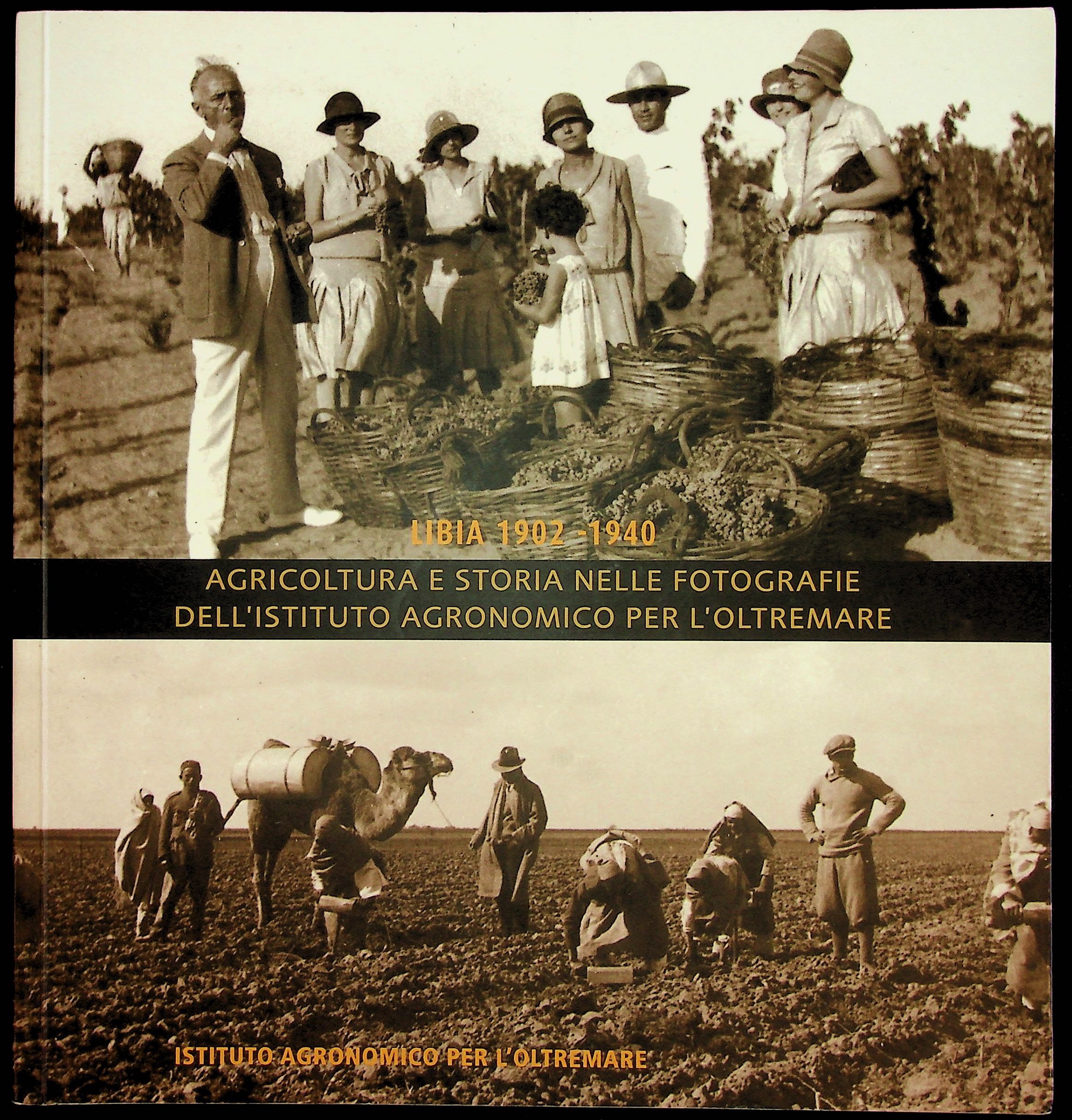
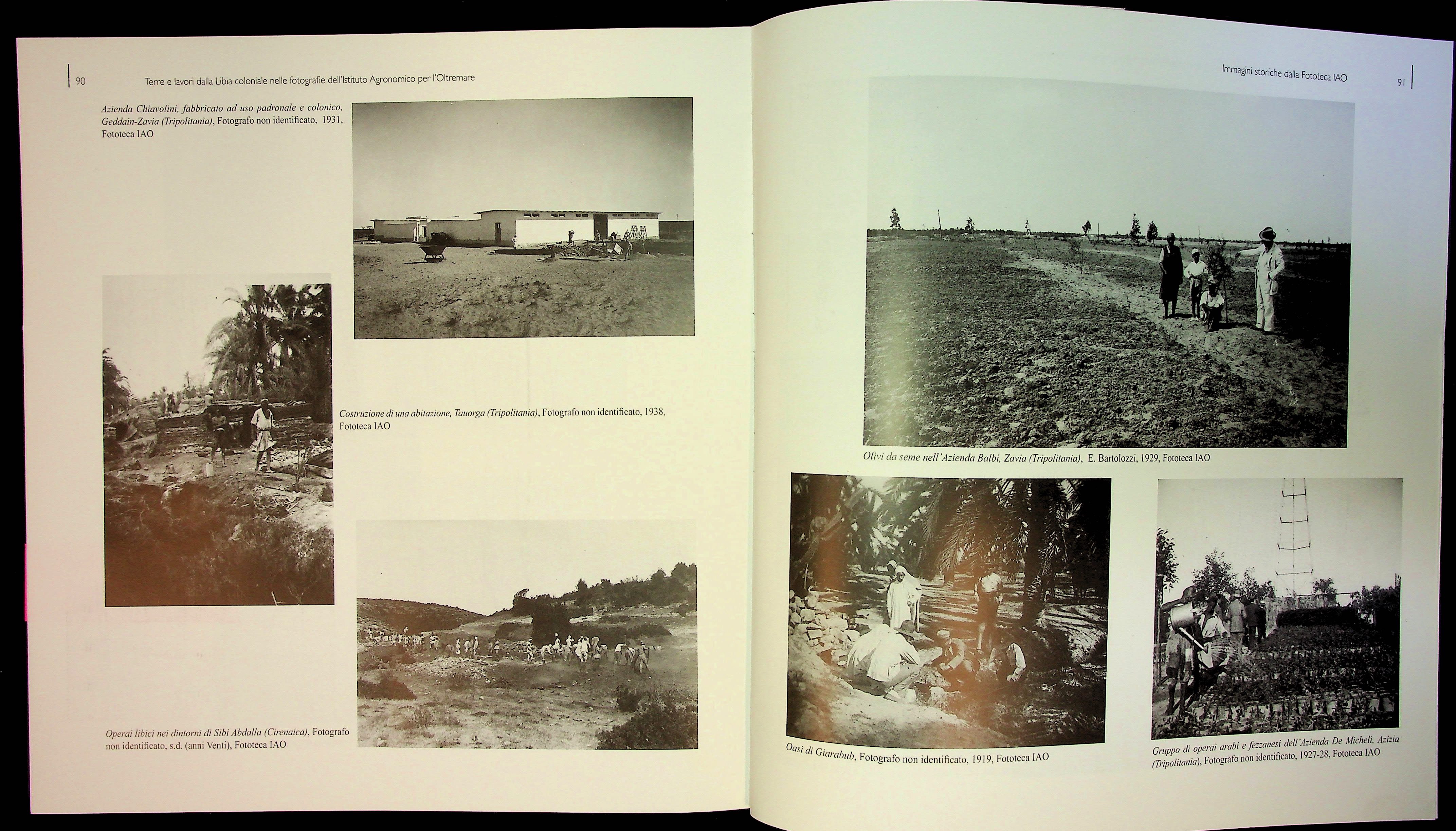
The Istituto Agronomico per l’Oltremare (now part of the Agenzia italiana per la cooperazione allo sviluppo) in Florence, Italy—itself a fairly major actor in Italian colonial expansion in north and east Africa—compiled some interesting documentation on Italian settler colonial agriculture and land development efforts in Libya based on its own archives.

Libia 1902-1940: Agricoltura e storia nelle fotografie dell’Istituto Agronomico per l’Oltremare, a cura di Massimo Battaglia e Fabrizia Morandi (IAO, 2015)

Terre e lavori dalla Libia coloniale nelle fotografie dell’Istituto Agronomico per l’Oltremare, a cura di Nicola Labanca (IAO, 2015)

Research Roundup June 2022

A variety of recent research on Libyan topics.

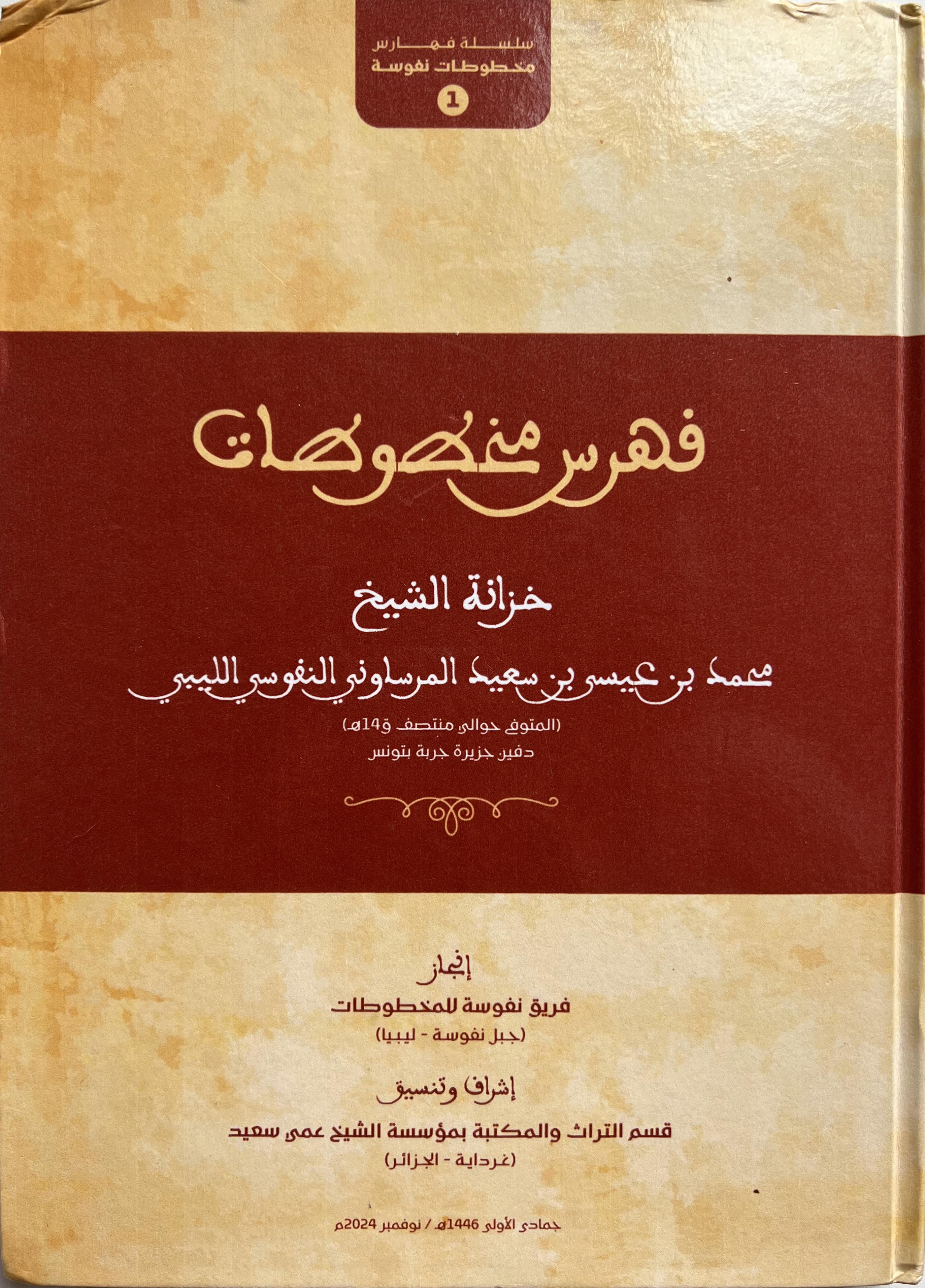
Paul Love, Libraries of the Nafusa. A pilot project to document and digitize material heritage in the Jebel Nafusa, Libya, part of the excellent LibMed project focusing on medieval Libya

The Libraries of Nafusa is a pilot project to document and to digitize written material culture in the Jebel Nafusa region of Libya. It is led by the Ibadica Centre for Research and Studies on Ibadism in France and the Fassato Foundation in Libya, with financial support from the Gerda Henkel Stiftung’s “Patrimonies” funding program in Germany. The administrative team reflects the international nature of the project, with members in Morocco, Algeria, France, and the United States.


Igor Cherstich, Martin Holbraad, Nico Tassi, Anthropologies of Revolution: Forging Time, People, and Worlds (University of California Press, 2020). *Open Access*

What can anthropological thinking contribute to the study of revolutions? The first book-length attempt to develop an anthropological approach to revolutions, Anthropologies of Revolution proposes that revolutions should be seen as concerted attempts to radically reconstitute the worlds people inhabit. Viewing revolutions as all-embracing, world-creating projects, the authors ask readers to move beyond the idea of revolutions as acts of violent political rupture, and instead view them as processes of societal transformation that penetrate deeply into the fabric of people’s lives, unfolding and refolding the coordinates of human existence.


Nir Arielli, “Colonial Soldiers in Italian Counter-Insurgency Operations in Libya, 1922-32”, British Journal for Military History 1/2 (2015), 47–66. *Open Access*

The vast majority of the force employed by the Italians to crush local resistance in Tripolitania and Cyrenaica was composed of Libyans, Eritreans and Ethiopians. The article examines why the Italians came to rely so heavily on colonial soldiers. It highlights two key predicaments the Italians faced: how to contend with the social, economic and political repercussions that military recruitment for the counter-insurgency created in East Africa; and the extent to which they could depend on forces raised in Libya itself. Finally, the article offers an initial assessment of how the counter-insurgency exacerbated tensions between Libyans and East Africans.


Klaus Braun & Jacqueline Passon (editors), Across the Desert: Tracks, Trade and Cross-Cultural Exchange in Libya (Springer, 2020). *Open Access*

This open access book provides a multi-perspective approach to the caravan trade in the Sahara during the 19th century. Based on travelogues from European travelers, recently found Arab sources, historical maps and results from several expeditions, the book gives an overview of the historical periods of the caravan trade as well as detailed information about the infrastructure which was necessary to establish those trade networks.
Included are a variety of unique historical and recent maps as well as remote sensing images of the important trade routes and the corresponding historic oases. To give a deeper understanding of how those trading networks work, aspects such as culturally influenced concepts of spatial orientation are discussed.
The book aims to be a useful reference for the caravan trade in the Sahara, that can be recommended both to students and to specialists and researchers in the field of Geography, History and African Studies.


Jérôme Lentin, selections of early modern written Libyan Arabic, in A Handbook and Reader of Ottoman Arabic, edited by Esther-Miriam Wagner (Open Book Publishers, 2021). *Open Access*

Libya 1: Ḥasan al-Faqīh Ḥasan’s Chronicle Al-Yawmiyyāt al-Lībiyya (early 19th century)

Libya 2: Letter from Ġūma al-Maḥmūdī (1795–1858) to ʿAzmī Bēk, Daftardār of the ʾIyāla (Province) of Tripoli (undated)

European Journals and Correspondence from early modern Libya (sources for the study of early modern Libya ii)

Previous posts in this series on historical sources for the study of early modern Libya:
i. Early Modern Libyan Manuscripts in the Bibliothèque Nationale de France

The present post gives references to journals and correspondence written by English observers, mostly diplomats of some kind, who lived in the region for a period of time. Travel accounts, which are far more numerous, will be dealt with separately. Fortunately, several of the most extensive collections of correspondence have been collected and published—those are the ones detailed here, with a few references thrown in to unpublished material; this post is not necessarily exhaustive.

17th century

Thomas Baker, English consul in Tripoli between 1677 and 1685 (then part of the Ottoman Empire and a key base of the “Barbary pirates”), kept a detailed journal during his time in the city-state. Though English consuls had been in Algiers and Tunis for some time, one was only sent to Tripoli from 1658, primarily for dealing with pirates, rather than trade. Baker’s journal, now preserved in the Bodleian Library at Oxford, is an intriguing early record at a time for which hardly any historical sources exist.

  • Piracy and Diplomacy in Seventeenth-Century North Africa: The Journal of Thomas Baker, English Consul in Tripoli, 1677-1685, edited by C.R. Pennell (Rutherford: Fairleigh Dickinson University Press, 1989)

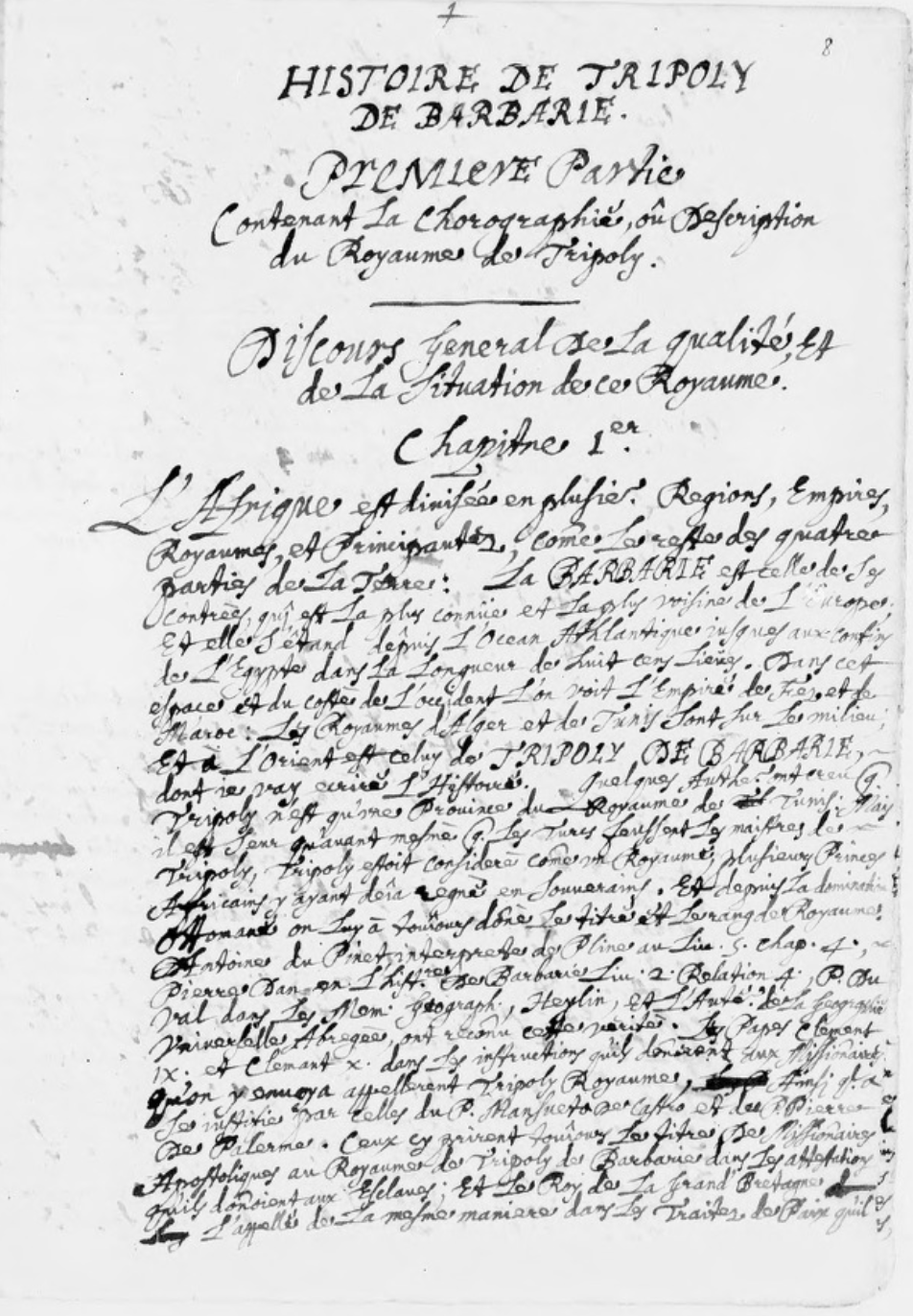
In the late 1600s, Dominique Girard, a Provençal surgeon captive in Tripoli between 1668 and 1675, composed a lengthy (over 1,000 pages) chronicle-diary, known as the Histoire chronologique du royaume de Tripoly de Barbarie. It is now held in the Bibliothèque nationale de France as BNF ms. fr. 12219 & 12220. It seems to have been little studied, excepting a recent PhD thesis.

  •  (al-Gawhari) Bushreida, Amal. 2017. Le Manuscrit de « L’Histoire chronologique du royaume de Tripoli de Barbarie ». Université de Poitiers Thèse de doctorat.
  • Laronde, André. 2006. Dominique Girard et la Cyrénaïque : le regard d’un captif français en Barbarie au XVIIe siècle. Bulletin de la Société nationale des Antiquaires de France 2001(1). 120–127.

Continue reading

Research Roundup Summer 2021

Here is my occasional roundup of published research on Libya in the humanities and social sciences which I find interesting or useful. I’ll also slowly be gathering some of the older individual posts on this blog into collective roundup posts.

Ali Ahmida, Genocide in Libya: Shar, a Hidden Colonial History (Routledge, 2020)

This original research on the forgotten Libyan genocide specifically recovers the hidden history of the fascist Italian concentration camps (1929–1934) through the oral testimonies of Libyan survivors. This book links the Libyan genocide through cross-cultural and comparative readings to the colonial roots of the Holocaust and genocide studies.
     Between 1929 and 1934, thousands of Libyans lost their lives, directly murdered and victim to Italian deportations and internments. They were forcibly removed from their homes, marched across vast tracks of deserts and mountains, and confined behind barbed wire in 16 concentration camps. It is a story that Libyans have recorded in their Arabic oral history and narratives while remaining hidden and unexplored in a systematic fashion, and never in the manner that has allowed us to comprehend and begin to understand the extent of their existence.
     Based on the survivors’ testimonies, which took over ten years of fieldwork and research to document, this new and original history of the genocide is a key resource for readers interested in genocide and Holocaust studies, colonial and postcolonial studies, and African and Middle Eastern studies.

There is an illuminating interview with the author on Jadaliyya, in addition to one on the New Books Network. Continue reading

The Librarian of the Desert

In 1906, Harry Lyman Koopman wrote a lengthy speculative poem about the transfer of the Senussi library from Jaghbub to Kufra some ten years earlier, part of the removal of the entire Senussi headquarters. A librarian at Brown University, Koopman (1860-1937) seemed captivated by the Senussi center of learning deep in the Sahara: the library was supposed to be so vast that, he relates, it required hundreds of camels to transport. Reflecting on this feat as a librarian himself, Koopman’s poem takes the perspective of the hypothetical Senussi librarian at Kufra. This fictitious narrator expounds on the history of Islam, the trajectories of Islamic learning, and finally the removal of the library from one oasis in the Sahara to another even more deep in the desert.

One might characterize the poem as Koopman’s attempt to describe the library job he might have enjoyed having, in an alternate universe. Appropriately, it was first published in The Library Journal, the official organ of American library associations, where it probably enjoyed a favorable reception among other librarians of venerable Anglophone educational institutions. It was then included two years later in a collected volume of Koopman’s poetry, his fifth, entitled The Librarian of the Desert and other poems (Boston, 1908). Since readers at that time may have been rather unfamiliar with the topic and its background, Koopman provided the poem with a “prefatory note”: Continue reading