Tag Archives: colonial era

مقال: فظائع الاستعمار الايطالي الفاشستي في طرابلس-برقة

In the 1930s the Tripolitanian notable and politician Bashir al-Sa‘dawi, later to be viewed as one of the main figures in the movement for Libyan independence, published an essay entitled ‘The atrocities of fascist Italian colonialism in Tripolitania-Barqa’ (مقال: فظائع الاستعمار الايطالي الفاشستي في طرابلس-برقة). Published by the “Association for the defense of Tripolitania-Barqa”, about which I know little, this essay seems to be one of the earliest Libyan anti-fascist and anti-colonial writings.

Article: Reluctant Militants: Colonialism, Territory, and Sanusi Resistance on the Ottoman‐Saharan Frontier

Jonathan Lohnes. 2021. Reluctant Militants: Colonialism, Territory, and Sanusi Resistance on the Ottoman‐Saharan Frontier. Journal of Historical Sociology 34(3), 466-478. [paywall]

Abstract: Libya's enigmatic Sanusi brotherhood has been the subject of perennial debate since its emergence in Ottoman Cyrenaica in the mid nineteenth century, becoming a screen upon which apologists and detractors could project their own political anxieties and desires. For European critics, the brotherhood embodied the irrationality and fanaticism of the Islamic East. Its networks in North and Central Africa constituted an obstacle to their expansionist designs, while Sanusi prestige throughout the Muslim world rendered the brotherhood a threat to the entire colonial order of things. Nationalist historiography has generally endorsed this view, albeit with a positive valence, characterizing the Sanusiyya as an anticolonial social movement. Meanwhile, modern critical scholarship has tried to impose order on the chaos of the turn-of-the-century Sahara by assigning to the fraternity the role of a “proto-state.” This article proposes a new framework for understanding the history and sociology of the Sanusi. Drawing on theorists of subaltern resistance such as James Scott and Michael Adas—alongside Ottoman, British, French, and Italian primary sources—I demonstrate that the brotherhood began its life as an inward-looking Islamic social justice movement with little evident interest in state building or the geopolitical controversies of the moment. I coin the term “reluctant militants” to describe its mercurial trajectory from frontier evangelism to armed struggle in response to French and Italian colonial encirclement. This process culminated in the Long War of 1911–1931, during which the Sanusiyya played a critical part in the struggles over post-Ottoman reconstruction, from the Maghreb to Anatolia.

Publications of the Instituto Agronomico per l’Oltremare on Colonial Libya

Thanks to the generosity of our colleague (and fellow archive diver) Amalie for sharing the below resources.

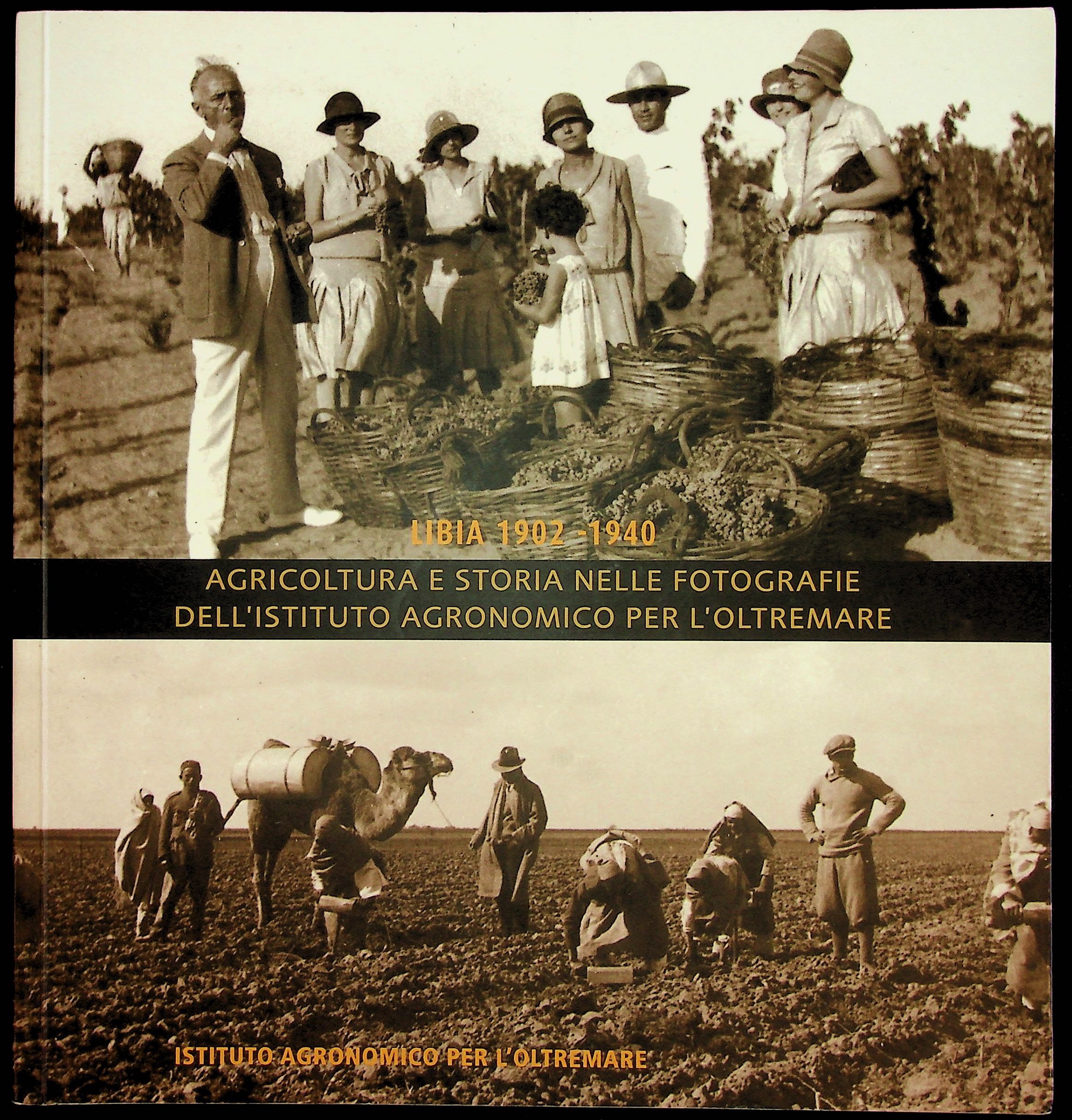
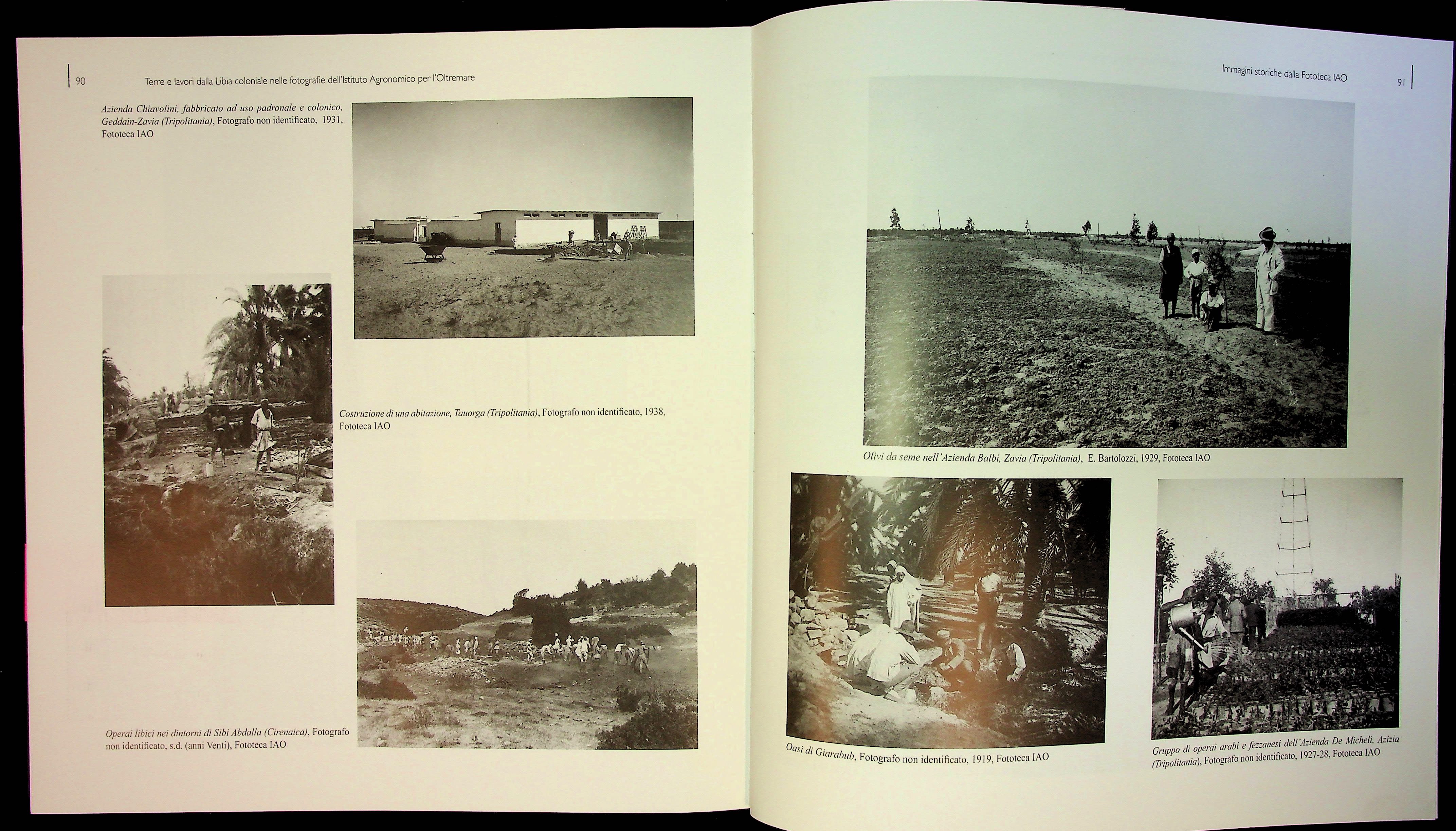
The Istituto Agronomico per l’Oltremare (now part of the Agenzia italiana per la cooperazione allo sviluppo) in Florence, Italy—itself a fairly major actor in Italian colonial expansion in north and east Africa—compiled some interesting documentation on Italian settler colonial agriculture and land development efforts in Libya based on its own archives.

Libia 1902-1940: Agricoltura e storia nelle fotografie dell’Istituto Agronomico per l’Oltremare, a cura di Massimo Battaglia e Fabrizia Morandi (IAO, 2015)

Terre e lavori dalla Libia coloniale nelle fotografie dell’Istituto Agronomico per l’Oltremare, a cura di Nicola Labanca (IAO, 2015)

Article: Solidarity Among Colonial Subjects in Wartime Libya, 1940-1943

Tagliacozzo, Livia. 2022. Solidarity Among Colonial Subjects in Wartime Libya, 1940-1943. Quest. Issues in Contemporary Jewish History 22(2). 109–140. (open access)

Abstract: During World War II, Jews in Libya faced persecution and adversity. In response, Muslim individuals often became aides to the Jews, driven by economic reward, shared benefits, and genuine empathy. Examining the manner Jews and Muslims interacted in these circumstances sheds light on the complex relationship between the two communities, influenced by factors such as religious affiliation, connections to the regime, and personal interests. The fascist regime’s differential policies towards the two communities over two decades also played a role in shaping this relationship, sometimes causing conflict between the communities, but also leading to a shared sense of opposition to the Italians following common experiences of persecution.

Thesis: Insurgent Geographies: The Production of Territorial Libya, 1835–1935

Lohnes, Jonathan M. 2022. Insurgent Geographies: The Production of Territorial Libya, 1835–1935. PhD Dissertation, Cornell University. (open access)

Abstract: This dissertation offers a panoramic reinterpretation of Libyan state-formation in light of Ottoman archival evidence and recent advances in critical geography, particularly revisionist approaches to the history of territory. Echoing Henri Lefebvre’s description of space as the “ultimate locus and medium of struggle,” I argue that the dynamic, frequently violent interaction of a diverse cast of networked social forces—local, transregional, Ottoman imperial, and European colonial— across a vast Saharan-Mediterranean theater produced the entity we now recognize as territorial Libya from approximately 1835 to 1935. Territorial spatialization along the rural frontiers of Tripolitania, Cyrenaica, and Fezzan is not reducible in theory to the enclosure of land or conquest of terrain— though both featured prominently within it—but also encompassed legal, diplomatic, technical-scientific, and ideological dimensions. The process unfolded in two phases: Ottoman provincialization, which transformed these areas into a “pilot province” for Istanbul’s ambitious development agenda, and Italian fascist colonization, which unified the country in the form of a colonial state after a twenty-year “pacification” campaign. Both phases unfolded at the expense of rural indigenous communities, who were targeted for disarmament, dispossession, displacement, and culminating in the ethnic cleansing of Cyrenaica in the late 1920s and early 1930s. Indigenous efforts to preserve local understandings of sovereign autonomy—up to and including “nomadic strategies” of guerrilla war—were the most historically and geographically significant factor in the production of Libyan territorial space. Modern Libya’s unique experience of territorial spatialization dislocated the country from the conceptual maps that guide us through transnational, regional, and local pathways of Global South history. Its ambivalent and fragmentary “geo-historical identity”—exemplified by the fact that Fezzan remains synonymous with “the middle of nowhere” in modern Turkish—is among the most enduring legacies of this process. Yet this inherited sense of Libya’s rural interior as the Periphery of Peripheries belies the fact that upland Tripolitania, Fezzan, and inner Cyrenaica often took center stage in the high drama of late and post-Ottoman politics. More than a microcosm of transformations underway across the Empire in its final century, this region was a critical frontline of global struggles over resources, sovereign legitimacy, geographic knowledge, and the fate of mobile and nomadic populations. All of which is to say, the middle of nowhere is the heart of the world.

Article: The Life Cycle of the Libyan Coastal Highway

Distretti, Emilio. 2021. The Life Cycle of the Libyan Coastal Highway: Italian Colonialism, Coloniality, and the Future of Reparative Justice in the Mediterranean. Antipode: A Radical Journal of Geography 53(5). 1421–1441.

Abstract: This paper explores the role of the Libyan Coastal Highway across history: originally built by fascist Italy during colonisation, in the postcolonial era Libya demanded Italy commit to the construction of a new motorway as part of the reparation process for its crimes. Only in 2008 was an agreement reached. Through it, Italy used the promise to build a new road as a bargaining-chip to secure Qaddafi’s cooperation in containing migrant mobility across the Mediterranean. This paper explores the different ways in which the Libyan road has endured as a space and a tool of power by tracing historical and political continuities across time, from colonisation to demands for postcolonial reparations and migration governance. Drawing inspiration from the notion of “coloniality”, the paper investigates the colonial continuum expressed by the Italian/Libyan reparation process, and seeks to posit alternative pathways towards the unresolved question of postcolonial justice around the Mediterranean.

North African Audio Archives (1)

As libraries, museums, and other institutions catalog and digitize holdings from 19th and 20th century European explorers, scholar, or colonial administrators in the Middle East or north Africa, a number of audio archives have come to light. These include recordings made on the older media of wax cylinders or shellac discs, or the slightly newer media of vinyl records or even magnetic tape. Some recordings were made on site while others were made in Europe. In this post and and a few subsequent posts, my goal is draw to attention to some of these recently-available audio archives.

Berliner Lautarchiv

The Lautarchiv (“sound archive”) at the Humboldt University in Berlin contains several thousand recordings on wax cylinders and shellac discs dating to the early 1900s. Among these are recordings made in a prison camp set up near Berlin during World War 1 for prisoners from the French and British armies who originated in the north African and south Asian colonies. A commission was set up to take advantage of the internment of speakers of many different languages, and hundreds of recordings on shellac discs were made for the purpose of linguistic study. Within this group of recordings from the prison camp are about 120 recordings of northern African speakers of Arabic and Berber varieties. The contents range from improvised narratives, poems, or songs, to the repetition of words and phrases from a dialectological questionnaire. Dating from 1916 to 1918, they are probably the oldest recordings of these languages; certainly the oldest known recordings made for linguistic purposes. Although all the holdings of the Lautarchiv have been digitized, they are not freely available online due to the sensitive circumstances of the internment and recording, but can be consulted in-person in Berlin by appointment.

The Lautarchiv has made available a sample recording of a poem critical of the war from a prisoner originating in Monastir, Tunisia. For a linguistic study of the recordings from a prisoner originating in Medenine, Tunisia, which I recently collaborated on with a colleague, see here. Otherwise, the north African records have not been the subject of much research until now.

Centre de Recherche en Ethnomusicologie

In the Collection Mission Henri Lhote held in the CREM are 511 (!) almost entirely unpublished magnetic tape recordings made during the 1948 expedition of Henri Lhote (1903-1991), a French explorer and hunter of primitive art, in the Hoggar region of Algeria. The recordings made during that trip contain a wide selection of materials, from found sounds to songs, poetry, lullabies, narratives, and conversations, mostly in the local Tuareg variety with some in Arabic as well. All of the recordings are digitized and can be listened to online.

Research Roundup June 2022

A variety of recent research on Libyan topics.

Paul Love, Libraries of the Nafusa. A pilot project to document and digitize material heritage in the Jebel Nafusa, Libya, part of the excellent LibMed project focusing on medieval Libya

The Libraries of Nafusa is a pilot project to document and to digitize written material culture in the Jebel Nafusa region of Libya. It is led by the Ibadica Centre for Research and Studies on Ibadism in France and the Fassato Foundation in Libya, with financial support from the Gerda Henkel Stiftung’s “Patrimonies” funding program in Germany. The administrative team reflects the international nature of the project, with members in Morocco, Algeria, France, and the United States.


Igor Cherstich, Martin Holbraad, Nico Tassi, Anthropologies of Revolution: Forging Time, People, and Worlds (University of California Press, 2020). *Open Access*

What can anthropological thinking contribute to the study of revolutions? The first book-length attempt to develop an anthropological approach to revolutions, Anthropologies of Revolution proposes that revolutions should be seen as concerted attempts to radically reconstitute the worlds people inhabit. Viewing revolutions as all-embracing, world-creating projects, the authors ask readers to move beyond the idea of revolutions as acts of violent political rupture, and instead view them as processes of societal transformation that penetrate deeply into the fabric of people’s lives, unfolding and refolding the coordinates of human existence.


Nir Arielli, “Colonial Soldiers in Italian Counter-Insurgency Operations in Libya, 1922-32”, British Journal for Military History 1/2 (2015), 47–66. *Open Access*

The vast majority of the force employed by the Italians to crush local resistance in Tripolitania and Cyrenaica was composed of Libyans, Eritreans and Ethiopians. The article examines why the Italians came to rely so heavily on colonial soldiers. It highlights two key predicaments the Italians faced: how to contend with the social, economic and political repercussions that military recruitment for the counter-insurgency created in East Africa; and the extent to which they could depend on forces raised in Libya itself. Finally, the article offers an initial assessment of how the counter-insurgency exacerbated tensions between Libyans and East Africans.


Klaus Braun & Jacqueline Passon (editors), Across the Desert: Tracks, Trade and Cross-Cultural Exchange in Libya (Springer, 2020). *Open Access*

This open access book provides a multi-perspective approach to the caravan trade in the Sahara during the 19th century. Based on travelogues from European travelers, recently found Arab sources, historical maps and results from several expeditions, the book gives an overview of the historical periods of the caravan trade as well as detailed information about the infrastructure which was necessary to establish those trade networks.
Included are a variety of unique historical and recent maps as well as remote sensing images of the important trade routes and the corresponding historic oases. To give a deeper understanding of how those trading networks work, aspects such as culturally influenced concepts of spatial orientation are discussed.
The book aims to be a useful reference for the caravan trade in the Sahara, that can be recommended both to students and to specialists and researchers in the field of Geography, History and African Studies.


Jérôme Lentin, selections of early modern written Libyan Arabic, in A Handbook and Reader of Ottoman Arabic, edited by Esther-Miriam Wagner (Open Book Publishers, 2021). *Open Access*

Libya 1: Ḥasan al-Faqīh Ḥasan’s Chronicle Al-Yawmiyyāt al-Lībiyya (early 19th century)

Libya 2: Letter from Ġūma al-Maḥmūdī (1795–1858) to ʿAzmī Bēk, Daftardār of the ʾIyāla (Province) of Tripoli (undated)

A Call for Independence from Tripoli and Benghazi, 1917

I recently stumbled upon an extremely interesting pamphlet from 1917 entitled “Aspirations and National Ideals of the Population of Tripoli of Africa and Benghazi” (“Aspirations et idéal national de la population de Tripoli d’Afrique et de Benghazie”). Written by Youssouf Chetvan and Mouhammed Salih Chérif, it was published in French, in Stockholm, Sweden. It is the earliest text I know of that was written by Libyans calling for independence in a European venue. More generally, the text connects the aspirations of people in Tripoli and Benghazi with the struggle of colonized Muslims the world over, framing itself as an “appeal in the name of the oppressed Muslims populations”. I wonder how widely it circulated…

I do not know anything about the authors, except that Youssouf Chetvan (يوسف بن شتوان؟) was likely a Benghazi notable, as that family has been prominent there for a long time. The other author, Mouhammed Salih Chérif (محمد صالح الشريف؟), credited as “one of the Senussi sheikhs”, could plausibly have been a member of the Senussi family or a ranking member of the Senussi order.

Research Roundup December 2021

This research roundup includes some exciting recent work in fields that have been previously unexplored, as well as work from the past few years which I wasn’t previously aware of.

Elfeituri, Nada. 2020. Tribalism as urban planning: The role of non-state actors in governing Benghazi’s peripheries. DPU Working Paper 204. (online)

The persistence of tribalism in countries of the Middle East and North Africa has posed a challenge to researchers and practitioners seeking to understand the political and social drivers of change in the region, particularly after the 2011 revolutions which saw the collapse of many governments and a resurgence in the prominence of tribal networks. The presence and role of tribal structures in cities – one of many non-state actors attempting to fill the governance gap – has increasingly become a key element in how they function today, particularly in planning, service delivery and security.

The accepted binary that places tribalism as a nomadic or rural practice – one which diminishes in settled and urban populations – is no longer adequate to understand developments occurring in the social, political and spatial arenas of these cities. Tribal networks have evolved and adapted over the years, both influencing and being affected by state policies and laws. Studies that attempt to understand tribal phenomena outside of anthropology tend to look at the relationship between tribe and state without examining how this relationship plays out in urban areas.

This research aims to reconceptualise the notion of tribalism in the MENA region in order to understand contemporary urban tribal practices, by looking at the tribe and the urban rather than the tribe and state alone. It will first establish a framework of understanding tribalism that builds on Ibn Khaldun’s conception of the Arab tribe as a form of social solidary, placing this within the notion of precarious urbanism. It will then look at the case of urban tribalism in Libya, analysing the relationship between tribalism, the state and the city, in order to understand why tribalism persists and what impact it has on city planning today. This will be explored in depth by analysing the current role of tribalism in Benghazi’s peripheral areas.


Elfeituri, Nada. 2021. The “Solidere” Effect and the Localisation of Heritage Reconstruction in Post-war Transitions, Libya. In Historic Cities in the Face of Disasters: Reconstruction, Recovery and Resilience of Societies (The Urban Book Series), 301–316. (paywalled)

In the wake of mass urban conflicts across the Middle East and North Africa (MENA), the most pressing question has been how reconstruction can be achieved on a large scale. Cities such as Benghazi, Aleppo and Mosul have witnessed widespread destruction that will take billions of dollars and decades to repair. With such a momentous task, many governments in the region appear to be looking towards the “Solidere” model of reconstruction that was applied in downtown Beirut after the Lebanese civil war, a model built around “disaster capitalism” in which new laws facilitate the role of private companies to lead the process. While there have been countless criticisms of the effect that this process had in Beirut, the region offers few other examples of successful reconstruction projects. Indeed, with the current climate of authoritarian rule, it is the central governments rather than residents themselves who have decision-making power to shape the reconstructed city. These decisions are driven not only by economic opportunities but by socio-political strategy, namely what should be forgotten and what will remain in the post-war city. Within this process, the efforts of citizens and local actors—often the first to initiate reconstruction of their neighbourhoods—are often overlooked or ignored. There have been increasing calls for more locally led reconstruction processes that are driven by people rather than profit, within the wider shift towards more participatory processes in urban development. These processes can be seen as more inclusive and sustainable than the “Solidere” model of reconstruction, but there is limited literature regarding how these local mechanisms operate in reconstruction contexts in the MENA region, and how they can fit into wider political processes. The aim of this chapter is to investigate local reconstruction efforts and how they play out in heritage centres. It focuses specifically on the case of downtown Benghazi’s reconstruction in Libya after the 2014 civil war. It will conclude by attempting to answer the question of what place local reconstruction should have in national visions of urban redevelopment in cities affected by conflict.


Musbahi, Moad. 2018. The Sahara Is Not a Desert: Re-Mapping Libya, Unravelling the State. The Funambulist No. 18 (Cartography & Power). (online)

This map shows Libya in the moment prior to the 1935 Franco-Italian agreement that decided the demarcation of the southern border. / Istituto Geografico Militare (1926), photo by Moad Musbahi.


Bertazzini, Mattia Cosma. 2019. The economic impact of Italian colonial investments in Libya and in the Horn of Africa, 1920-2000. PhD thesis, London School of Economics and Political Science. (online)

This dissertation examines the micro-level effects of Italian colonial investments in Libya, Somalia, Eritrea, and Ethiopia, and sheds light on both their short and long-term impact. It focuses on two flagship projects, launched by the dictator Benito Mussolini during the 1930s, namely the construction of a modern road network in the Horn of Africa and the settlement of Italian farmers in Libya. The contributions are twofold. First, this thesis focuses on types of colonial investment that have not been studied before, while looking at a group of colonies that have previously been neglected by the cliometrics revolution in African economic history. Thus, it enhances our understanding of the effect of colonialism in general and, on Africa, in particular. Second, by exploiting a set of quasi-natural experiments from the history of Italian colonialism to explore the micro-effect of specific policies, this thesis also contributes to the economic geography and development literatures that have looked at the determinants of agglomeration and productivity in developing countries. It is structured around three substantive chapters. The first one studies the effect of Italian road construction in the Horn of Africa on economic development and shows how locations that enjoyed a first-mover advantage in transportation thanks to the Italian road network are significantly wealthier today. The second substantive chapter assesses the effect of Italian agricultural settlement on indigenous agriculture in Libya at the end of the colonial period and pinpoints an adverse effect of Italian presence on Libyan productivity. Finally, the third substantive chapter studies the effect of the expulsion of Italian farmers from Libya after World War II and finds a reduction in agricultural commercialization in affected districts following the shock.


Simona Berhe and Olindo de Napoli, editors. 2022. Citizens and Subjects of the Italian Colonies Legal Constructions and Social Practices, 1882–1943. Routledge.

This forthcoming book features several chapters concerning Libya: “Subjecthood, Citizenship, Autonomy, Independence? Legal Status and National Claims in the First Decade of Italian Occupation in Libya (1911–1920)” by Federico Cresti, “The System of Differences: Justice and Citizenship in Libya (1911–1922)” by Alessia Di Stefano, and finally “Rights, Mobility and Identity: Colonial Citizenship in Libya in the Twenties”, by Simona Berhe.