Tag Archives: history

Books: Mercantile Documents from Ghadames | وثائق تجارية من غدامس

ghadames-mss219th-century documents from the collection of the Yusha‘ family—one of the most important merchant families of Ghadames during the 18th and 19th centuries—were published by the Ghadamsi scholar Bashir Qasim Yusha‘ in 1983, shedding light for the first time on the extremely wide extent of the Ghadamsi mercantile network in Africa. Merchants from Ghadames were apparently so well-known in Saharan and western Africa that in Hausa the only North African group other than  Larabawa ‘Arabs’ to have a particular designation were the Adamusawa ‘Ghadamsis’. Yusha‘’s publication is the following:

Yusha‘, Bashir Qasim. Ghadāmis: Wathā’iq tijāriyya tārikhiyya ijtimā‘iyya (1228-1310 hijri). Tripoli: Libyan Studies Center, 1983.

To my knowledge, the only Western scholar to engage with these sources was Ulrich Haarmann, who in 1988 published a lengthy (94 pages with 492 footnotes!) and wide-ranging article based on the documents:

Haarmann, Ulrich, “The Dead Ostrich: Life and Trade in Ghadames (Libya) in the Nineteenth Century“, Der Welt des Islams 38/1 (1998), 9–94.

Before his death in 1999 Haarmann had prepared German translations of many of the documents published by Yusha‘ in 1983, along with commentaries. This material was gathered and published posthumously in 2008 by a colleague of Haarmann’s:

Haarmann, Ulrich, edited by Stephan Connermann. Briefe aus der Wüste: Die private Korrespondenz der in Ġadāmis ansässigen Yūša‘-Familie (Letters from the Desert: the private correspondence of the Yusha‘ family resident in Ghadames). EB-Verlag, 2008.

Publisher’s blurb (German): “Im Jahre 1983 legte der Gadameser Gelehrte Basir Qasim Yusa der interessierten Öffentlichkeit 150 Privatpapiere – Briefe, Rechnungen, Warenlisten, Quittungen oder Geburtsregister – aus dem Besitz seiner Familie vor. Diese Dokumente, die in dem Zeitraum von 1813 bis 1917 entstanden sind, handeln alle in der einen oder anderen Weise von Mitgliedern der berberischen Familie Yusa. Geschrieben sind diese Schriftstücke in einem lokalen Umgangsarabisch, in dem sich verschiedentlich berberische oder hocharabische Einsprengsel finden. Als Verfasser kommen entweder die Absender selbst, deren schriftkundigen Bekannte oder aber bezahlte Briefschreiber in Frage. Kurz nachdem Basir Qasim Yusa seine Edition veröffentlicht hatte, begann Ulrich Haarmann sich mit den Texten zu befassen. Ein Aufenthalt am Berliner Wissenschaftskolleg im Frühjahr 1997 gab ihm Zeit und Gelegenheit, alle Befunde in einen geschlossenen Text zu gießen, der dann 1998 in der Zeitschrift Die Welt des Islams unter dem Titel „The Dead Ostrich: Life and Trade in Ghadames (Libya) in the Nineteenth Century“ publiziert wurde. Die von ihm weitgehend übersetzten Dokumente sollten einer späteren Veröffentlichung vorbehalten sein. Dazu kam es dann aber nicht mehr, denn Ulrich Haarmann verstarb 1999. Stephan Conermann hat die Übertragungen der schwierigen Texte nun zusammen mit einer längeren Einleitung in vorsichtiger Überarbeitung herausgegeben.”

Book: The Ottoman Scramble for Africa

Minawi, Mostafa. 2016. The Ottoman Scramble for Africa: Empire and Diplomacy in the Sahara and the Hijaz. Stanford University Press.

The Ottoman Scramble for Africa is the first book to tell the story of the Ottoman Empire’s expansionist efforts during the age of high imperialism. Following key representatives of the sultan on their travels across Europe, Africa, and Arabia at the close of the nineteenth century, it takes the reader from Istanbul to Berlin, from Benghazi to Lake Chad Basin to the Hijaz, and then back to Istanbul. It turns the spotlight on the Ottoman Empire’s expansionist strategies in Africa and its increasingly vulnerable African and Arabian frontiers.

Drawing on previously untapped Ottoman archival evidence, Mostafa Minawi examines how the Ottoman participation in the Conference of Berlin and involvement in an aggressive competition for colonial possessions in Africa were part of a self-reimagining of this once powerful global empire. In so doing, Minawi redefines the parameters of agency in late-nineteenth-century colonialism to include the Ottoman Empire and turns the typical framework of a European colonizer and a non-European colonized on its head. Most importantly, Minawi offers a radical revision of nineteenth-century Middle East history by providing a counternarrative to the “Sick Man of Europe” trope, challenging the idea that the Ottomans were passive observers of the great European powers’ negotiations over solutions to the so-called Eastern Question.”

An episode of the Ottoman History Podcast with Minawi was also dedicated to this topic and is well worth a listen.

مجلة البحوث التاريخية | Journal of Historical Research

1Libya’s foremost research journal for history, in its broadest conception, is the مجلة البحوث التاريخية (Journal of Historical Research), published by the Libyan Center for Historical Studies.* Since 1979, the journal has consistently published articles by Libyan scholars, as well as several well-known European scholars writing in Arabic, on a very broad array of topics. In many cases, in fact, there is little or no research published outside of Libya on these topics, and the journal therefore offers extremely valuable insight into the range of possibilities for research as well as useful starting points for those who can read Arabic. Unfortunately, it is difficult to come by in European or American libraries (in London, the SOAS library has many of the issues)—a goal for the appropriate authority in Libya would be to make back issues available online. The website of the Center shows issues from 2013 as being the most recent. Although it seems not to have been updated for some time now, later issues are not known to me. I hope the journal is still alive.

*The Center was previously called مركز جهاد الليبيين ضد الغزو الايطالي للدراسات التاريخية (The Libyan Resistance against the Italian Invader Center for Historical Studies), later shortened to مركز جهاد الليبين للدراسات التاريخية (The Libyan Resistance Center for Historical Studies).

An old article about Tawargha

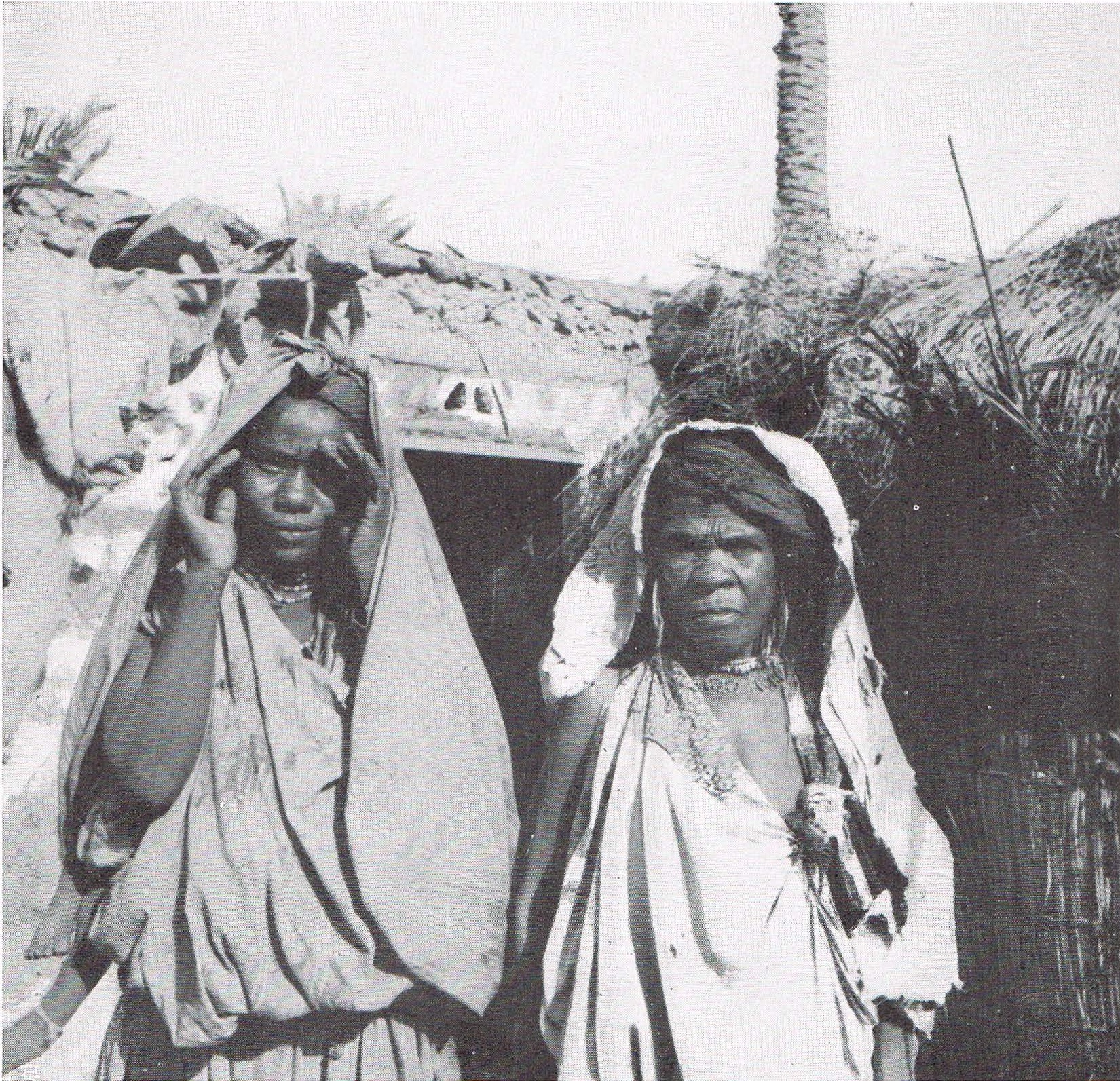
tawarghan-women

Tawarghan Women (Photo U. Paradisi, 1950s)

The inhabitants of the small oasis of Tawargha (تورغاء) outside of Misrata have suffered a great deal as a result of recent conflicts in Libya. The majority of Tawarghans are people often referred to in Libyan society as “black Libyans”, in order to draw attention to their sub-Saharan African ancestry (I prefer the term “Libyans”, since they are Libyans like everyone else). Unfortunately, most people make little effort to understand them or their history.

Tawarghan Man (Photo U. Paradisi, 1950s)

Tawarghan Man (Photo U. Paradisi, 1950s)

This being the case, I thought it important to share an article written about Tawargha fifty years ago by the linguist Umberto Paradisi, known mainly for his work on Libyan Berber. He also apparently noticed that  many Tawarghans were Black (about 4600 of a population of 5100 in 1936, apparently), and wrote an article for the popular magazine Le Vie del Mondo about it (he also wrote popular articles for this magazine about Tripoli, Ghadames, and other places in Libya). That this particular social situation was the case fifty years ago, and goes back even long before the colonial period, further shows that the recent forced displacement of Tawarghans by local militias is based on scapegoating and racism—they have been a part of society for as long as the concept of ‘Libya’ has existed. The reason for the unique demographic of Tawargha goes back to an unfortunate, but inescapable, part of Libyan history: the slave trade. This much is implied by the pejorative term shushan (plural shawāshna) used in the article, and even sometimes now, to refer to the Tawarghans and other Libyans ultimately descended from enslaved people. We need to understand these histories and work to rectify, rather than repeat, them.

Here is a scan of the article (in Italian), entitled “I sudanesi di Tauórga” and published in Le Vie del Mondo (February 1956). It uses the dated and inaccurate way of referring to Black people in Arab societies as “Sudanese”, though this is unsurprising given the era and the colonial venue it was published in. It also has several photographs showing various aspects of life in Tawargha such as date cultivation and textile making.

Article: The second Ottoman period in the writing of Libyan history | العهد العثماني الثاني في كتابة التاريخ الليبي

هنا نقدّم مقالةً عربيةً للمرة الاولى و هي مقالة “العهد العثمان الثاني في كتابة التاريخ الليبي” من الباحث الالماني ياكوب كرايس.

في مجال تاريخ الولايات العربية تحت السيطرة العثمانية تحتل ليبيا مكانة خاصة بالماقرنة مع البلدان الاخرى في شمال افريقيا لأنه كان ارتباطاً وثيقاً بين اعادة الاحتلال العثماني لليبيا و اعادة التنظيم للامبراطورية الشاملة. اذا من الممكن، في مشاريع التحديث العثمانية في ليبيا، اكتشاف التناقد بين التطور الاضطهاد. و لذلك يعتبر تيار من البحث التاريخي الدولة العثمانية كقوة استعمارية كغيرها، بينما يشير بعض العلماء الى اهمية التراث العثماني في العالم العربي. اما المؤمرخون الليبيون المعاصرون فلهم ايضاً وجهات نظر مختلفة: هناك باحثون مهتومون بالتأثيرات السلبية للاصلاحات العثمانية، من جهة اخرى ينوه مؤرخون اخرون بنتائجها اليجابية و في نفس الوقت هناك اتفاق بين التيارين بالنسبة الى التضامن الاسلامي ضد الغزو الاستعماري الايطالي.

Abstract: “In the history of the Ottoman Empire’s Arab provinces Libya occupies a special place, compared to the other North African countries, insofar as the Ottoman reoccupation of Libya went hand in hand with the reorganization of the empire as a whole. It is thus possible to trace, in the Ottoman reform projects, an opposition between development and repression. That is why one strand in historical research considers the Ottoman Empire as a regular colonial power, while some scholars, on the other hand, emphasize the importance of the Ottoman heritage in the Arab world. The contemporary Libyan historians, for their part, have also different points of view: there are those researchers who are interested, above all, in the negative influences of Ottoman reforms, whereas others stress the positive outcomes. At the same time, there exists a consensus as far as the Islamic solidarity against the Italian colonial aggression is concerned.”

Book: Benghazi Through the Ages | بنغازي عبر التاريخ

The Libyan historian Hadi Bulugma produced a series of books in Arabic on the history of Benghazi entitled بنغازي عبر التاريخ. He also made an abbreviated English version, the first volume of which (I am not sure that the second and third volumes were ever finished) concentrates on the geography and geographical history of the city. Here is a PDF of the book.

Bulugma, Hadi. 1968. Benghazi through the Ages. Volume I. Dar Maktabat al-Fikr, Tripoli.

Book: The State and Social Transformation in Tunisia and Libya, 1830-1980

Lisa Anderson, The State and Social Transformation in Tunisia and Libya, 1830-1980. Princeton University Press (1986).

Publisher’s blurb: The book traces growing state intervention in the rural areas of Tunisia and Libya in the middle 1800s and the diverging development of the two countries during the period of European rule. State formation accelerated in Tunisia under the French with the result that, with independence, interest-based policy brokerage became the principal form of political organization. For Libya, where the Italians dismantled the pre-colonial administration, independence brought with it the revival of kinship as the basis for politics.

This is one of the few books (along with this one) about Libyan history to be based on extensive research with primary sources in Libyan, Ottoman, and European archives.

Book: The Origins of the Libyan Nation | اصول الدولة الليبية

Anna Baldinetti, The Origins of the Libyan Nation: Colonial Legacy, Exile and the Emergence of a New Nation-State (Routledge, 2010).

From the book’s abstract:

“Libya is a typical example of a colonial or external creation. This book addresses the emergence and construction of nation and nationalism, particularly among Libyan exiles in the Mediterranean region. It charts the rise of nationalism from the colonial era and shows how it developed through an external Libyan diaspora and the influence of Arab nationalism.

From 1911, following the Italian occupation, the first nucleus of Libyan nationalism formed through the activities of Libyan exiles. Through experiences undergone during periods of exile, new structures of loyalty and solidarity were formed. The new and emerging social groups were largely responsible for creating the associations that ultimately led to the formation of political parties at the eve of independence.

Exploring the influence of colonial rule and external factors on the creation of the state and national identity, this critical study not only provides a clear outline of how Libya was shaped through its borders and boundaries but also underlines the strong influence that Eastern Arab nationalism had on Libyan nationalism. An important contribution to history of Libya and nationalism, this work will be of interest to all scholars of African and Middle Eastern history.”

Book: Les annales tripolitaines

“The Tripolitanian Annals” is a work written by Laurent-Charles Féraud, a French Arabist and statesman, while he was consul general in Tripoli from 1879 to 1884. The work contains extremely important historical information about the region of Tripolitania, pertaining not just to the 19th century, but to the region’s history since the Arab conquest. Originally published posthumously in 1927, then largely forgotten, the manuscript was recently re-edited and published by Nora Lafi with a useful introduction.

Les annales tripolitaines de Charles Féraud, with an introduction by Nora Lafi, Paris: Bouchène, 2005.

Book: A historical work on Ottoman Tripoli | دراسة تاريخية في مدينة طرابلس العثمانية

A landmark contribution to the study of North African urban history, the history of Tripoli, and the history of Ottoman Libya is “A North African City between ancien regime and Ottoman reforms: the birth of municipal institutions in Tripoli 1795-1911” [مدينة في المغرب بين العهد القديم و التنظيمات العثمانية: تكوين المؤسسات البلدية في طرابلس الغرب] by Nora Lafi (academia page), a scholar now based at the Zentrum Moderner Orient in Berlin:

Lafi, Nora. 2002. Une ville du Maghreb entre ancien régime et réformes ottomanes: genèse des institutions municipales à Tripoli de Barbarie (1795-1911). Paris: L’Harmattan, Tunis: Institut de recherche sur le Maghreb contemporain (IRMC), 305p.

From a review on H-Net: “Lafi’s … is the first work of western scholarship to be thoroughly grounded in documents held in Tripoli’s Municipal Archives. (Studies on Tripoli usually make use of Italian, French, and British archives and published sources in many languages, including Arabic.) These are supplemented by sources in the Ottoman archives and diplomatic papers in both France and Italy… At the heart of the book is its demonstration that the city was managed by an assembly (the jama’a(t) al-bilad), headed by the mayor-like “chief of the city” (shaykh al-bilad), a notable elected by the other members of the jama’a. This contradicts the impression conveyed by many historical works, that Arab cities did not generate stable civic institutions of this sort, and have instead followed amorphous, enigmatic, and/or disordered civic trajectories under their reign from above by Ottoman delegates or puppets. In Lafi’s analysis, instead, we find urban and civic self-management at the middle levels. As early as the eighteenth century, long before the Ottoman reforms (tanzimat) of the following century, or subsequent European incursions, Tripoli’s municipal organization operated on a well-functioning, autonomous system of its own making.”