Tag Archives: politics

Film: My Father and Qaddafi (2025)

Jihan Kikhia’s long-awaited documentary film “My Father and Qaddafi” about her father Mansur Kikhia’s forced disappearance by the Qaddafi regime in 1990s is now out. Its international debut will be at the Venice Biennale this month.

The disappearances and assasinations of the 80s and 90s, and indeed the Libyan opposition movements to the Qaddafi regime, are some aspects of Libyan history that are poorly known and understood by non-Libyans (despite even the success of Hisham Matar’s book The Return, for example), and even increasingly by younger generations of Libyans. As Kikhia notes in her director’s statement, “this is one of the ways I am hoping to hold my father before he disappears completely from my memory and even potentially from Libya’s memory.” This film is an important addition to Libyan history and joins a short list of beautiful and insightful documentaries about Libyan topics from the last few years, including Khalid Shamis’ thematically-related “The Colonel’s Stray Dogs”.
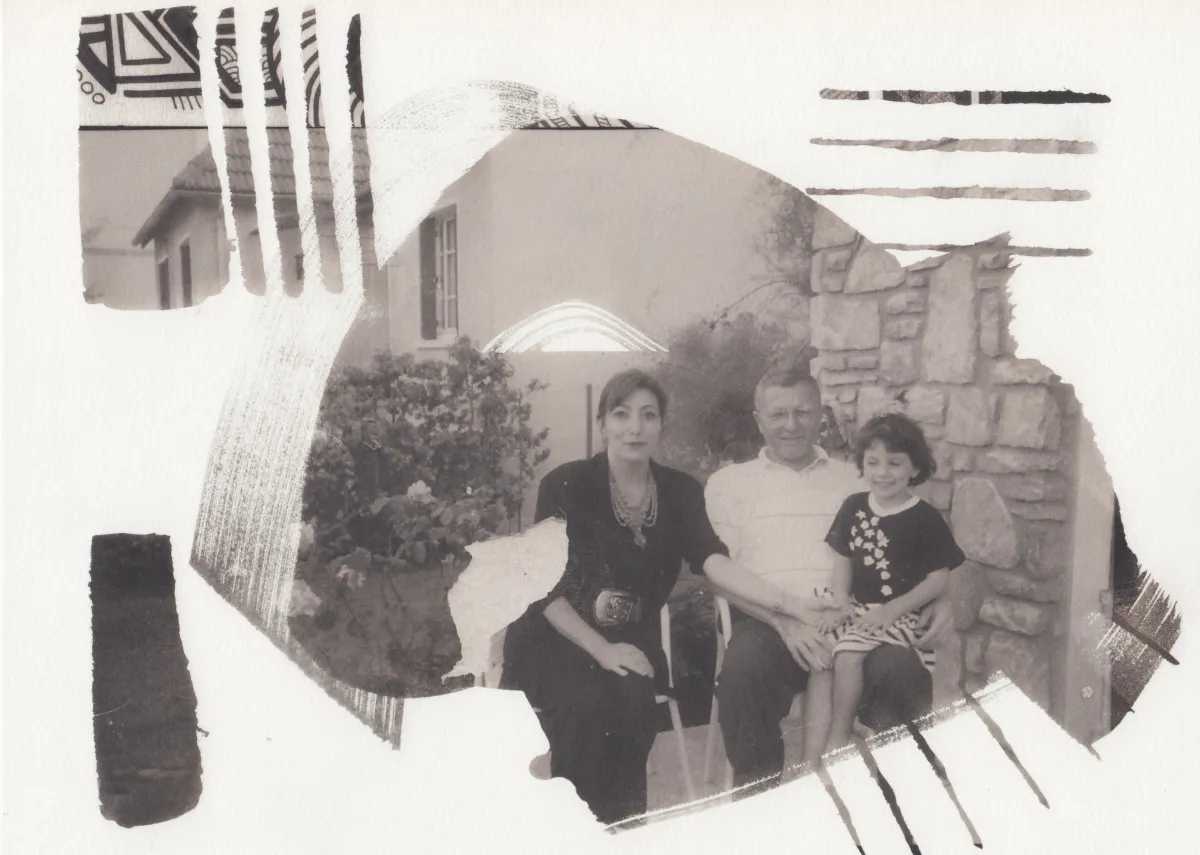
Synopsis: In My Father and Qaddafi Jihan K pieces together a father she barely remembers — Mansur Rashid Kikhia was a human rights lawyer, Libya’s foreign minister and ambassador to the United Nations. After serving in Qaddafi’s increasingly brutal regime, he defected from the government and became a peaceful opposition leader. For many, Kikhia was a rising star who could replace Qaddafi, however, in 1993 he disappeared from his hotel in Egypt. Jihan’s mother, Baha Al Omary, searched for him for nineteen years until his body was found in a freezer near Qaddafi’s palace.

Through encounters with family, her father’s colleagues, and historical archives, Jihan’s search for the truth evolves into a deeper curiosity, drawing her closer to both her father and her Libyan identity.

View the trailer here:

Book: La politica berbera nella Libia coloniale

Chiara Pagano, La politica berbera nella Libia coloniale. Identità, reti e conflitti (1835-1924) (Carocci, 2025).

“A seguito del crollo del regime di Gheddafi l’etnicità berbera/amazigh ha fornito un efficace dispositivo di affermazione politica ad alcuni gruppi libici che si sono mobilitati in aperta polemica con il paradigma panarabo dominante. L’attivismo amazigh ha ricercato nel passato gli argomenti per legittimarsi nel presente, riaffermando un legame originario con il territorio per rivendicare il riconoscimento come popolo indigeno, più che come minoranza. Eppure, come l’identità nazionale, anche l’identità etnica è un prodotto storico contingente, plasmato da specifici processi politici. Il volume ricostruisce in chiave critica la (ri)produzione dell’etnicità amazigh nella storia della Libia contemporanea, focalizzandosi sul periodo tra la metà dell’Ottocento e l’avvento del fascismo. Vengono così analizzate le rivendicazioni avanzate da attori locali definiti come “berberi” nei confronti delle autorità ottomane prima e coloniali poi. Da queste emerge come la politica berbera promossa dalle autorità italiane, e fatta propria da alcuni notabili tripolitani, individuò nell’etnicità uno strumento privilegiato per l’organizzazione gerarchica della società coloniale. Fu allora che vennero poste le basi delle dinamiche identitarie che, ancora oggi, naturalizzano l’opposizione tra gruppi arabi e berberi proiettandone le origini in un passato indefinito.”

Article: The Politics of Boredom in Post-Revolutionary Libya

Cherstich, Igor. 2023. Smoking, Praying, Killing: The Politics of Boredom in Post-Revolutionary Libya. In Revolution Beyond the Event: The Afterlives of Radical Politics, ed. by Charlotte Al-Khalili, Narges Ansari, Myriam Lamrani, and Kaya Uzel (London: UCL Press). [open access]


Modern Libyan history has been marked by two revolutionary occurrences. In 1969 Colonel Muʿammar al Gaddafi led a coup against the king of Libya, abolishing the monarchy and establishing one of the most perdurable socialist governments of the twentieth century. Forty years later, a revolution broke out against Gaddafi, determining the sudden collapse of the socialist state. In this chapter I will examine the aftermaths of these two uprisings. In so doing, I will show that in spite of their antithetical character – one revolution brought Gaddafi to power, the other put his rule to an end – both events were characterised by a similar, fundamental discrepancy. More specifically, I will demonstrate that in both cases the revolutionaries claimed to have brought about a completely new phase in Libyan history: a novel era marked by an unprecedented sense of vitality and dynamicity. Equally, I will show that the insurgents attained exactly the opposite of what they aimed to achieve: rather than precipitating an age of effervescence and movement, they generated an age of stasis. A stagnant state of affairs where Libyans could not help but feeling stuck, lethargic, and bored.

Article: What drives public trust in the military in non-democracies

Abouzzohour, Yasmina & Tarik M. Yousef. 2023. What drives public trust in the military in non-democracies: Evidence from Libya (2014-2019). The Journal of North African Studies. [open access]

This article investigates the conditions that lead to heightened trust in the military in non-democracies through an empirical study of post-2011 Libya. Drawing on the political science and sociology literatures on institutional trust in non-democratic contexts, we develop hypotheses linking public trust in the military to personal safety, political interest, Islamist orientation, trust in institutions, regionalism, and support for democracy. Using survey data collected by the Arab Barometer between 2014 and 2019, we empirically test these hypotheses. Our findings reveal a confluence of factors driving trust in the military in Libya, including regional, generational, educational, and class divides. Being older, male, and from the East contribute positively to trust in the military as well as perceived personal safety, trust in government, interest in politics, and support for democracy. On the other hand, an Islamist orientation, education and income are negatively correlated. These results allow us to speculate about the drivers of trust in the military. In particular, the positive impact of personal safety and support for democracy could reflect the public's perception of the army as responsible for ensuring safety and protecting a nation in turmoil. The role of interest in politics could be attributed to the charged context of politics and security after the 2014 elections. Notably, regional exceptionalism in the East could be related to the role and behaviour of the eastern-based, self-proclaimed Libyan National Army. Our paper contributes to the limited empirical research on trust in the military in non-democracies, backsliding in conflict countries, and political attitudes in Libya.

Article: A State of Discord: A Sociohistorical Reflection on Contested Statehood in Libya

El Taraboulsi-McCarthy, Sherine. 2023. A State of Discord: A Sociohistorical Reflection on Contested Statehood in Libya. In Armando Salvatore, Sari Hanafi & Kieko Obuse (eds.), The Oxford Handbook of the Sociology of the Middle East. Oxford: Oxford University Press.

Abstract: Contrary to the majority of Western scholarship on Libya, which ascribes Libya’s “statelessness” to a failure on the part of local actors to adopt modern state formation following independence in 1951, the author argues that this view fails to take into account local power dynamics among social actors and between social actors and the state (colonial and postcolonial) that manifested themselves in modes of cooperation and contestation and have shaped Libya’s experience with statehood. The author shows that while contestation among social actors before and after independence had been stronger than centralizing forces, resulting in a state of discord, this should be explained in context and through a local account of Libya’s history as a colonized country. This chapter calls for a more robust incorporation of temporal aspects of social and political development in theorizing the state in Libya and the Arab world.

Documentary: The Colonel’s Stray Dogs

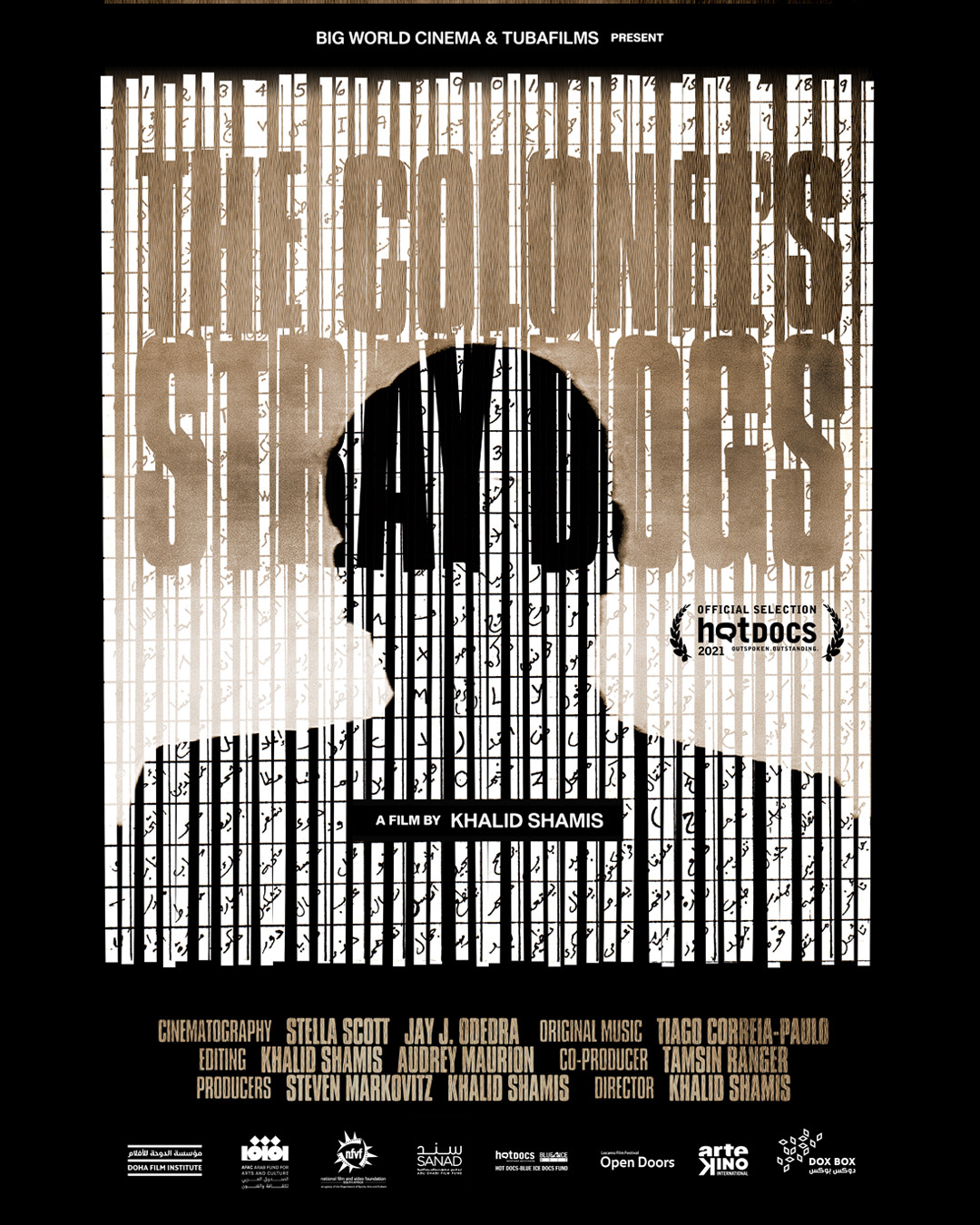
Libyan/South African director Khalid Shamis’ new documentary film The Colonel’s Stray Dogs:

For over 40 years Ashur Shamis was a member of the Libyan Muslim Brotherhood and Colonel Gadaffi’s enemy number one in exile with a $1m bounty on his head. His dream of a ‘free’ Libya almost cost him his life and his family. When the 2011 revolution rid the country of their dictator, Ashur finally returned home to a hero’s welcome but soon found a land vastly different to the one he left. As Libya slipped into civil war he was rejected by the new country and found himself exiled once again. His dream of Libya now distorted, Ashur’s son uncovers a dangerous past and questions the choices his father made to inherit the mess Gadaffi left.

Online archive of al-Inqadh

A number of old issues of the well-known Libyan opposition magazine Al-Inqadh (الانقاذ) are now available online. The main publication of the National Front for the Salvation of Libya (الجبهة الوطنية لانقاذ ليبيا), one of the main opposition groups to the regime of Muammar Qaddafi especially in the 1980s and early 90s, Al-Inqadh circulated widely among the Libyan diaspora in the US, UK, and Europe. It is now archived on the website of the National Front Party, which seems to view itself as the successor to the NFSL.

Collage of six different covers of the opposition magazine Al-Inqadh

The back issues are well worth browsing—they are a monument to the opposition movements of the 1980s and contain some very interesting political art and poetry.

Research Roundup Fall 2018

Back for your seasonal research roundup, containing sources on several totally un/under-researched areas.

After the Tunisian popular revolution of 2011, and during the civil war in Libya that followed, roadside stands near the Tunisian–Libyan bor- der near Remada, Tunisia sold nationalist souvenirs of the revolution with the reinstated Libyan flag (first flown from 1951 to 1969) as well as the Tunisian flag1. Post–independence governments in North Africa have been deeply invested in enforcing the borders they inherited from colonial regimes. Even when borders «were originally “artificial” creations, they have long since become an integral part of the lives of borderlanders. . . borders have an impact on social identities and have come to “demarcate mental space”» (Nugent and Asiwaju 1996, p. 10 in Lentz 2003, p. 274). International borders, for many people, are deeply meaningful and naturalized through socialization in school lessons, bureaucratic administrative procedures, economic systems, and even children’s play. In refugee camps and shelters on the Tunisian side of the border, Libyan children made homemade flags to decorate their temporary dwelling spaces. While «borders and borderlands define ourselves and others» (Lloyd et al 2010, p. 703 and Paasi 2003), a border in and of itself means nothing without human mediation, notably in the dual forms of policing and narration. As I explain in this article, during the first years of the Libyan civil war, the selves and others people were mediating were not only national — Tunisian and Libyan — but also ethnic: minority Amazigh (Berber) and majority Arab.

***

Historically, connections between southern Libya and northern Chad have always been close, if only due to the fundamental need for connectivity that characterises most Saharan economies. Drawing on so far mostly inaccessible archival records and oral history, this article outlines the implications of this proximity, arguing that it led to intimate entanglements within families and an ongoing confusion of property rights. This in turn resulted in increased rather than diminished hostility during the years of war that opposed the two countries, as people attempted to define uncertain boundaries, and were – and still are – competing for access to similar resources, moral, symbolic, social, and economic.

***

This article will challenge the currently accepted notions of weak British consular presence, influence and activity in the southern Mediterranean during the period 1795–1832 through a case study of the careers of three successive consuls in the Regency of Tripoli: Simon Lucas, William Wass Langford and Hanmer Warrington. Utilising the official cor- respondence of these agents, the extent of the consular bridgehead in the capital, Tripoli, will be investigated, and how, through these consular and diplomatic agents, it served to define imperial interests and activity at the frontiers of empire. Moreover, the overlapping personal and professional networks within which the consuls embedded themselves, the role of enterprising missions and the development of an intelligence-gathering network will be of central significance in understanding the consequent ruptures in the social and political fabric of the Regency of Tripoli. British imperial interest in North Africa during and immediately post the Napoleonic era remains under-studied and misunder- stood within both British diplomatic and imperial history. This article challenges the exist- ing literature that underestimates the diplomatic as well as consular power exercised by the British consuls to Algiers, Tunis and Tripoli, as well as the importance of these three Barbary regencies to wider strategic interests in the Mediterranean.

***

Zarrugh, Amina. ‘You Exile them in their Own Countries’: The Everyday Politics of Reclaiming the Disappeared in Libya. Middle East Critique 27(3), pp. 247–259.

Located in Libya’s capital city of Tripoli, Abū Salīm Prison has become suspended in Libya’s national collective memory as the site of a contested prison killing in 1996. During the late 1980s and early 1990s, the prison hosted many prisoners of conscience, namely individuals who forcibly had been disappeared because security personnel suspected them of opposing the regime of Mu’amar Qadhdhafi. Drawing on interviews with their family members, I trace how Libyan families contested the state’s violence and forced disappearance through everyday behaviors, such as inquiring about their relatives’ whereabouts and visiting Abū Salīm Prison. The article contributes to an ongoing discussion within sociology, anthropology, and area studies about the significance of small-scale acts of resistance as forms of political action. Disappearance not only pulled people apart, but also brought them together, often around the same spaces that were intended to disenfranchise them.

***

For a change, an article which looks, at least in part, at the Libyan south (and is open-access!):

Tabib, Rafaa. 2015. Mobilized publics in Post-Qadhafi Libya: the emergence of new modes of popular protest in Tripoli and Ubari. Mediterranean Politics 21(1), pp. 86–106

As the formal transformation process in Libya faltered and political and local elites were locked in contestation over shares of power and resources, spaces opened for non-formal movements of citizens pushing to exert influence on the political sphere, and to pursue their interests vis-à-vis state institutions with hitherto unknown forms of contentious action. This article investigates two distinctively different examples of such initiatives: on the one hand, the movement against militia rule and the extension of the mandate of the General National Congress (GNC) that emerged in Tripoli in the fall of 2013 and organized demonstrations for new elections throughout the spring of 2014. On the other, a movement for more equitable access to resources and citizenship rights that emerged in the provincial town of Ubari in the Fezzan region and gained momentum in late 2013 through the (largely peaceful) disruption of oil production. The chapter argues that through their mobilization capacities and innovative forms of contentious action, both movements compelled political and institutional actors to recognize mobilized publics as a force to reckon with, and modify the ways they interact with citizens and the general public.