Tag Archives: archives

Archive: Jan Vansina and Libya

Jan Vansina was a Belgian historian who taught in the US for many years and is considered by many to one of the major figures of African history in the 20th century, pioneering the use of local oral traditions as important historical sources.

In the 1970s he became involved with Libyan scholars and played an important role in setting up what is now the Libyan Studies Center and designing its large-scale project to collect oral histories from participants in the resistance to Italian colonial rule and survivors of the Italian concentration camps. The connection to Libya was undoubtedly through his being on the PhD committee of Mohamed Jerary, one of the founders and long-term director of the Center (thanks to a comment on this post for the tip).*

Although Vansina did not end up writing much or anything about his work with the Libyan oral histories projects and time in Tripoli, the Jan Vansina Papers, held at Northwestern University, contain notes and information about his participation, including some interview designs and trainings he offered to Libyan historians:

Research Notes Libya: Oral History of the Italo-Libyan war (1911-1933)-boxes 2-3: This section contains research methods, procedures, and the interview tool used to collect the oral histories. Also included are maps, general information on the Libyan Studies Centre, and related essays on Libya.

The archive also contains lots of other material about his teaching and research, and exploring it may shed some light on how he became connected with the fledgling Center and helped shape their field research program.

There are also some photos from Libya taken by Vansina held in the University of Wisconsin-Madison Libraries Digital Collections.

*Jerary’s PhD thesis was on the ancient history of Libya, not on oral traditions.

Archive: British Institute for Libyan and Northern African Studies

The British Institute for Libyan and Northern African Studies (BILNAS), formerly known as the Society for Libyan Studies from 1969 to 2022, supports research, scholarship, and collaboration relating to the history, archaeology, culture, art, and literature of Libya and Northern Africa.

The BILNAS Archive. Photograph by Design Services, University of Leicester.

The BILNAS Archive has been housed at the University of Leicester since 2012. It holds a number of documents, photographs, drawings, maps, plans, and a great deal of unpublished data relating to archaeological projects in Libya from the early 20th century onwards undertaken mainly by British scholars, sometimes in collaboration with Libyan colleagues, in sites such as Sabratha, Lepcis Magna, Ghirza, the Fezzan, Tocra, Cyrene, Sidi Khrebish, and El Merj. The archive can be browsed online, where it is mostly organized by person or by excavation. Materials can be consulted in-person at the University of Leicester.

The materials from some of the major excavations are regularly being digitized and made openly available via Archaeology Data Service. So far, material from the Sabratha excavations of 1948-51 are online.

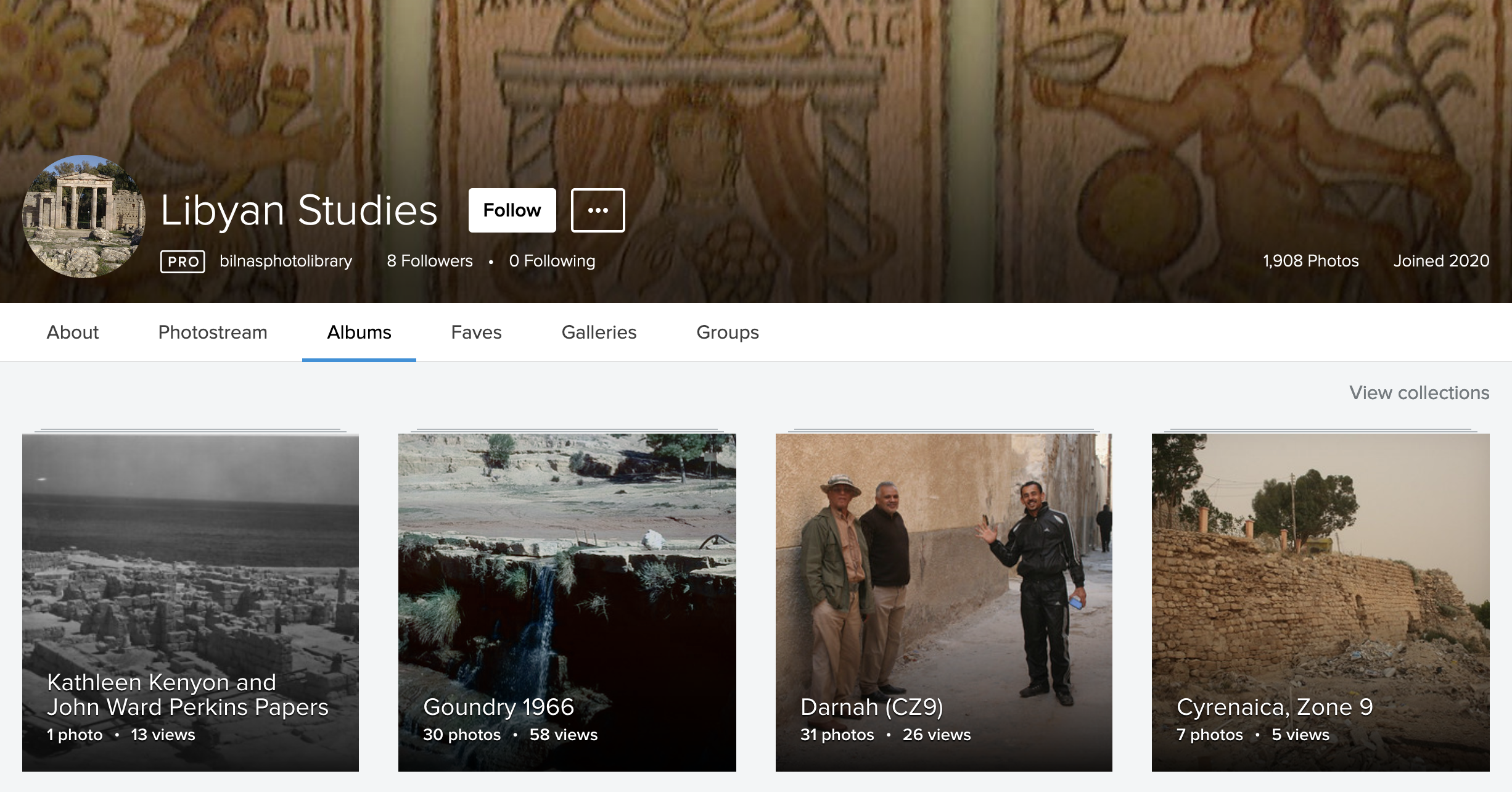
BILNAS has also made an extensive collection of photographs from its archives available online at FLICKR. The photos are historical as well as more recent.

Photographic Archives of the “Italo-Turkish War”

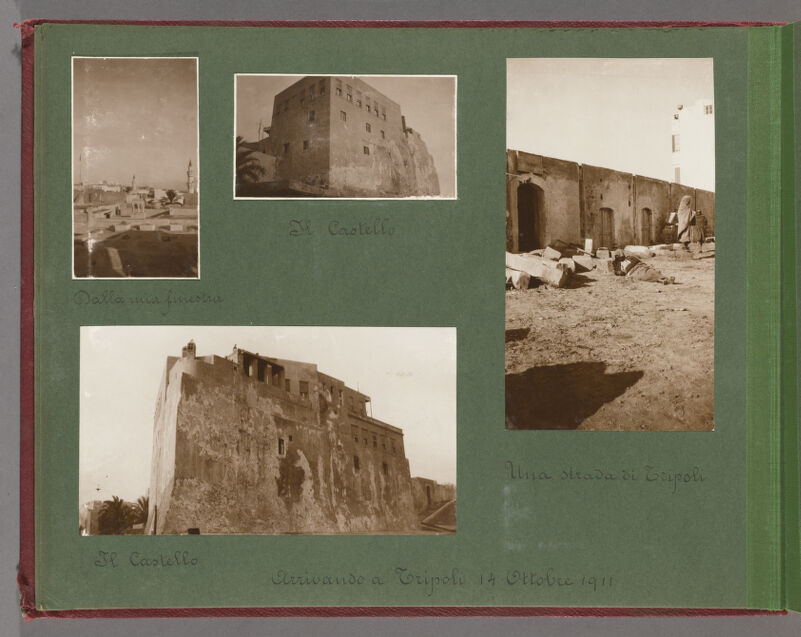
The Harvard library holds several private photographic albums documenting the Italian invasion of Libya in 1911-12, sometimes referred to as the “Italo-Turkish War”. The albums belonged to individuals: Count Pompeo Campello, a professional photographer and army officer, Carlo Caneva, general of the armed forces in Libya, and Angelo Cormanni, soldier working in the telegraph unit.

Pompeo di Campello (1874-1927): “Campagna di Libia (9 ottobre 1911 – 28 maggio 1912)”

Carlo Caneva (1845-1922): “Guerra Italo-Turca 1911-1912 / Ricordi di Bengasi”

Angelo Cormanni: “Guerra di Africa”

Some studies have been written about these albums:

  • Dalila Colucci, Images of Propaganda: Emotional Representations of the Italo-Turkish War 2021, “Close Encounters in War and the Emotions.” Eds. Gianluca Cinelli, Patrizia Piredda, and Simona Tobia. Close Encounters in War 4 (2021), 75–122.
  • Luca Mazzei, “L’occhio insensibile. Cinema e fotografia durante la prima Campagna di Libia 1911-1913,” in Fotografia e culture visuali del XXI secolo, vol. 2, ed. Enrico Menduini and Lorenzo Marmo (Rome: Roma Tre-Press, 2018).

Publications of the Instituto Agronomico per l’Oltremare on Colonial Libya

Thanks to the generosity of our colleague (and fellow archive diver) Amalie for sharing the below resources.

The Istituto Agronomico per l’Oltremare (now part of the Agenzia italiana per la cooperazione allo sviluppo) in Florence, Italy—itself a fairly major actor in Italian colonial expansion in north and east Africa—compiled some interesting documentation on Italian settler colonial agriculture and land development efforts in Libya based on its own archives.

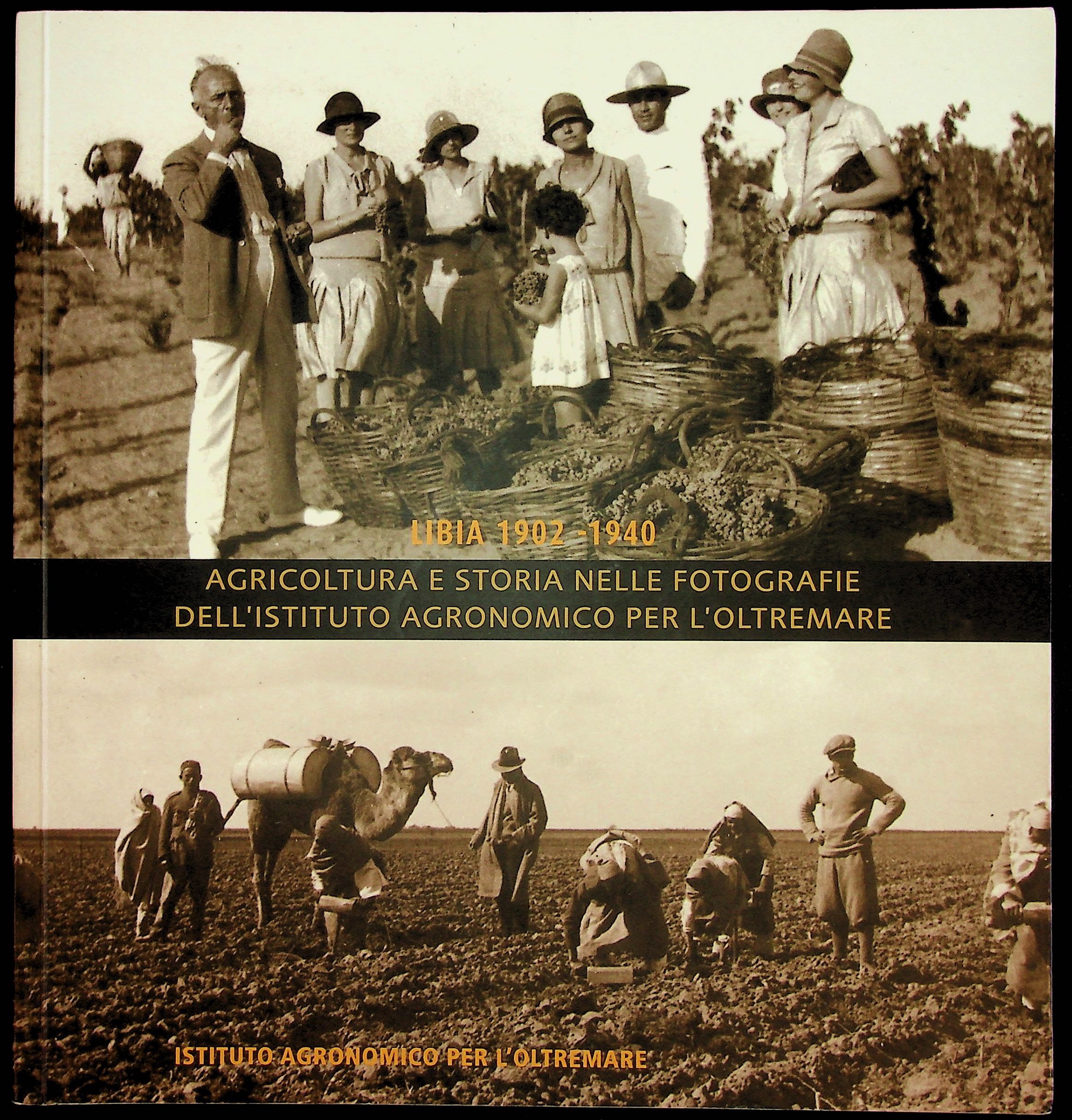
Libia 1902-1940: Agricoltura e storia nelle fotografie dell’Istituto Agronomico per l’Oltremare, a cura di Massimo Battaglia e Fabrizia Morandi (IAO, 2015)

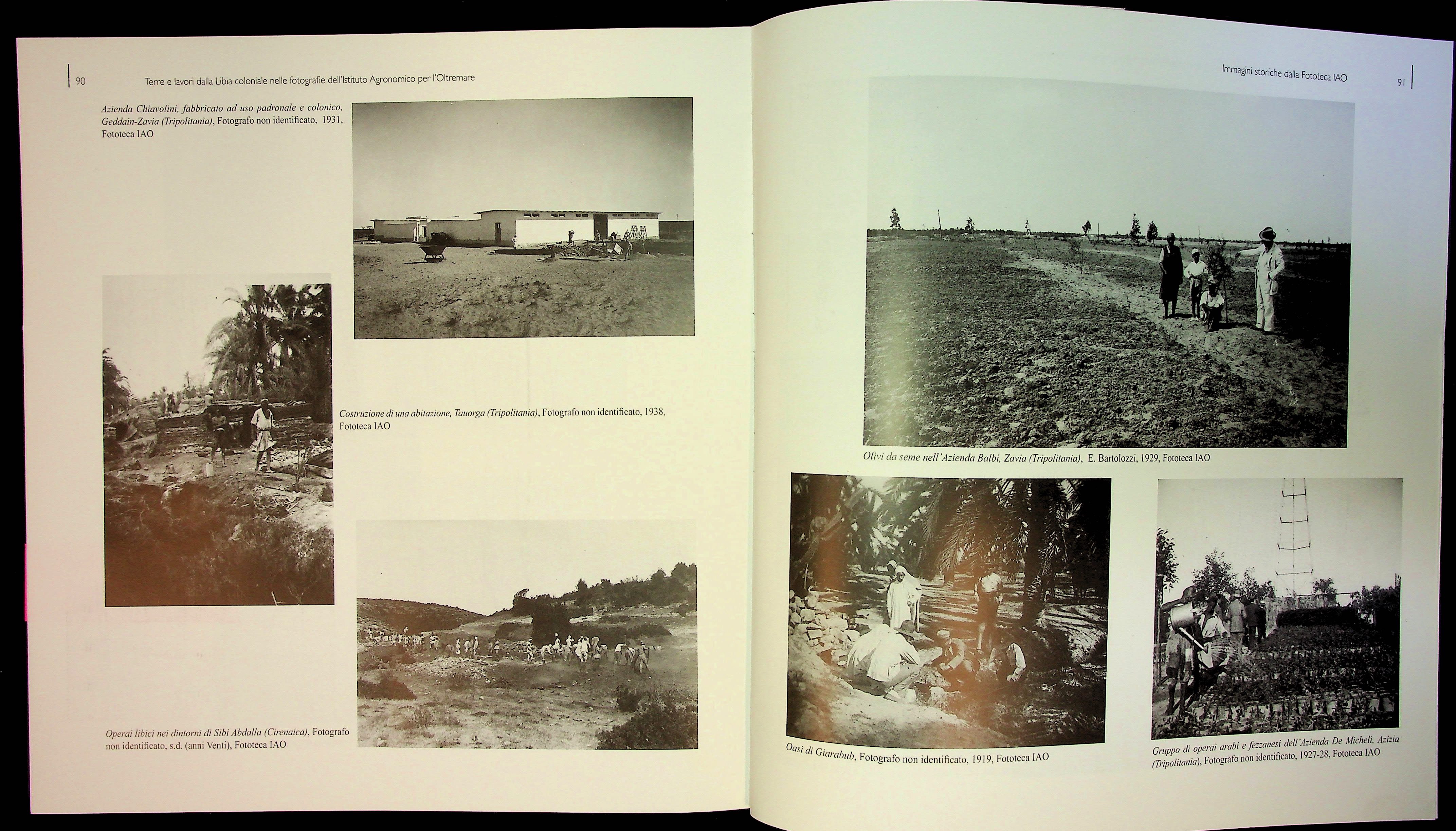
Terre e lavori dalla Libia coloniale nelle fotografie dell’Istituto Agronomico per l’Oltremare, a cura di Nicola Labanca (IAO, 2015)

North African Audio Archives (1)

As libraries, museums, and other institutions catalog and digitize holdings from 19th and 20th century European explorers, scholar, or colonial administrators in the Middle East or north Africa, a number of audio archives have come to light. These include recordings made on the older media of wax cylinders or shellac discs, or the slightly newer media of vinyl records or even magnetic tape. Some recordings were made on site while others were made in Europe. In this post and and a few subsequent posts, my goal is draw to attention to some of these recently-available audio archives.

Berliner Lautarchiv

The Lautarchiv (“sound archive”) at the Humboldt University in Berlin contains several thousand recordings on wax cylinders and shellac discs dating to the early 1900s. Among these are recordings made in a prison camp set up near Berlin during World War 1 for prisoners from the French and British armies who originated in the north African and south Asian colonies. A commission was set up to take advantage of the internment of speakers of many different languages, and hundreds of recordings on shellac discs were made for the purpose of linguistic study. Within this group of recordings from the prison camp are about 120 recordings of northern African speakers of Arabic and Berber varieties. The contents range from improvised narratives, poems, or songs, to the repetition of words and phrases from a dialectological questionnaire. Dating from 1916 to 1918, they are probably the oldest recordings of these languages; certainly the oldest known recordings made for linguistic purposes. Although all the holdings of the Lautarchiv have been digitized, they are not freely available online due to the sensitive circumstances of the internment and recording, but can be consulted in-person in Berlin by appointment.

The Lautarchiv has made available a sample recording of a poem critical of the war from a prisoner originating in Monastir, Tunisia. For a linguistic study of the recordings from a prisoner originating in Medenine, Tunisia, which I recently collaborated on with a colleague, see here. Otherwise, the north African records have not been the subject of much research until now.

Centre de Recherche en Ethnomusicologie

In the Collection Mission Henri Lhote held in the CREM are 511 (!) almost entirely unpublished magnetic tape recordings made during the 1948 expedition of Henri Lhote (1903-1991), a French explorer and hunter of primitive art, in the Hoggar region of Algeria. The recordings made during that trip contain a wide selection of materials, from found sounds to songs, poetry, lullabies, narratives, and conversations, mostly in the local Tuareg variety with some in Arabic as well. All of the recordings are digitized and can be listened to online.

Early Modern Libyan Manuscripts in the Bibliothèque Nationale de France (sources for the study of early modern Libya i)

A great deal of historical writing on early modern Libya depends on sources written by Westerners, whether colonial archival documents, or travelogues and journals written by travellers, British diplomats’ relatives, and so forth. Only recently are local documentary archives coming to light (e.g. the ones in Ghadames). But there are also Libyan historical texts from before the colonial era scattered in collections in Libya and elsewhere. Here and in some upcoming posts I’ll try to post some brief guides to these resources, many of which still require study and publication.

The Bibliothèque Nationale de France in Paris has a few interesting Libyan historical manuscripts (described in William MacGuckin de Slane’s Catalogue des manuscrits arabes, pp. 339-340). Fortunately, several of the manuscripts have been digitized and are freely available to download and read. Here is a brief description of each manuscript. Continue reading