Tag Archives: books

Book: Benghazi Through the Ages | بنغازي عبر التاريخ

The Libyan historian Hadi Bulugma produced a series of books in Arabic on the history of Benghazi entitled بنغازي عبر التاريخ. He also made an abbreviated English version, the first volume of which (I am not sure that the second and third volumes were ever finished) concentrates on the geography and geographical history of the city. Here is a PDF of the book.

Bulugma, Hadi. 1968. Benghazi through the Ages. Volume I. Dar Maktabat al-Fikr, Tripoli.

Book: A Bibliography of Libyan Sociologists

As a research aid, the Libyan sociologist Mustafa al-Tir (مصتفى عمر التير) published a bilingual English-Arabic bio-bibliography of sociologists and anthropologists in Libya in the early 1980s. In it, he writes:

“Producing bibliographies and indexes, whether general or specialised, is an important concern of those organising or propagating knowledge in society…Bibliographies and indexes are, of course, essential for the development of scientific research…

I have noticed on more than one occasion that many Libyan planners and scholars ignore sociological studies which have been carried out in their own society…and that some planners seek the help of specialised experts in social sciences from abroad while native experts, no less competent and probably much more so, because of their knowledge of the language, values and systems of this society, are available…The wrong lies in their complete negligence of the works of their native colleagues.

I believe that the negligence on the part of many students, planners and specialists of the works of Libyan researchers in social sciences is due, partly at least, to their failure to recognise the availability of local experience and their ignorance of the works of Libyan researchers.”

Attir, Mustafa O. 1980(?). The Libyan Sociologists, anthropologists and social works and their scientific research. Arab Development Institute: Tripoli.

 مصتفى عمر التير. 1980. المتخصصون الليبيون في علوم الاجتماع و الانسان و الخدمة الاجتماعية و نشاطهم العلمي. معهد الانماء العربي: طرابلس

A PDF of the work can be found here.

Book: Libyan Fairytales | خراريف ليبية

Perhaps the only such collection to be published in Libya in recent years, خراريف ليبية (Libyan Fairytales) is an anthology of fairytales collected in the Jabal Akhdar region of eastern Libya by the folklorist and short-story writer Ahmad Yusuf ‘Agila.

The book presents thirty-four fairytales, many of which— such as ام بسيسي or نقارش or عويشة بنت السلطان—are well-known to Libyans. ‘Agila also includes a lexicon of the more unusual words used in the tales; some are truly uncommon, while some (such as شرز for سرج ‘saddle’) are simply the local pronunciation of a common word.

Many younger-generation Libyans, or those who grew up in the diaspora, may not have heard many fairytales as children. This book is particularly useful for those groups, who may want to familiarize themselves with the tales their parents grew up hearing but no longer remember. Also, because ‘Agila attempts to render the eastern Libyan dialect as accurately as possible, the tales can be read aloud to friends and family members—thus keeping at least some Libyan fairytales alive.

‘Agila’s introduction to the book, as well as samples of some of the fairytales can be found at this link.

Poetry of Khaled Mattawa | دواوين شعر خالد مطاوع

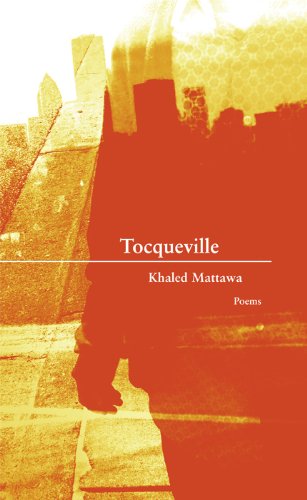
Khaled Mattawa is a renowned Libyan-American poet, in addition to being a prolific translator of Arabic poetry into English and scholar of Arabic literature. He is a member of the American Academy of Poets and was recently in the news for being named a recipient of the MacArthur “genius grant” fellowship. Mattawa has published four books of his poetry in English:

Tocqueville (2010)

Amorisco (2008)

Zodiac of Echoes (2003)

Ismailia Eclipse (1995)

In the aftermath of killing of Libya’s former dictator, he wrote the  poem, “After 42 Years”. You can listen to him reading it here.

Contemporary Art from Libya

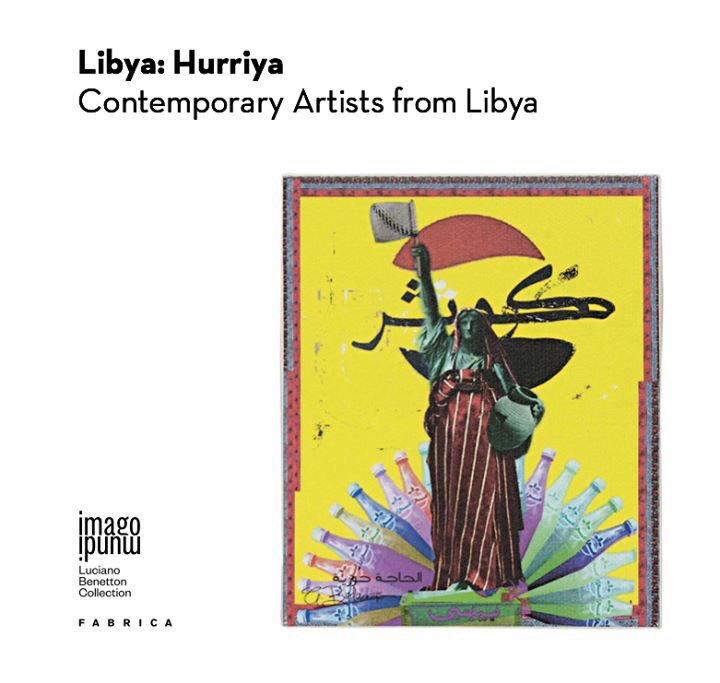
This week a major achievement for the Libyan arts has been accomplished: the publication of Libya:Hurriya, the Imago Mundi catalog for Libyan contemporary art. Under the curatorship of the tireless Najlaa Elageli and Noon Arts, the Libyan contribution to the Benetton Collection’s contemporary art project—producing an illustrated catalog of contemporary artists from every country—has finally been realized. For the first time, there will be a widely-available book containing the work of Libyan artists. Libyan art has often been overlooked in works on, and exhibitions of, contemporary Arab art, and information on the artists and their work is incredibly hard to find. But now, everyone can have this beautiful book in their home and/or exhibit space, helping to spread the knowledge that interesting art is being made in Libya and by Libyans too.

The work selected for the catalog can be browsed online here and includes dozens of artists, some well known to Libyans and some less well known. Congratulations to Najlaa Elageli and all the artists on this milestone!

The catalog is available for online purchase at an extremely reasonable price and can be shipped anywhere in the world.

Book: The Arabic dialect of Tripoli | لهجة طرابلس العربية

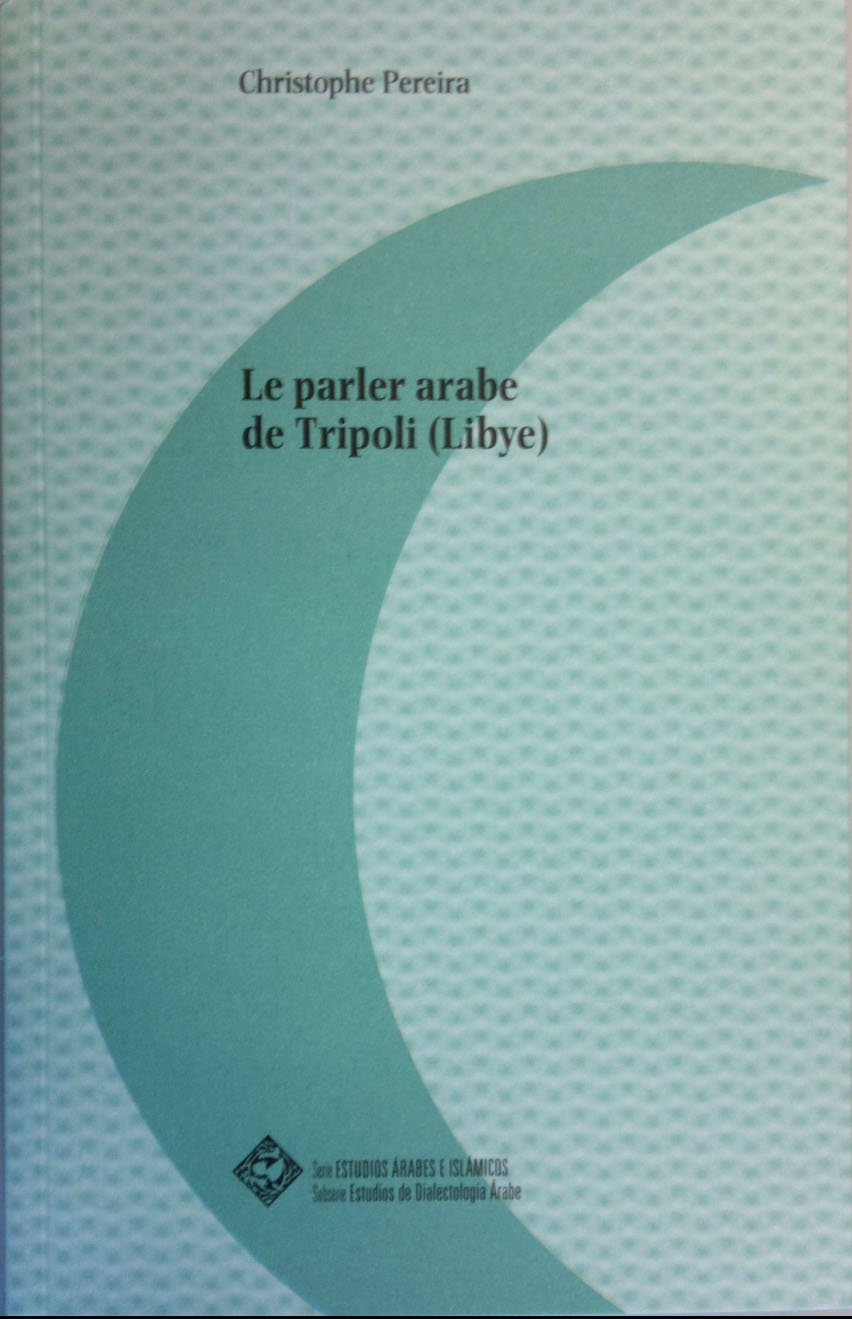
pereira-parler-arabePereira, Christophe. 2010. Le parler arabe de Tripoli (Libye) | لهجة طرابلس العربية. Estudios de Dialectología Árabe 4. Zaragoza.

This book is the most recent linguistic description of the Arabic dialect spoken in Libya’s capital, Tripoli. Based on fieldwork over the course of several years, it provides a detailed look at the dialect of Tripoli from the viewpoint of Arabic dialectology, but goes beyond the usual approaches in including a thorough description of syntax. Furthermore, it is the only book to be written on a variety of Arabic in Libya since the early 1980s. Christophe Pereira is a Maître de Conférences at INALCO in Paris.


Book: The Arabic dialect of the Jews of Tripoli | لهجة يهود طرابلس العربية

The city of Tripoli in western Libya was home to a thriving Jewish community until about the early 1970s, when various political and social factors pushed the remaining members of the community to emigrate, completing the process of Libya losing its Jewish communities begun several decades earlier. Now, Jewish Libyan communities are still thriving, but in the diaspora, principally in Italy and Israel.
Since many members of the community still speak their Arabic dialect at home, it is still possible to do linguistic fieldwork and describe Jewish Libyan dialects. However, so far no dialects except that of Tripoli have received attention.

The most important study of Jewish Libyan Arabic is The Arabic dialect of the Jews of Tripoli (Libya) by Sumikazu Yoda (Harrassowitz, 2005). Yoda’s work is the only detailed description of a Libyan Jewish dialect that exists. Although written for a linguistic audience, it also contains the transcription and translation of a fairy tale (“The Sultan and the three sisters”) as well as a glossary, both of which are useful for the non-linguist reader who might want to get an idea of what the Jewish dialect of Tripoli was like.

Fortunately, Yoda also made his recording of that fairy tale available online, which you can listen at this link. It was narrated by Mere Hajjaj Liluf (میري حجاج ليلوف), who was born in Tripoli in 1925, and recorded in Israel in the 1990s.

For those who speak Libyan Arabic, the main differences to note are that t ت becomes ch چ, h ه disappears, and q ق is pronounced q and not g. So for example انتا is pronounced انچا and تعالى sounds like چَعْلا che3la. Or instead of hada هدا you hear ada ادا. I’d be interested to know how much is understandable!

Book: Libya between Ottomanism and Nationalism

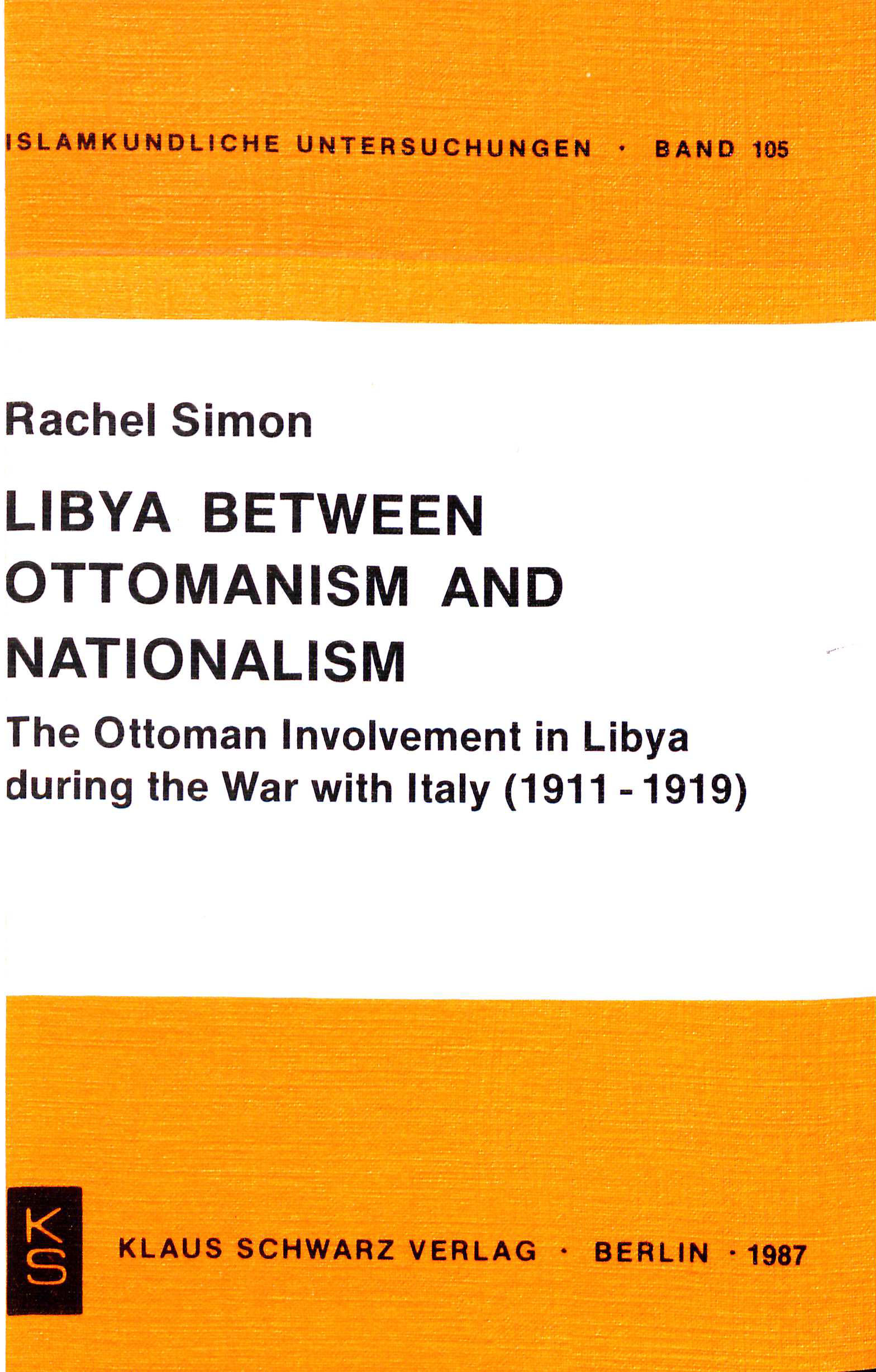
simon-libya-ottomanism-nationalismRachel Simon, Libya between Ottomanism and Nationalism: The Ottoman involvement in Libya during the War with Italy (1911–1919). Klaus Schwarz: Berlin (Islamkundliche Untersuchungen, vol. 105), 1987.

Libya between Ottomanism and Nationalism is a historical study dedicated to a period which saw the Ottoman empire’s control of North Africa wane while Italy attempted to establish a colony in Tripoli and Cyrenaica. It surveys the political makeup of the late Ottoman provinces that became Libya, the Ottoman involvement in Italy’s conquest of those territories, and chronicles the resistance against colonization in Libya, looking at both Tripoli and Cyrenaica as well as Libyan resistance movements and the Ottoman support thereof.

Since this title has been out of print for many years, the publisher (Klaus Schwarz Verlag in Berlin) has kindly given permission to put a PDF of the entire book on this blog. You can find it here.

A review of the book by Lisa Anderson can be found at this link.

Book: Caricatures of Muhammad az-Zwawi | كاريكاتير محمد الزواوي

Muhammad al-Zwawi (محمد الزواوي) was a Libyan caricaturist who lived from 1936 to 2011. Over a long career mainly in Libya, he produced a vast number of caricatures which commented on everything from social and political life in Libya, to Libya’s relationships with other countries, to politics in the world at large. His relationships with the powers-that-were were often complicated, as he critiqued a wide range of social and political issues. But his caricatures concerning Libya’s politics with other Arab nations were regularly published in the regime’s main newspapers, especially in the 1970s and 1980s.

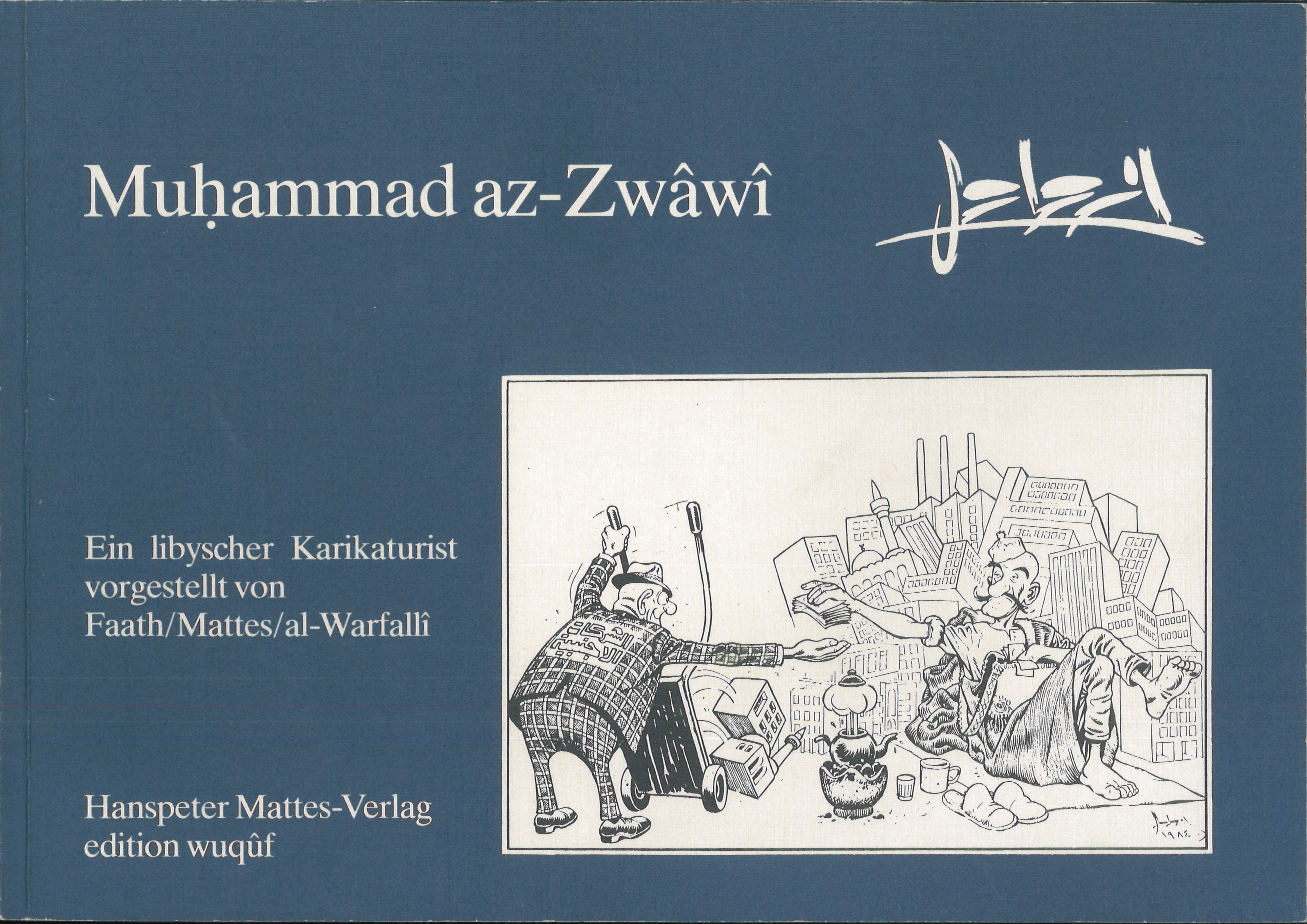
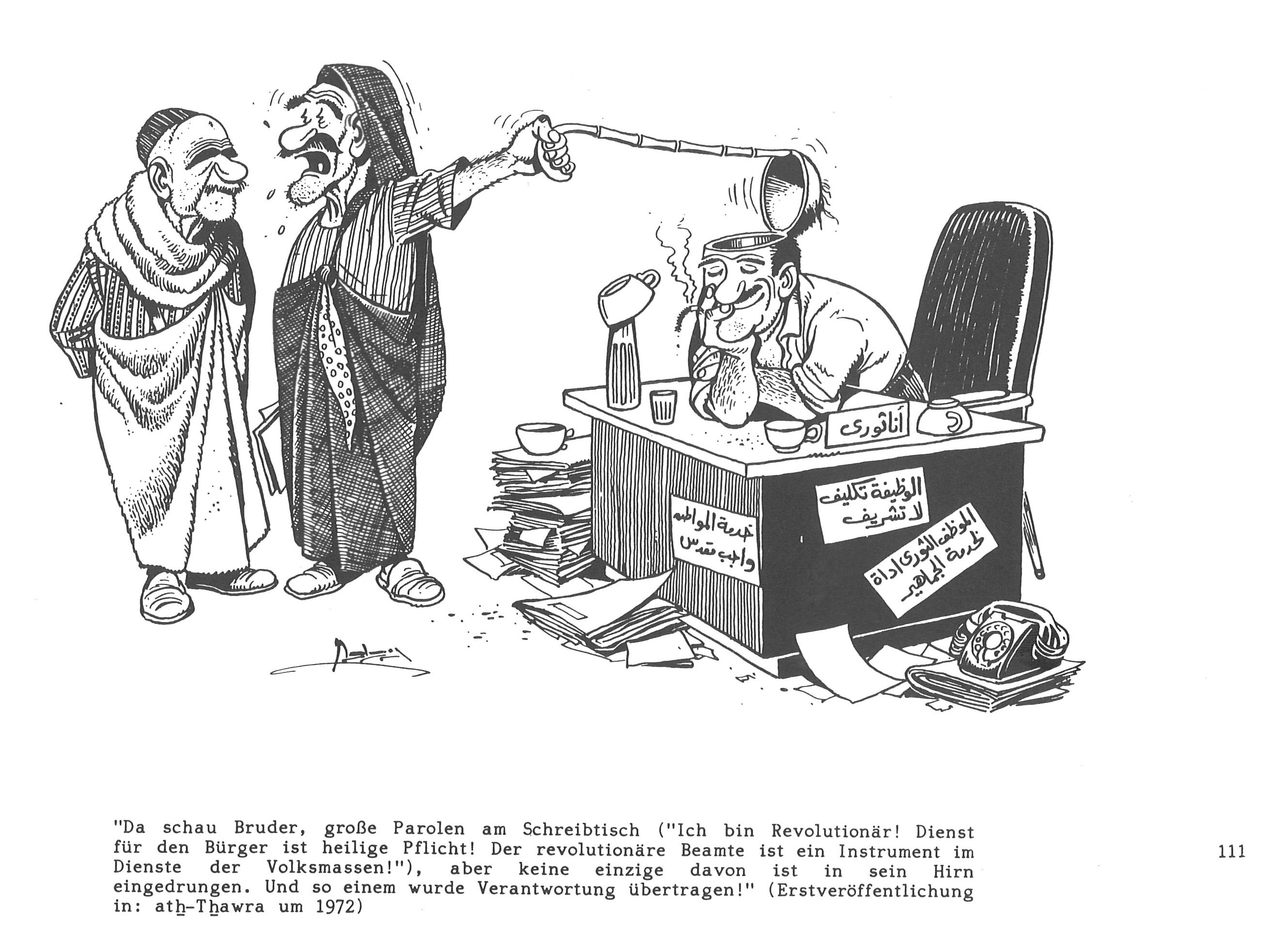
zwawi-1The only publication of, or on, al-Zwawi’s work in the West that I know of is a little-known book produced in German in 1984 by a small imprint called Edition Wuqûf, in collaboration with al-Zwawi himself. The book is divided into two parts. Part One includes three main chapters: I. Overview of the the history and present situation of caricature in Arab lands, II. Caricature in Libya, III. Remarks on the historical and social background of al-Zwawi’s caricatures. Part Two contains something like over a hundred caricatures with German captions (original Arabic text within the caricature is left as is). Here is an example:

zwawi-3

“Look at the big words on the desk (I am a revolutionary! Serving the citizen is a sacred duty!), none of which have made it into his head.”

The main Arabic language publication of his work is an album with over 300 of his caricatures entitled الوجه الاخر ‘The Other Face’ that appeared in Libya in 1973.

wajh-akhr

The Other Face. Social and Political (Drawings) 1966-1972.

Online galleries of his work can be found here and here.

Book: The State and Social Transformation in Tunisia and Libya, 1830-1980

Lisa Anderson, The State and Social Transformation in Tunisia and Libya, 1830-1980. Princeton University Press (1986).

Publisher’s blurb: The book traces growing state intervention in the rural areas of Tunisia and Libya in the middle 1800s and the diverging development of the two countries during the period of European rule. State formation accelerated in Tunisia under the French with the result that, with independence, interest-based policy brokerage became the principal form of political organization. For Libya, where the Italians dismantled the pre-colonial administration, independence brought with it the revival of kinship as the basis for politics.

This is one of the few books (along with this one) about Libyan history to be based on extensive research with primary sources in Libyan, Ottoman, and European archives.