The latest issue—the Heirloom Edition—of Afikra’s quarterly online magazine Daftar has a couple of articles on Libyan food: one on ‘asida by the artist Marwa Ben Halim and one on rishta by Hala Ghellali (author of a recent book on Libyan jewelry).
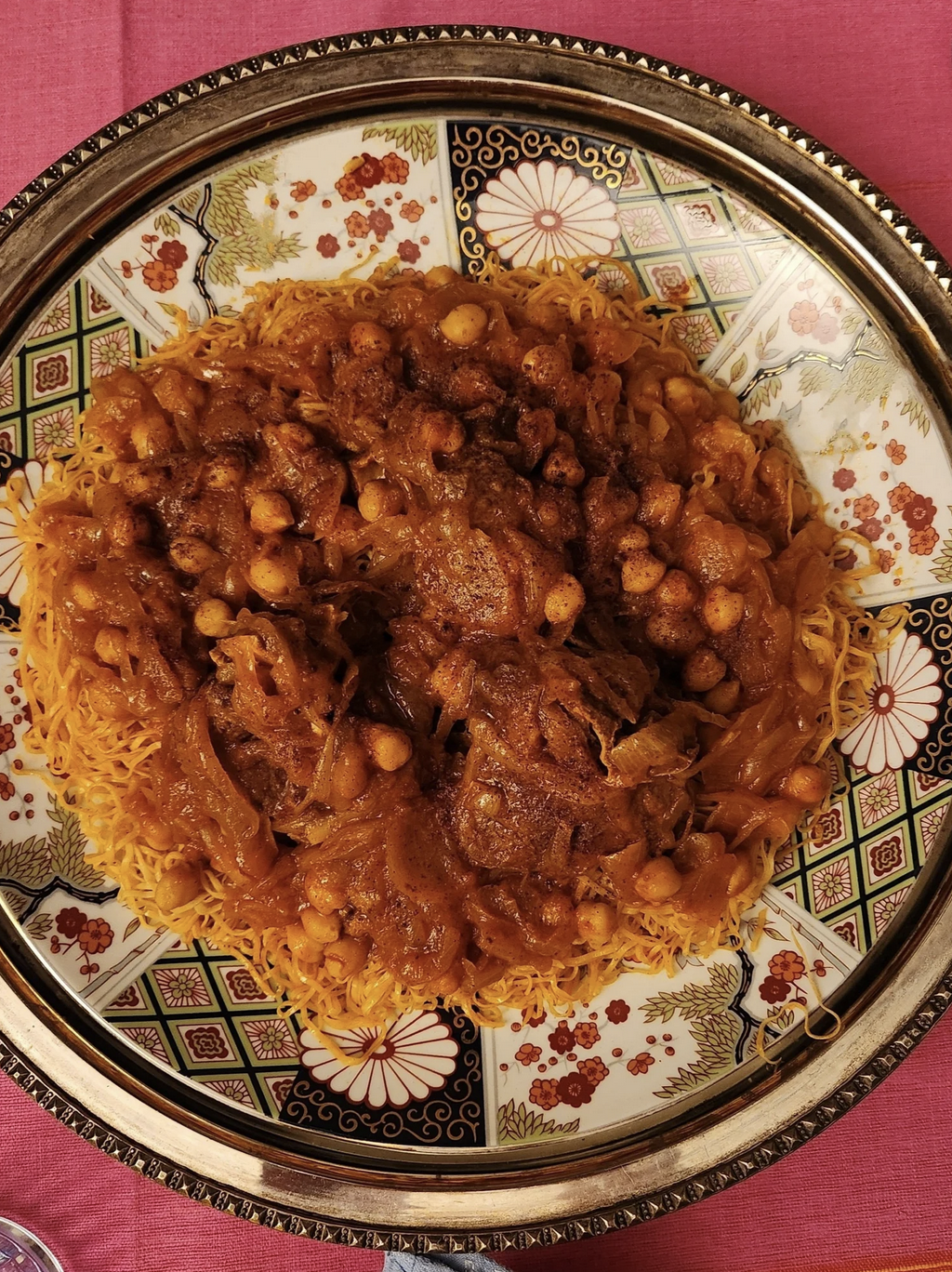
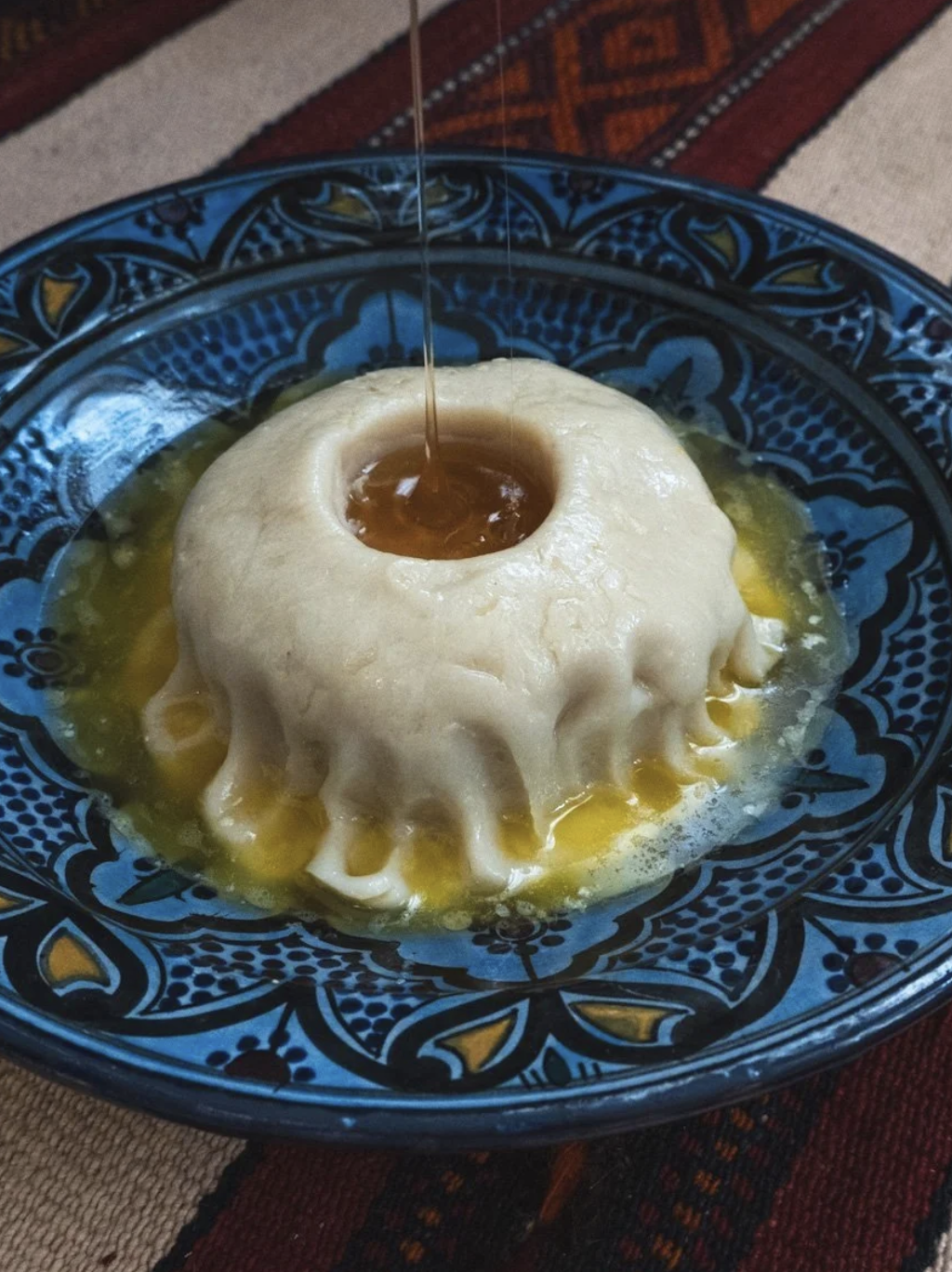
The latest issue—the Heirloom Edition—of Afikra’s quarterly online magazine Daftar has a couple of articles on Libyan food: one on ‘asida by the artist Marwa Ben Halim and one on rishta by Hala Ghellali (author of a recent book on Libyan jewelry).
The project Hessa6 (حصة سادسة) is “dedicated to unlocking the power of art to bring about social change through a range of activities that include researching, archiving, producing and promoting Libyan art.” With support from the Arab Fund for Culture and Arts, Hessa6 has released a new album entitled دسكة غير مستوردة “Unimported Disc” (click here to listen on Spotify). Described as “an electrifying musical project that brings together an eclectic mix of artists, rappers, and bands from across Libya”, the new album presents diverse, homegrown sounds in multiple genres, with lyrics in Arabic and Amazigh varieties, and incredible cover art for the album and for each track by Moneer Alwerfally.


The tracks and their descriptions as provided by Hessa6 on their Instagram page are below:
Continue readingHala Ghellali’s long-awaited book on Libyan jewelry is finally in print! An account based on the author’s own collections and her long personal experience and interaction with artisans of bygone generations, this will be the resource on the topic for a long time. Cover photo by Sasi Harib.

Publisher’s description: Hala Ghellali was eighteen years old when her father first took her to the suq to buy her first silver bracelets. They visited traditional jewelers in the madina al-qadima, the old walled city of Tripoli. This single event in 1975, ignited her lifelong passion for traditional jewelry and costume items and she has been collecting objects and stories ever since. Her unique stories, personal observations, research and firsthand information about jewelry design and silversmithing fill this book. ‘Jewelry and Adornment of Libya’ aims to share with its readers a lifetime passion for the jewelry made in Tripoli. It includes a section dedicated solely to the role of jewelry and costume in Tripoli with narratives of traditional weddings, and traditions linked to jewelry gifting in the city. The book is dedicated to the local jewelers and masters of weaving and embroidery who have almost all disappeared, their art and skills not being passed on to the present generation.
Ghurfa 211 is a new Arabic-language periodical focusing on arts and culture published by the Arete Foundation for Arts and Culture in Libya.
Its name comes from the work “Season of Stories” by Khalifa al-Fakhri, in which “he writes that Room 211 is a refuge during the night-time winter rains. When the cafes shake off their patrons and the sitting-rooms their guests, “the only thing you have is to return to Room 211″ where there is loneliness and the gathering words pulsating in the chest until a charge that sifts the feelings fills the body and from it writing begins.”
The first two issues appeared in 2023, containing poetry, short fiction, commentary, essays, and letters by Libyan writers (some translated from English and other languages into Arabic).
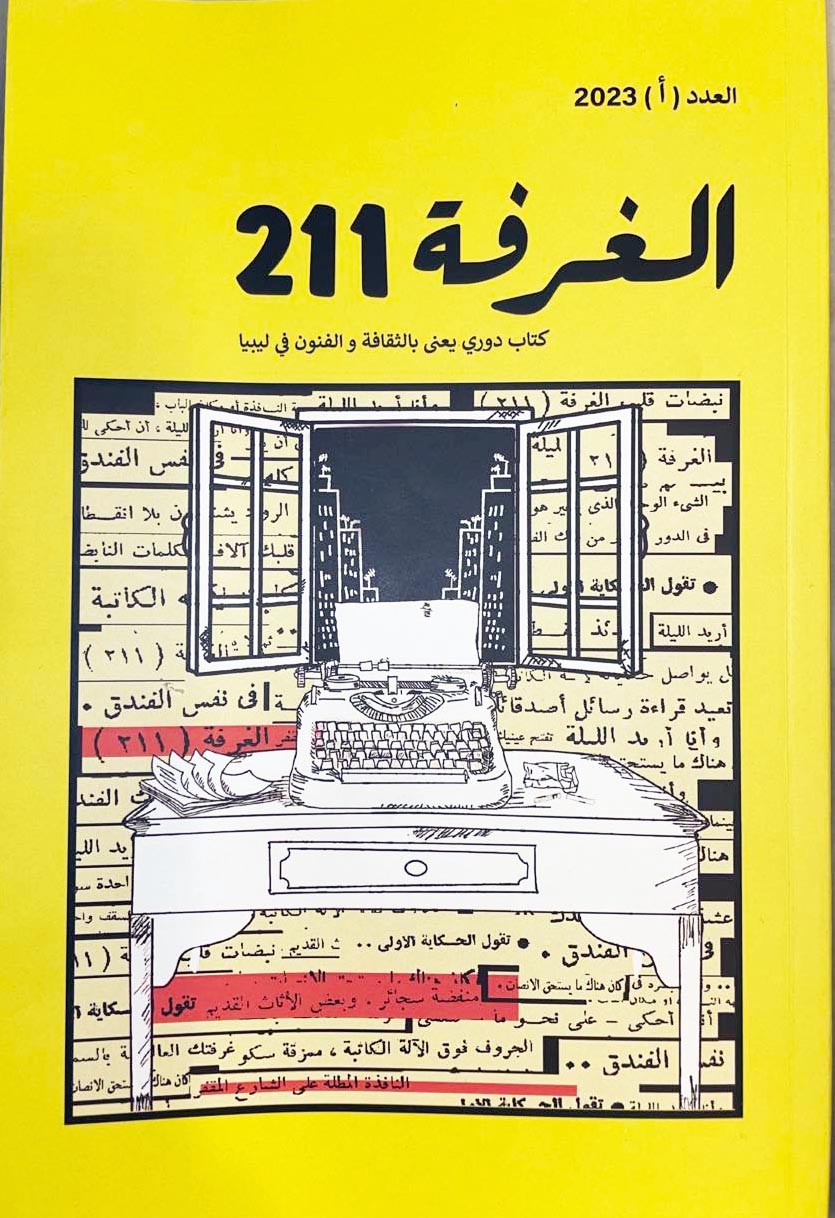
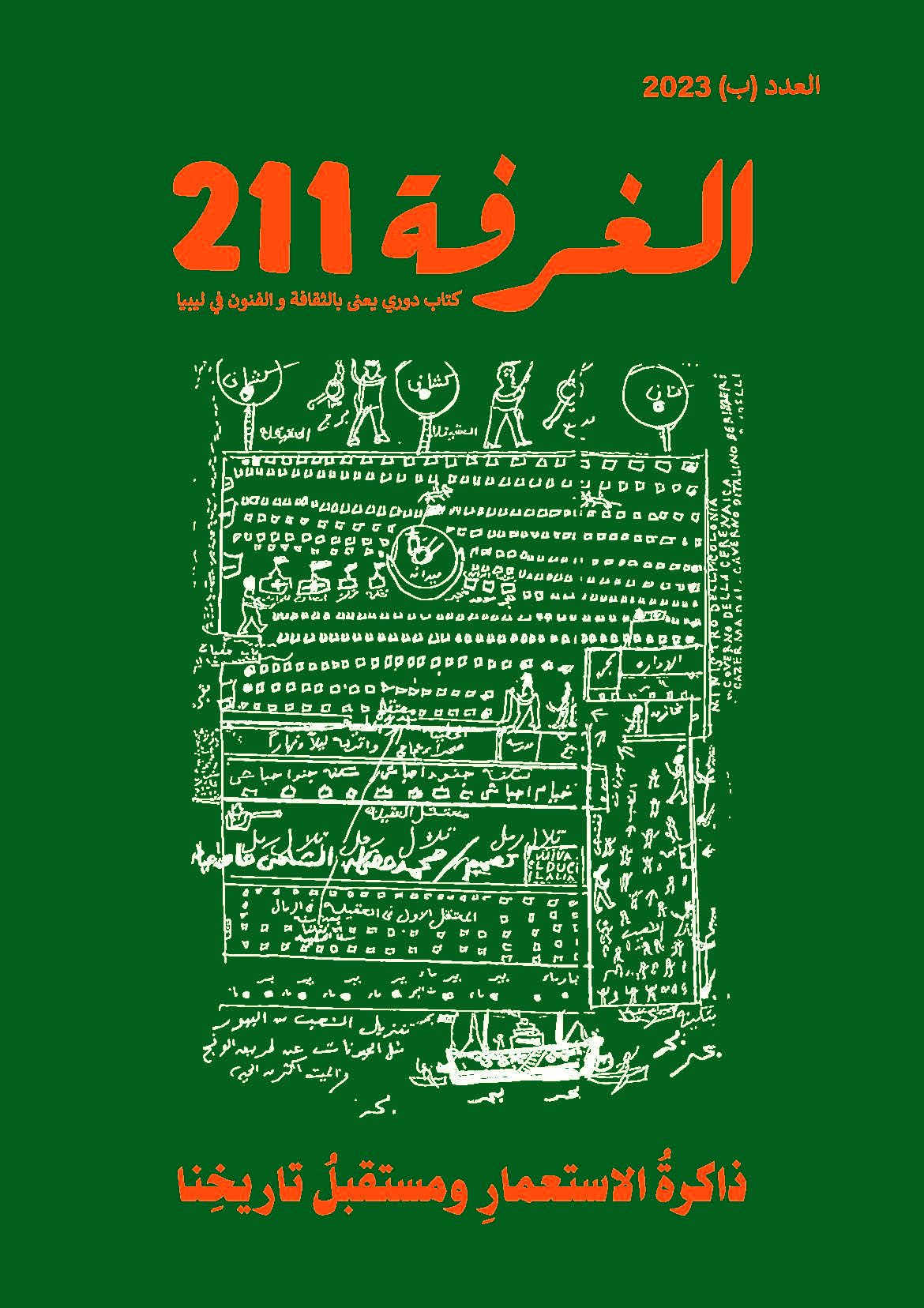
See also their facebook site.
The Maghrib in Past & Present podcast most recent episode in its “Libyan Studies” series is “Mobility, Memory, and the performance of Bousaadiya in Libya”.
In this podcast, Dr. Leila Tayeb, Assistant Professor in Residence in the Communication and Liberal Arts Programs at Northwestern University in Qatar (NU-Q), explores the cultural politics of mobility and memory in Libya. Looking at Bousaadiya, a figure who has been performed in many iterations throughout North Africa, she offers a reading of these performance practices as a space in which Libyans enact and contest practices of belonging. Tayeb describes how performance, and specifically dance, creates a frame through which to observe political, historical, and cultural phenomena. Highlighting repetition as an important element of performance, she argues that mimesis of certain practices over time can serve to reinstantiate – or disrupt – power structures. Bousaadiya performance practices, Tayeb argues, serve as a space in which Libyans grapple with the unresolved history of the trans-Saharan slave trade which took place in Libya for centuries and persisted even after it was formally abolished. Reading Bousaadiya through these lenses allows for an excavation of this history, its legacies, and opportunities for repair.
Nasser, Hala Khamis & Marco Boggero. 2008. “Omar al-Mukhtar: the formation of cultural memory and the case of the militant group that bears his name.” Journal of North African Studies 13(2), pp. 201–217.
Abstract:
“This paper investigates how the martyr figure of Omar al-Mukhtar (1858–1931) became a popular transnational icon in Africa, Asia and the Arab world. Originally part of the history of Cyrenaica, Omar al-Mukhtar became part of Arab culture during the struggle against colonialism and is now part of a suggested Arab ‘imagined community’. The paper explores how his memory has been shaped in new and multiple ways in contemporary culture and politics of Middle East and North Africa. Al-Mukhtar’s historic character has crossed the Libyan boundaries and the Cyrenaican leader became instrumental not only in the history of modern Libya, but contributed to the formation of different forms of Arab nationalism during their struggle against colonialism. The authors investigate how the construction of martyrdom developed and show that the pattern of collective memory did not proceed unambiguously. Further, they demonstrate how the martyr’s legacy has been and is still utilised for political mobilisation and make the case by studying the activities of transnational insurrection groups – the ‘brigades’ or ‘forces of Omar al-Mukhtar’ from its original inceptions to recent occurrences.”
Libyan Flavours is a “movement to celebrate the traditions and cultures that unite Libya.” Its byline is: ليبيا: نكهات مختلفة – روح واحدة “Libya: different flavors, one spirit”. To that end, the people behind it have produced so far three beautiful videos showing different aspects of Libyan culture integral to all regions and groups. On their Facebook page, you can also find relevant photos and videos contributed by other users.
 The Silphium Gatherer | مجمّع سلفيوم