Author Archives: AB

Book: Tunisian and Libyan Arabic Dialects

A new volume containing linguistic studies of Arabic dialects in Libya and Tunisia has just been published:

Tunisian and Libyan Arabic Dialects: Common Trends – Recent Developments – Diachronic Aspects, edited by Veronika Ritt-Benmimoun. Zaragoza: Prensas de la Universidad de Zaragoza, 2017.
The publisher’s description reads: “This tripartite volume with 18 contributions in English and French is dedicated to Tunisian and Libyan Arabic dialects which form part of the so-called Maghrebi or Western group of dialects. There are ten contributions that investigate aspects of Tunisian dialects, five contributions on Libyan dialects, and three comparative articles that go beyond the geographical and linguistic borders of Tunisia and Libya. The focus of “Tunisian and Libyan Arabic Dialects” is on linguistic aspects but a wider range of topics is also addressed, in particular questions regarding digital corpora and digital humanities. These foci and other subjects investi­gated, such as the syntactic studies and the presentation of recently gathered linguistic data, bear reference to the subtitle “Common Trends – Recent Developments – Diachronic Aspects”.”
 Several essays in the book deal with aspects of Libyan Arabic dialects, in particular the following:
  • Adam Benkato, “Vowels in Benghazi Arabic: Maghrebi or Bedouin?”, pp. 291-300.
  • Najah Benmoftah & Christophe Pereira, “Preliminary Remarks on the Arabic spoken in Al-Khums (Libya)”, pp. 301-326.
  • Dominique Caubet, “A Tentative Description of Aspect and Modality in the Fezzan: W. and Ph. Marçais’ Texts Revisited”, pp. 327-350.
  • Luca D’Anna, “On the Development of Conditional Particles in the Arabic Dialects of the Fezzān”, pp. 351-370.
  • Maciej Klimiuk, “The Particle rā- in Libyan Arabic Dialects (with emphasis on the Arabic dialect of Msallāta)”, pp. 371-386.

Book: Najwa Bin Shatwan’s The Slave Pens | زرايب العبيد لنجوى بن شتوان

The latest work of Benghazi-born writer Najwa Bin Shatwan, The Slave Pens (زرايب العبيد) has been garnering praise across the Arab literary world. She was recently shortlisted for the 2017 International Prize for Arabic Fiction, and a translated excerpt from her book is featured in the current issue of Banipal magazine (#58 ‘Arab Literary Awards’).

The novel is set just outside of downtown Benghazi in the early 20th century. In this part of the city, known as al-Sabri (الصابري), both enslaved and free people lived in a dense network of rudimentary palm-leaf dwellings, essentially a ghetto. Bin Shatwan is the first writer or scholar to attempt to address this aspect of Benghazi’s history in particular, perhaps the first Libyan writer to deal deeply with slavery and its legacy in Libya.

Summary: The Slave Pens lifts the lid on the dark, untold history of slavery in Libya, of which the effects can still be felt today. Slave owner Mohammed and his slave Ta’awidha have fallen in love, but their relationship is considered taboo. Living in a community where masters take female slaves as lovers as they please, Mohammed’s father sends him on a trading mission in an attempt to distance him from Ta’awidha. During his absence, his mother forces her to miscarry by serving her a spiked drink, and she is married off to another slave. On his return from his trip, Mohammed learns of his family’s activities and he begins searching for his beloved.

Interviews with the author:

http://en.qantara.de/content/libyan-author-najwa-binshatwan-on-the-slave-pens-confronting-a-dark-chapter

The Leader by Nouri Zarrugh

The latest working title of The Massachusetts Review is a prizewinning novella entitled The Leader by Libyan-American writer Nouri Zarrugh. The novella follows three generations of a Libyan family during the reign of Muammar Gaddafi and the aftermath of the revolution, and is introduced by Khaled Mattawa. Check it out at http://massreview.org/node/787.
An extract is below:

That last February before the war and the hard years that were to follow it, forty-one years after the Leader’s revolution, Laila woke to the sound of explosions in the street. She sat clutching the blanket, eyes darting, half expecting to find herself buried in dust and rubble, her vision slowly adjusting to the familiar sight of the armoire and the floral cushions piled beside it, the matching nightstand and the ceramic lamp and on the other side of them, undisturbed, the sheets tucked and folded, Hajj Yunus’s empty bed, glowing in the faint moonlight like a preserved artifact. Finding everything intact, she lay down, thinking the sound a remnant of some already fading dream,  a trace of that April night a quarter century earlier when the walls had shaken and the neighbors had cried out in terror, and she had buried her face in her father’s arms, whispering with him: “I seek refuge in the Lord of the dawn.”

It was when she heard the laughter that she finally understood, voices in the alley giving way to the pop and scatter of what she now recognized as firecrackers, to the exclamations of the boys who lit and tossed them and to the nasal cries of the youngest among them, who begged to spark the fuses. She lay there a long time listening as they tried out their bottle rockets and smoking black snakes, eager for the coming mawlid, when they would march down Sharaa Fashloum and Ben Ashour, the older boys bearing makeshift torches and singing, the younger boys relegated to harmless sparklers and pouting. She waited for the footsteps of the other women but had by then learned that only the morning prayer call could draw them from their beds to wash and dress in the darkness. Theirs was a sleep of boundless exhaustion, all of them foreigners, maids and nannies, and it seemed at times that all that kept them awake was their duty to Allah and to the task he’d given them of surviving. . .

ادب ليبي جديد: شمس على نوافذ مغلقة

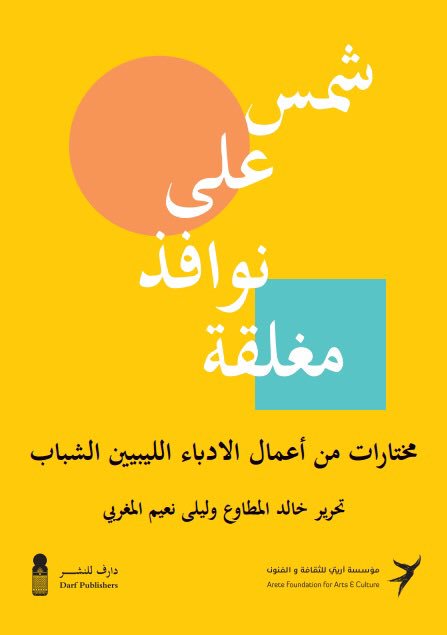
شمس على نوافذ مقغلة هو كتاب جديد من دار المنشورات المشهورة “دار الفرجاني” الليبية يضم نصوص ادبية لخمسة و عشرين كاتباً و كاتبةً من ليبيا تحت تحرير خالد المطاوع و ليلى المغربي.

من الغلاف:

في خطوة غير مسبوقة تقدم لنا مختارات “شمس على نوافذ مقلقة” نصوصاً غير اعتيادية لا يحدّها سقف، مختلفة الأجناس لشباب في أعمار طرية العود. لكن نصوصهم جذورها عميقة نصطاد كلماتها الماء العذب الصافي، تنبعث منها روائح متفاوتة تتقارب لتكوّن عطراً دافقاً بمحبة الوطن.، عطراً متمرداً على واقع وجدوا أنفسهم مغمورين فيه دونما ارادتهم، لاهثاً خلف وجود صنعه تاريخ الاجداد. –فريدة المصري

في هذا الكتاب مسح للحالة الابداعية الليبية للشباب الذين نشروا نتاجهم في الفترة ما بعد ثورة فبراير الليبية. انه يمثل المشهد الشبابي الابداعي في ليبيا كما يحب … ان هذه الكتابات السردية و الشعرية تتميز عن الكتابة الليبية السابقة بأنها كُتبت في زمن الثورة و الحرب الاهلية الناتجة عنها، و هي حرب مدن و شوارع وقودها جيل الكتاب من اخوتهم و جيرانهم و زملائهم و اصدقائهم و احبتهم، لذا تمجس للفجيعة في وقت القتل و المجان و الصدفة و العبث. –احمد الفيتوري

Sun on Closed Windows is a new collection of Libyan literature written mostly during and after the revolution of February 2011. Edited by Khaled Mattawa and Laila Moghrabi in conjunction with the Arete Foundation and the British Council, this book promises to continue to fulfill Darf (Dar al-Firgiani) Publishers’ goal of making Libyan literature available to a wider audience. With a few novels by Libyan authors available in English translation, Sun on Closed Windows expands Darf’s already extensive catalog of Arabic literature by Libyan authors.

Books: Mercantile Documents from Ghadames | وثائق تجارية من غدامس

ghadames-mss219th-century documents from the collection of the Yusha‘ family—one of the most important merchant families of Ghadames during the 18th and 19th centuries—were published by the Ghadamsi scholar Bashir Qasim Yusha‘ in 1983, shedding light for the first time on the extremely wide extent of the Ghadamsi mercantile network in Africa. Merchants from Ghadames were apparently so well-known in Saharan and western Africa that in Hausa the only North African group other than  Larabawa ‘Arabs’ to have a particular designation were the Adamusawa ‘Ghadamsis’. Yusha‘’s publication is the following:

Yusha‘, Bashir Qasim. Ghadāmis: Wathā’iq tijāriyya tārikhiyya ijtimā‘iyya (1228-1310 hijri). Tripoli: Libyan Studies Center, 1983.

To my knowledge, the only Western scholar to engage with these sources was Ulrich Haarmann, who in 1988 published a lengthy (94 pages with 492 footnotes!) and wide-ranging article based on the documents:

Haarmann, Ulrich, “The Dead Ostrich: Life and Trade in Ghadames (Libya) in the Nineteenth Century“, Der Welt des Islams 38/1 (1998), 9–94.

Before his death in 1999 Haarmann had prepared German translations of many of the documents published by Yusha‘ in 1983, along with commentaries. This material was gathered and published posthumously in 2008 by a colleague of Haarmann’s:

Haarmann, Ulrich, edited by Stephan Connermann. Briefe aus der Wüste: Die private Korrespondenz der in Ġadāmis ansässigen Yūša‘-Familie (Letters from the Desert: the private correspondence of the Yusha‘ family resident in Ghadames). EB-Verlag, 2008.

Publisher’s blurb (German): “Im Jahre 1983 legte der Gadameser Gelehrte Basir Qasim Yusa der interessierten Öffentlichkeit 150 Privatpapiere – Briefe, Rechnungen, Warenlisten, Quittungen oder Geburtsregister – aus dem Besitz seiner Familie vor. Diese Dokumente, die in dem Zeitraum von 1813 bis 1917 entstanden sind, handeln alle in der einen oder anderen Weise von Mitgliedern der berberischen Familie Yusa. Geschrieben sind diese Schriftstücke in einem lokalen Umgangsarabisch, in dem sich verschiedentlich berberische oder hocharabische Einsprengsel finden. Als Verfasser kommen entweder die Absender selbst, deren schriftkundigen Bekannte oder aber bezahlte Briefschreiber in Frage. Kurz nachdem Basir Qasim Yusa seine Edition veröffentlicht hatte, begann Ulrich Haarmann sich mit den Texten zu befassen. Ein Aufenthalt am Berliner Wissenschaftskolleg im Frühjahr 1997 gab ihm Zeit und Gelegenheit, alle Befunde in einen geschlossenen Text zu gießen, der dann 1998 in der Zeitschrift Die Welt des Islams unter dem Titel „The Dead Ostrich: Life and Trade in Ghadames (Libya) in the Nineteenth Century“ publiziert wurde. Die von ihm weitgehend übersetzten Dokumente sollten einer späteren Veröffentlichung vorbehalten sein. Dazu kam es dann aber nicht mehr, denn Ulrich Haarmann verstarb 1999. Stephan Conermann hat die Übertragungen der schwierigen Texte nun zusammen mit einer längeren Einleitung in vorsichtiger Überarbeitung herausgegeben.”

Book: The Ottoman Scramble for Africa

Minawi, Mostafa. 2016. The Ottoman Scramble for Africa: Empire and Diplomacy in the Sahara and the Hijaz. Stanford University Press.

The Ottoman Scramble for Africa is the first book to tell the story of the Ottoman Empire’s expansionist efforts during the age of high imperialism. Following key representatives of the sultan on their travels across Europe, Africa, and Arabia at the close of the nineteenth century, it takes the reader from Istanbul to Berlin, from Benghazi to Lake Chad Basin to the Hijaz, and then back to Istanbul. It turns the spotlight on the Ottoman Empire’s expansionist strategies in Africa and its increasingly vulnerable African and Arabian frontiers.

Drawing on previously untapped Ottoman archival evidence, Mostafa Minawi examines how the Ottoman participation in the Conference of Berlin and involvement in an aggressive competition for colonial possessions in Africa were part of a self-reimagining of this once powerful global empire. In so doing, Minawi redefines the parameters of agency in late-nineteenth-century colonialism to include the Ottoman Empire and turns the typical framework of a European colonizer and a non-European colonized on its head. Most importantly, Minawi offers a radical revision of nineteenth-century Middle East history by providing a counternarrative to the “Sick Man of Europe” trope, challenging the idea that the Ottomans were passive observers of the great European powers’ negotiations over solutions to the so-called Eastern Question.”

An episode of the Ottoman History Podcast with Minawi was also dedicated to this topic and is well worth a listen.

Book: Islamic Sanctuaries in 17th-century Tripolitania

sanctuari-islamiciIslamic Sanctuaries in 17th-century Tripolitania is the translation of a work by the Libyan religious scholar ‘Abd as-Salām al-‘Ālam al-Tajouri.* It gives details about the many shrines and mosques in Tripolitania (western Libya), as they were known in the 17th-century. The Italian translation of the work, shown here, is the only scholarly work on the text that I know of. Antonio Cesàro, an Arabist who also wrote a grammar of the Tripoli dialect of Arabic, teamed up with the human geographer Enrico de Agostini to also track down the sites mentioned by al-Tajouri and document them in photos and with maps.

An interesting, though probably discouraging, project would be to go to these sites today, in and around Tripoli, Tajoura, Tarhuna, Zliten, and Misrata, and document as many as possible—both those that have survived the past five years of turmoil and those that have not.

*The full reference is Tajouri, A. Santuari Islamica nel secolo XVII in Tripolitania, tr. by Antonio Cesàro. Tripoli: Maggi, 1933.

Exhibit: Jewelled Tales of Libya

The exhibition Jewelled Tales of Libya, curated by Najlaa El-Ageli and Hala Ghellali, will take place at the Arab British Centre from 19 to 27 January 2017.

Jewelled Tales of Libya is a rare exhibition which will explore the diversity and historical identity of a country through its tradition of fine jewellery. By showcasing this rich cultural heritage, the exhibition aims to tell the stories behind the adornments and symbols that feature heavily throughout the geographical expanse that we know as Libya.

Alongside a display of 45 pieces of authentic Libyan silver jewellery from the 1920s to 1960s (comprising chokers, belts, headpieces, bangles, silver slippers amongst many other pieces), the exhibition will show 13 original vintage photographs, that belong to the curators’ private collections. Dating back to the early decades of the 20th Century, the images of Libyan women were taken by the Italian cameramen, (such as Aula, Nascia, Rimoldi and others),who established studios in Libya during the European colonisation and who contributed to the Orientalist strand of photography.

In contrast to this old collection, the exhibition will also feature more recent photographs taken by the talented Libyan photographer Sassi Harib, whose work captures the essence of Libya’s Southern women adorned in their jewellery.

Furthermore, Hala Ghellali, one of the curators, will be giving a talk about Libyan jewellery, its symbolism and the history of silver making in Libya on 24 Jan, 6:30pm – 7:30pm @ The Arab British Centre (admission is free).

مجلة البحوث التاريخية | Journal of Historical Research

1Libya’s foremost research journal for history, in its broadest conception, is the مجلة البحوث التاريخية (Journal of Historical Research), published by the Libyan Center for Historical Studies.* Since 1979, the journal has consistently published articles by Libyan scholars, as well as several well-known European scholars writing in Arabic, on a very broad array of topics. In many cases, in fact, there is little or no research published outside of Libya on these topics, and the journal therefore offers extremely valuable insight into the range of possibilities for research as well as useful starting points for those who can read Arabic. Unfortunately, it is difficult to come by in European or American libraries (in London, the SOAS library has many of the issues)—a goal for the appropriate authority in Libya would be to make back issues available online. The website of the Center shows issues from 2013 as being the most recent. Although it seems not to have been updated for some time now, later issues are not known to me. I hope the journal is still alive.

*The Center was previously called مركز جهاد الليبيين ضد الغزو الايطالي للدراسات التاريخية (The Libyan Resistance against the Italian Invader Center for Historical Studies), later shortened to مركز جهاد الليبين للدراسات التاريخية (The Libyan Resistance Center for Historical Studies).

An old article about Tawargha

tawarghan-women

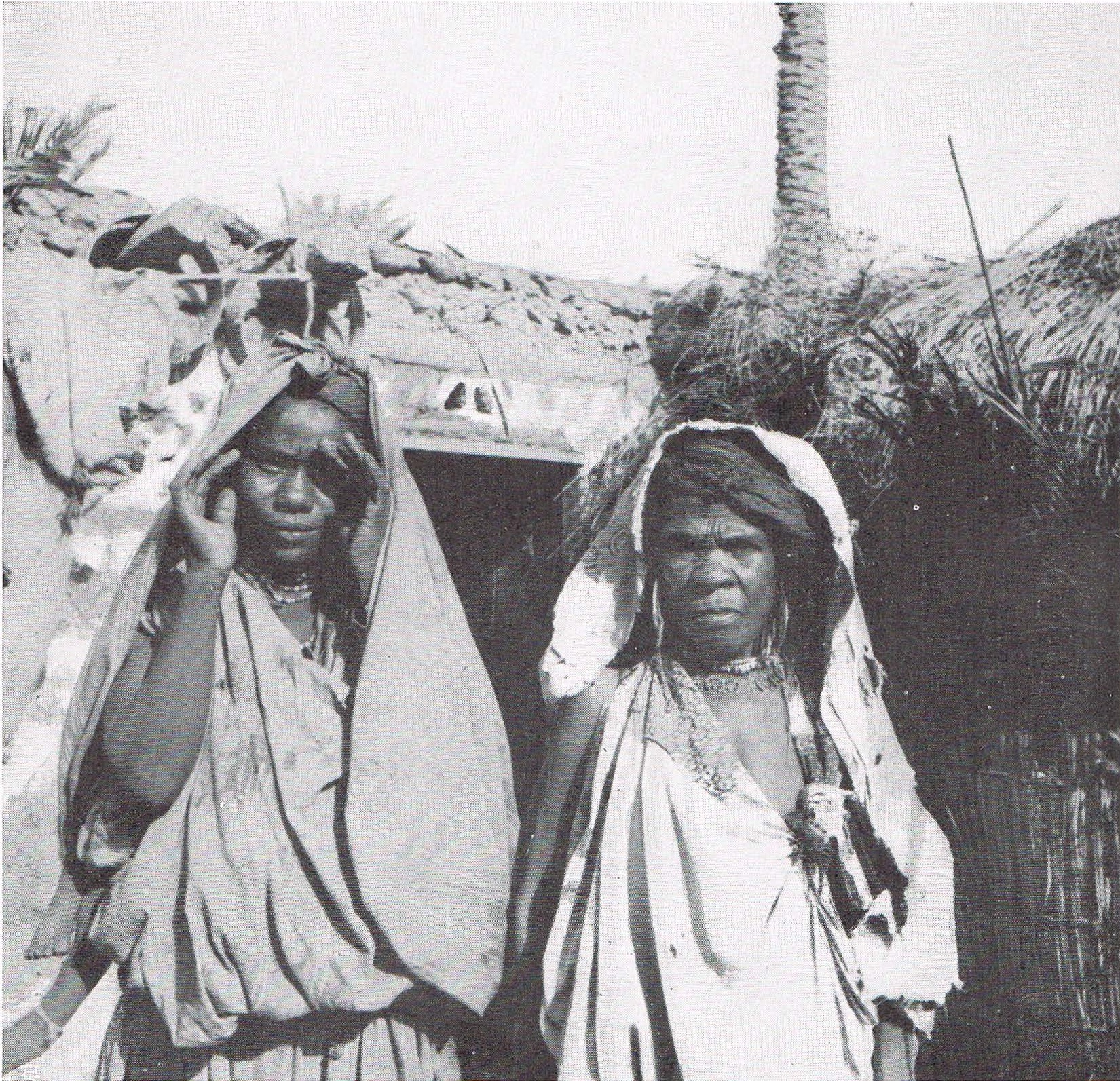
Tawarghan Women (Photo U. Paradisi, 1950s)

The inhabitants of the small oasis of Tawargha (تورغاء) outside of Misrata have suffered a great deal as a result of recent conflicts in Libya. The majority of Tawarghans are people often referred to in Libyan society as “black Libyans”, in order to draw attention to their sub-Saharan African ancestry (I prefer the term “Libyans”, since they are Libyans like everyone else). Unfortunately, most people make little effort to understand them or their history.

Tawarghan Man (Photo U. Paradisi, 1950s)

Tawarghan Man (Photo U. Paradisi, 1950s)

This being the case, I thought it important to share an article written about Tawargha fifty years ago by the linguist Umberto Paradisi, known mainly for his work on Libyan Berber. He also apparently noticed that  many Tawarghans were Black (about 4600 of a population of 5100 in 1936, apparently), and wrote an article for the popular magazine Le Vie del Mondo about it (he also wrote popular articles for this magazine about Tripoli, Ghadames, and other places in Libya). That this particular social situation was the case fifty years ago, and goes back even long before the colonial period, further shows that the recent forced displacement of Tawarghans by local militias is based on scapegoating and racism—they have been a part of society for as long as the concept of ‘Libya’ has existed. The reason for the unique demographic of Tawargha goes back to an unfortunate, but inescapable, part of Libyan history: the slave trade. This much is implied by the pejorative term shushan (plural shawāshna) used in the article, and even sometimes now, to refer to the Tawarghans and other Libyans ultimately descended from enslaved people. We need to understand these histories and work to rectify, rather than repeat, them.

Here is a scan of the article (in Italian), entitled “I sudanesi di Tauórga” and published in Le Vie del Mondo (February 1956). It uses the dated and inaccurate way of referring to Black people in Arab societies as “Sudanese”, though this is unsurprising given the era and the colonial venue it was published in. It also has several photographs showing various aspects of life in Tawargha such as date cultivation and textile making.