Author Archives: AB

Article: What drives public trust in the military in non-democracies

Abouzzohour, Yasmina & Tarik M. Yousef. 2023. What drives public trust in the military in non-democracies: Evidence from Libya (2014-2019). The Journal of North African Studies. [open access]

This article investigates the conditions that lead to heightened trust in the military in non-democracies through an empirical study of post-2011 Libya. Drawing on the political science and sociology literatures on institutional trust in non-democratic contexts, we develop hypotheses linking public trust in the military to personal safety, political interest, Islamist orientation, trust in institutions, regionalism, and support for democracy. Using survey data collected by the Arab Barometer between 2014 and 2019, we empirically test these hypotheses. Our findings reveal a confluence of factors driving trust in the military in Libya, including regional, generational, educational, and class divides. Being older, male, and from the East contribute positively to trust in the military as well as perceived personal safety, trust in government, interest in politics, and support for democracy. On the other hand, an Islamist orientation, education and income are negatively correlated. These results allow us to speculate about the drivers of trust in the military. In particular, the positive impact of personal safety and support for democracy could reflect the public's perception of the army as responsible for ensuring safety and protecting a nation in turmoil. The role of interest in politics could be attributed to the charged context of politics and security after the 2014 elections. Notably, regional exceptionalism in the East could be related to the role and behaviour of the eastern-based, self-proclaimed Libyan National Army. Our paper contributes to the limited empirical research on trust in the military in non-democracies, backsliding in conflict countries, and political attitudes in Libya.

Podcast: Mobility, Memory, and the performance of Bousaadiya in Libya

The Maghrib in Past & Present podcast most recent episode in its “Libyan Studies” series is “Mobility, Memory, and the performance of Bousaadiya in Libya”.

In this podcast, Dr. Leila Tayeb, Assistant Professor in Residence in the Communication and Liberal Arts Programs at Northwestern University in Qatar (NU-Q), explores the cultural politics of mobility and memory in Libya. Looking at Bousaadiya, a figure who has been performed in many iterations throughout North Africa, she offers a reading of these performance practices as a space in which Libyans enact and contest practices of belonging. Tayeb describes how performance, and specifically dance, creates a frame through which to observe political, historical, and cultural phenomena. Highlighting repetition as an important element of performance, she argues that mimesis of certain practices over time can serve to reinstantiate – or disrupt – power structures. Bousaadiya performance practices, Tayeb argues, serve as a space in which Libyans grapple with the unresolved history of the trans-Saharan slave trade which took place in Libya for centuries and persisted even after it was formally abolished. Reading Bousaadiya through these lenses allows for an excavation of this history, its legacies, and opportunities for repair.

Article: Reluctant Militants: Colonialism, Territory, and Sanusi Resistance on the Ottoman‐Saharan Frontier

Jonathan Lohnes. 2021. Reluctant Militants: Colonialism, Territory, and Sanusi Resistance on the Ottoman‐Saharan Frontier. Journal of Historical Sociology 34(3), 466-478. [paywall]

Abstract: Libya's enigmatic Sanusi brotherhood has been the subject of perennial debate since its emergence in Ottoman Cyrenaica in the mid nineteenth century, becoming a screen upon which apologists and detractors could project their own political anxieties and desires. For European critics, the brotherhood embodied the irrationality and fanaticism of the Islamic East. Its networks in North and Central Africa constituted an obstacle to their expansionist designs, while Sanusi prestige throughout the Muslim world rendered the brotherhood a threat to the entire colonial order of things. Nationalist historiography has generally endorsed this view, albeit with a positive valence, characterizing the Sanusiyya as an anticolonial social movement. Meanwhile, modern critical scholarship has tried to impose order on the chaos of the turn-of-the-century Sahara by assigning to the fraternity the role of a “proto-state.” This article proposes a new framework for understanding the history and sociology of the Sanusi. Drawing on theorists of subaltern resistance such as James Scott and Michael Adas—alongside Ottoman, British, French, and Italian primary sources—I demonstrate that the brotherhood began its life as an inward-looking Islamic social justice movement with little evident interest in state building or the geopolitical controversies of the moment. I coin the term “reluctant militants” to describe its mercurial trajectory from frontier evangelism to armed struggle in response to French and Italian colonial encirclement. This process culminated in the Long War of 1911–1931, during which the Sanusiyya played a critical part in the struggles over post-Ottoman reconstruction, from the Maghreb to Anatolia.

Article: Whose Memory Is Lost?

Spadaro, Barbara & Najlaa El-Ageli. 2023. “Whose Memory Is Lost? Languages, Spaces, Diasporic Implications and the Memory of Libya: A Conversation between Najlaa El-Ageli and Barbara Spadaro”, in Brioni, S., Polezzi, L, Sinopoli, F. (eds.) Creativita Diasporiche. Dialoghi transnazionali tra teoria e arti (Rome: Mimesis). Open access.

Diasporic Creativity is a bilingual volume made up of thirteen conversations between humanities scholars and artists whose work focuses on the theme of migration and identity. The contributions in the collection embrace forms of production ranging from literature to visual arts, from cinema to theatrical performance, from podcasts to rap music, while among the recurring themes emerge debates on identity, language, migration, memory and citizenship. This volume is also an invitation to rethink creative and academic work, in the humanities area, as intrinsically linked to dialogue and collaboration. Each conversation focuses on Italy understood as a catalyst of meanings and artistic practices that develop in different and often unexpected directions, rather than as a geographically and culturally specific, homogeneous and delimited place. Similarly, the notion of Italian culture that emerges from these conversations is open, dynamic and intrinsically linked to the belief that research and creativity have a central role in imagining and building more just and inclusive societies.

Evaluating “understudied”

So often many of us use the word “understudied” to describe Libya as a topic in different fields of research. I myself have done so on this blog (probably quite often) and I hear colleagues do the same. In this post, I want to make one kind of attempt to quantify this. Not to complain (more than I already do), or propose any particular solution, and certainly not to validate the idea that quantity of research on a topic somehow indicates better, more useful research. Rather, just as an informal exercise, get some more precision about what “understudied” might really mean, as a complement to the (rather vague) impression many of us have. To do this, I’ve decided to look at general venues of research in which a Libyan-related topic might be reasonably expected to appear, and make a rough calculation about what percent of work in those venues relates to Libya. I focus on early-modern to contemporary Libya here (ancient Libya already has good coverage through several dedicated journals).

Continue reading

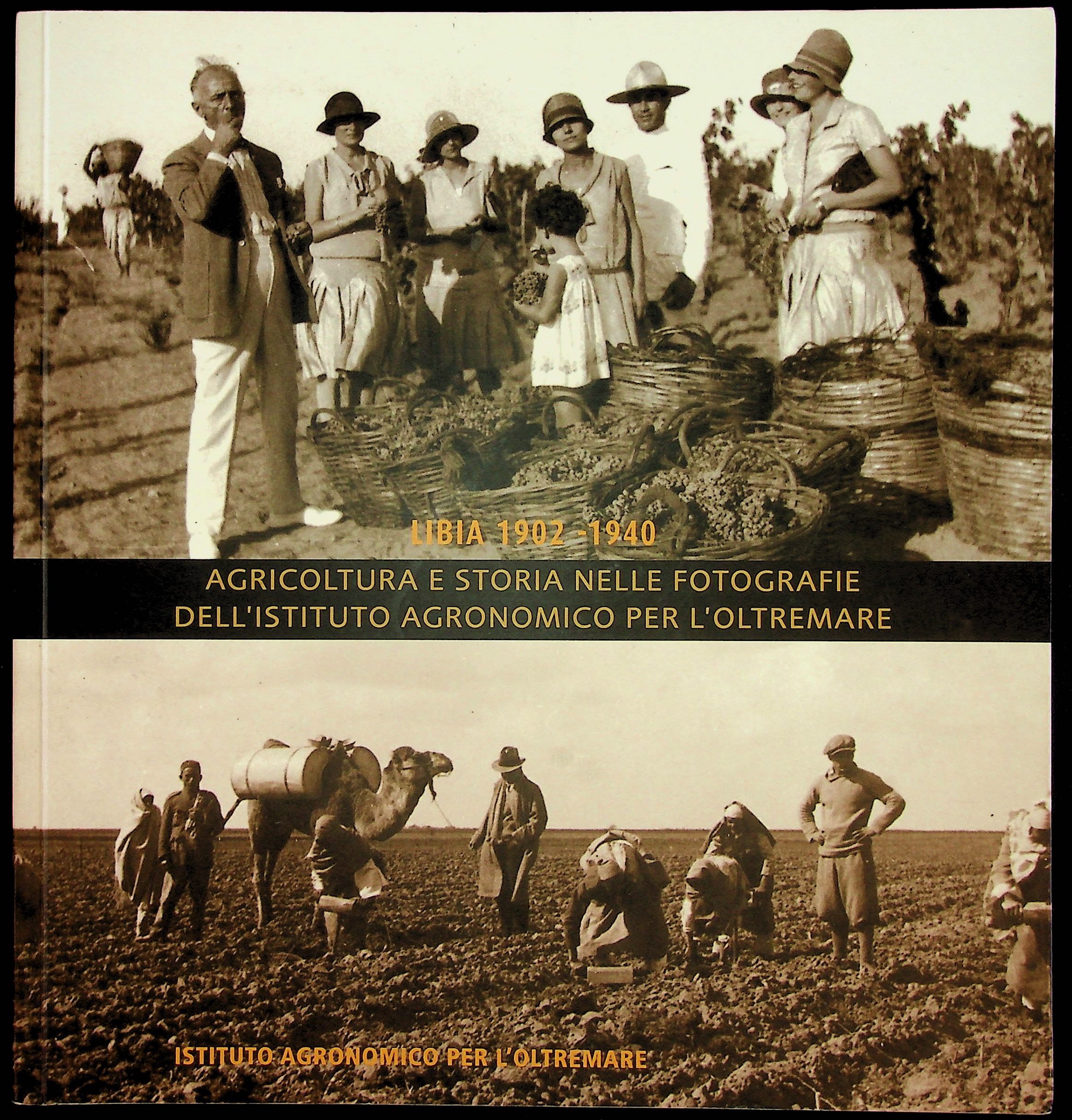
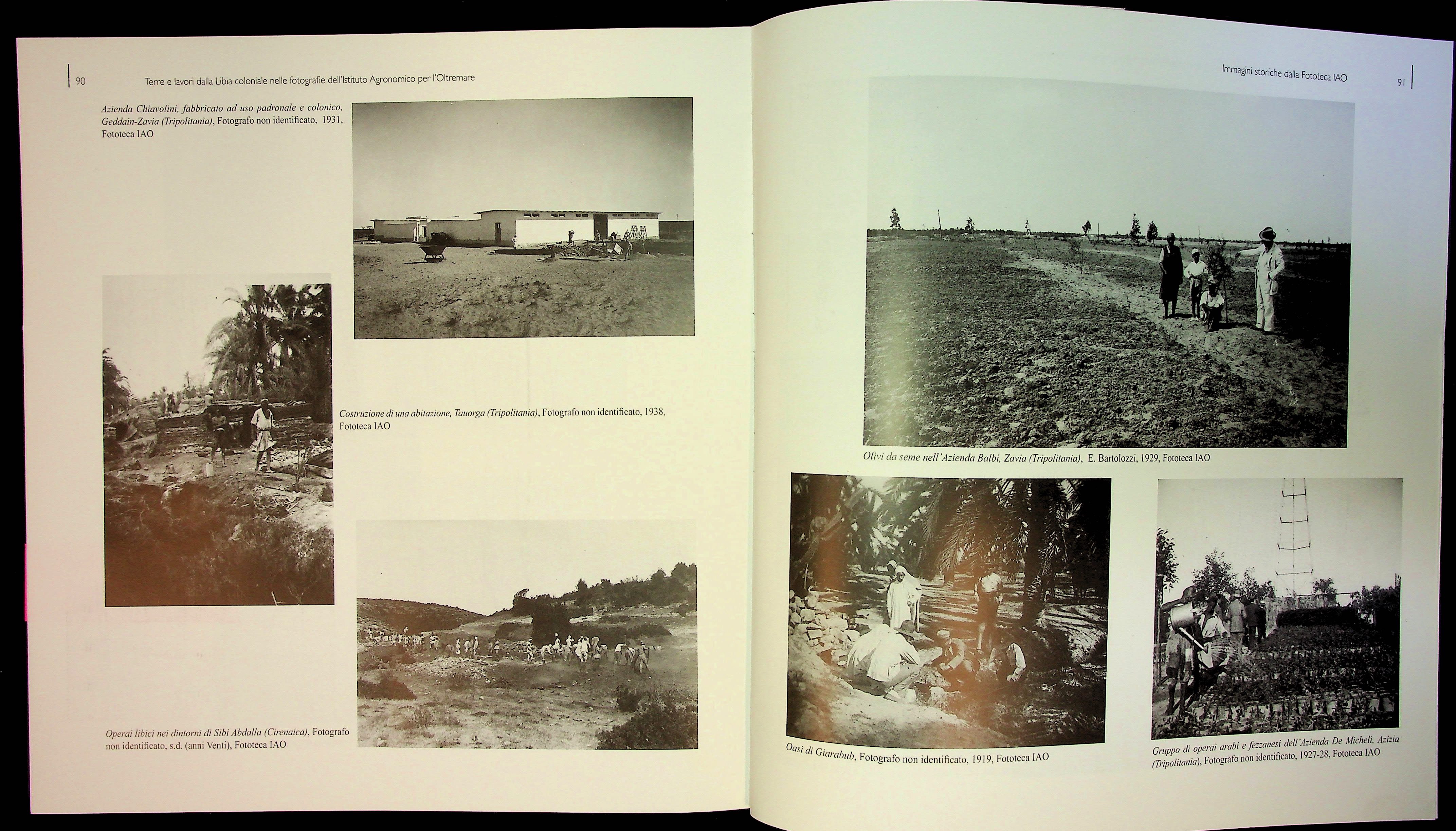
Publications of the Instituto Agronomico per l’Oltremare on Colonial Libya

Thanks to the generosity of our colleague (and fellow archive diver) Amalie for sharing the below resources.

The Istituto Agronomico per l’Oltremare (now part of the Agenzia italiana per la cooperazione allo sviluppo) in Florence, Italy—itself a fairly major actor in Italian colonial expansion in north and east Africa—compiled some interesting documentation on Italian settler colonial agriculture and land development efforts in Libya based on its own archives.

Libia 1902-1940: Agricoltura e storia nelle fotografie dell’Istituto Agronomico per l’Oltremare, a cura di Massimo Battaglia e Fabrizia Morandi (IAO, 2015)

Terre e lavori dalla Libia coloniale nelle fotografie dell’Istituto Agronomico per l’Oltremare, a cura di Nicola Labanca (IAO, 2015)

Article: Solidarity Among Colonial Subjects in Wartime Libya, 1940-1943

Tagliacozzo, Livia. 2022. Solidarity Among Colonial Subjects in Wartime Libya, 1940-1943. Quest. Issues in Contemporary Jewish History 22(2). 109–140. (open access)

Abstract: During World War II, Jews in Libya faced persecution and adversity. In response, Muslim individuals often became aides to the Jews, driven by economic reward, shared benefits, and genuine empathy. Examining the manner Jews and Muslims interacted in these circumstances sheds light on the complex relationship between the two communities, influenced by factors such as religious affiliation, connections to the regime, and personal interests. The fascist regime’s differential policies towards the two communities over two decades also played a role in shaping this relationship, sometimes causing conflict between the communities, but also leading to a shared sense of opposition to the Italians following common experiences of persecution.

Article: A State of Discord: A Sociohistorical Reflection on Contested Statehood in Libya

El Taraboulsi-McCarthy, Sherine. 2023. A State of Discord: A Sociohistorical Reflection on Contested Statehood in Libya. In Armando Salvatore, Sari Hanafi & Kieko Obuse (eds.), The Oxford Handbook of the Sociology of the Middle East. Oxford: Oxford University Press.

Abstract: Contrary to the majority of Western scholarship on Libya, which ascribes Libya’s “statelessness” to a failure on the part of local actors to adopt modern state formation following independence in 1951, the author argues that this view fails to take into account local power dynamics among social actors and between social actors and the state (colonial and postcolonial) that manifested themselves in modes of cooperation and contestation and have shaped Libya’s experience with statehood. The author shows that while contestation among social actors before and after independence had been stronger than centralizing forces, resulting in a state of discord, this should be explained in context and through a local account of Libya’s history as a colonized country. This chapter calls for a more robust incorporation of temporal aspects of social and political development in theorizing the state in Libya and the Arab world.

Thesis: Insurgent Geographies: The Production of Territorial Libya, 1835–1935

Lohnes, Jonathan M. 2022. Insurgent Geographies: The Production of Territorial Libya, 1835–1935. PhD Dissertation, Cornell University. (open access)

Abstract: This dissertation offers a panoramic reinterpretation of Libyan state-formation in light of Ottoman archival evidence and recent advances in critical geography, particularly revisionist approaches to the history of territory. Echoing Henri Lefebvre’s description of space as the “ultimate locus and medium of struggle,” I argue that the dynamic, frequently violent interaction of a diverse cast of networked social forces—local, transregional, Ottoman imperial, and European colonial— across a vast Saharan-Mediterranean theater produced the entity we now recognize as territorial Libya from approximately 1835 to 1935. Territorial spatialization along the rural frontiers of Tripolitania, Cyrenaica, and Fezzan is not reducible in theory to the enclosure of land or conquest of terrain— though both featured prominently within it—but also encompassed legal, diplomatic, technical-scientific, and ideological dimensions. The process unfolded in two phases: Ottoman provincialization, which transformed these areas into a “pilot province” for Istanbul’s ambitious development agenda, and Italian fascist colonization, which unified the country in the form of a colonial state after a twenty-year “pacification” campaign. Both phases unfolded at the expense of rural indigenous communities, who were targeted for disarmament, dispossession, displacement, and culminating in the ethnic cleansing of Cyrenaica in the late 1920s and early 1930s. Indigenous efforts to preserve local understandings of sovereign autonomy—up to and including “nomadic strategies” of guerrilla war—were the most historically and geographically significant factor in the production of Libyan territorial space. Modern Libya’s unique experience of territorial spatialization dislocated the country from the conceptual maps that guide us through transnational, regional, and local pathways of Global South history. Its ambivalent and fragmentary “geo-historical identity”—exemplified by the fact that Fezzan remains synonymous with “the middle of nowhere” in modern Turkish—is among the most enduring legacies of this process. Yet this inherited sense of Libya’s rural interior as the Periphery of Peripheries belies the fact that upland Tripolitania, Fezzan, and inner Cyrenaica often took center stage in the high drama of late and post-Ottoman politics. More than a microcosm of transformations underway across the Empire in its final century, this region was a critical frontline of global struggles over resources, sovereign legitimacy, geographic knowledge, and the fate of mobile and nomadic populations. All of which is to say, the middle of nowhere is the heart of the world.