Category Archives: Announcements

Film: My Father and Qaddafi (2025)

Jihan Kikhia’s long-awaited documentary film “My Father and Qaddafi” about her father Mansur Kikhia’s forced disappearance by the Qaddafi regime in 1990s is now out. Its international debut will be at the Venice Biennale this month.

The disappearances and assasinations of the 80s and 90s, and indeed the Libyan opposition movements to the Qaddafi regime, are some aspects of Libyan history that are poorly known and understood by non-Libyans (despite even the success of Hisham Matar’s book The Return, for example), and even increasingly by younger generations of Libyans. As Kikhia notes in her director’s statement, “this is one of the ways I am hoping to hold my father before he disappears completely from my memory and even potentially from Libya’s memory.” This film is an important addition to Libyan history and joins a short list of beautiful and insightful documentaries about Libyan topics from the last few years, including Khalid Shamis’ thematically-related “The Colonel’s Stray Dogs”.
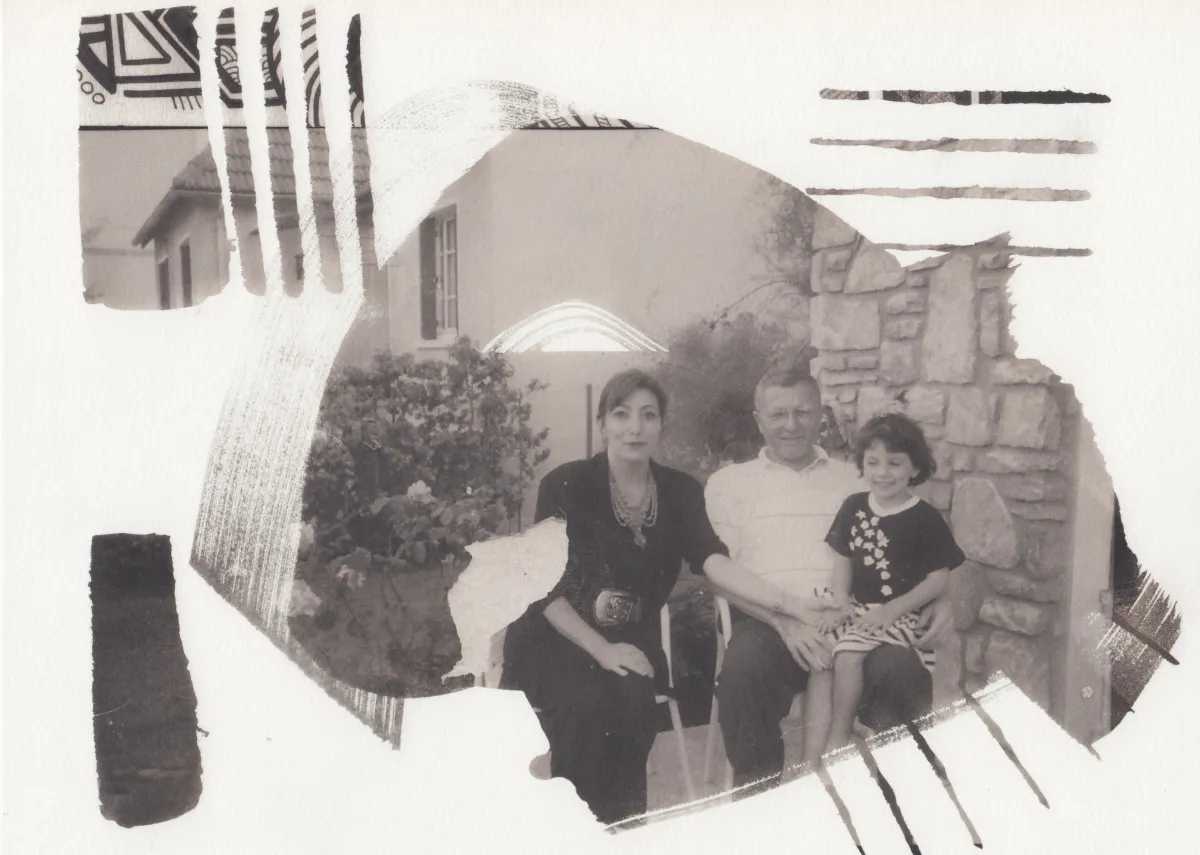
Synopsis: In My Father and Qaddafi Jihan K pieces together a father she barely remembers — Mansur Rashid Kikhia was a human rights lawyer, Libya’s foreign minister and ambassador to the United Nations. After serving in Qaddafi’s increasingly brutal regime, he defected from the government and became a peaceful opposition leader. For many, Kikhia was a rising star who could replace Qaddafi, however, in 1993 he disappeared from his hotel in Egypt. Jihan’s mother, Baha Al Omary, searched for him for nineteen years until his body was found in a freezer near Qaddafi’s palace.

Through encounters with family, her father’s colleagues, and historical archives, Jihan’s search for the truth evolves into a deeper curiosity, drawing her closer to both her father and her Libyan identity.

View the trailer here:

Hessa6’s collaborative new album “Unimported Disc”

The project Hessa6 (حصة سادسة) is “dedicated to unlocking the power of art to bring about social change through a range of activities that include researching, archiving, producing and promoting Libyan art.” With support from the Arab Fund for Culture and Arts, Hessa6 has released a new album entitled دسكة غير مستوردة “Unimported Disc” (click here to listen on Spotify). Described as “an electrifying musical project that brings together an eclectic mix of artists, rappers, and bands from across Libya”, the new album presents diverse, homegrown sounds in multiple genres, with lyrics in Arabic and Amazigh varieties, and incredible cover art for the album and for each track by Moneer Alwerfally.

The tracks and their descriptions as provided by Hessa6 on their Instagram page are below:

Continue reading

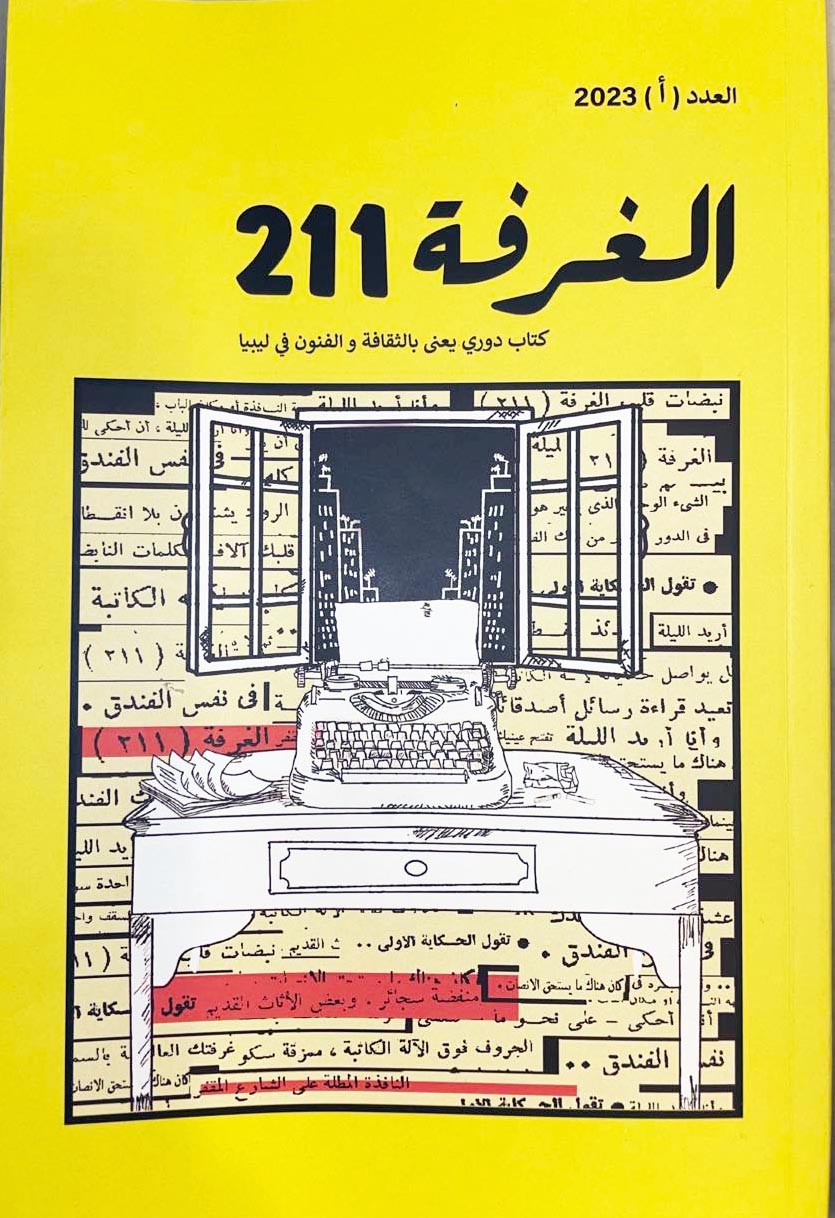
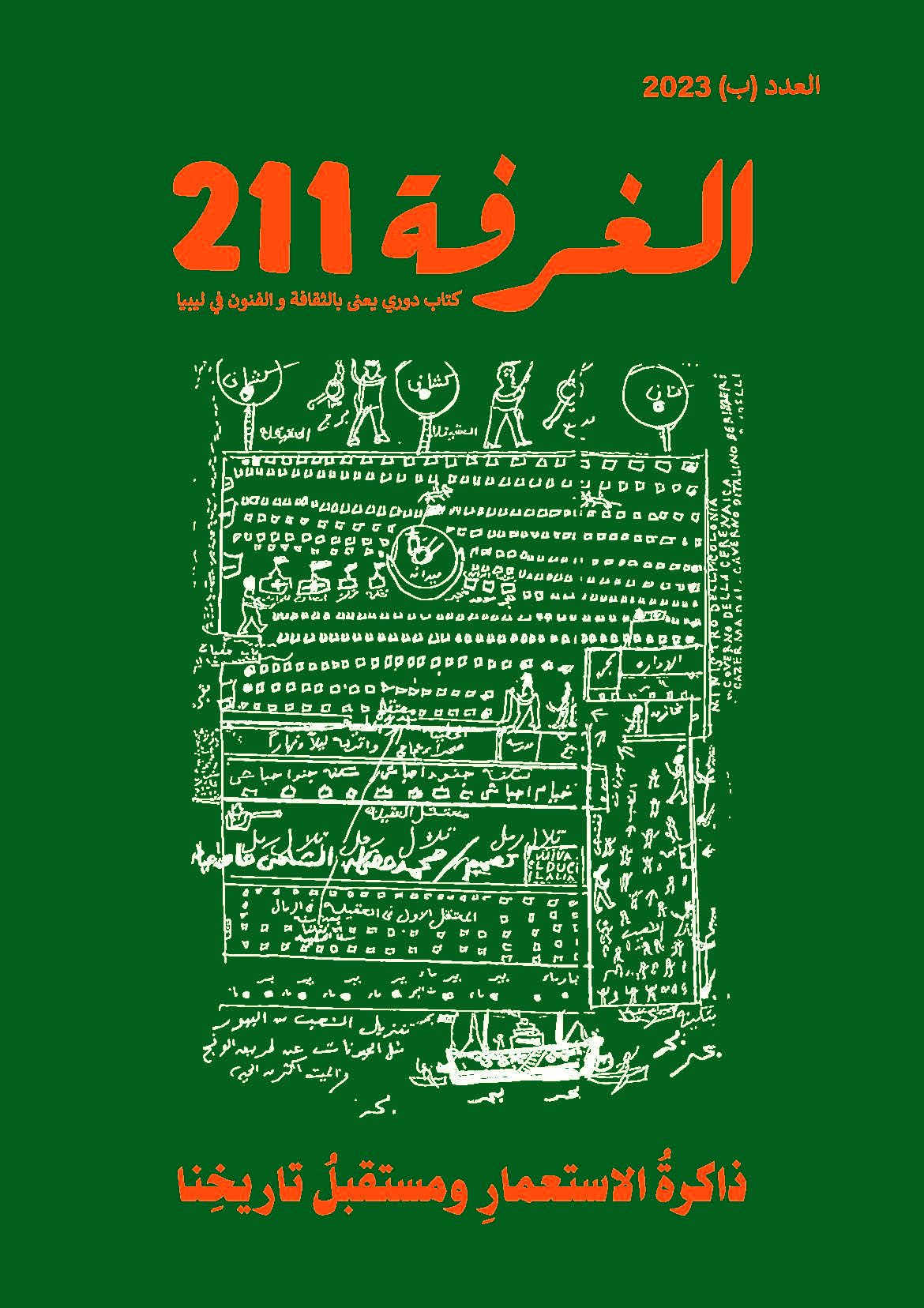
Ghurfa 211 / الغرفة 211

Ghurfa 211 is a new Arabic-language periodical focusing on arts and culture published by the Arete Foundation for Arts and Culture in Libya.

Its name comes from the work “Season of Stories” by Khalifa al-Fakhri, in which “he writes that Room 211 is a refuge during the night-time winter rains. When the cafes shake off their patrons and the sitting-rooms their guests, “the only thing you have is to return to Room 211″ where there is loneliness and the gathering words pulsating in the chest until a charge that sifts the feelings fills the body and from it writing begins.”

The first two issues appeared in 2023, containing poetry, short fiction, commentary, essays, and letters by Libyan writers (some translated from English and other languages into Arabic).

See also their facebook site.

Lamma: A Journal of Libyan Studies 2

The second issue of Lamma has been published! It is accessible in open-access via punctum books (where one can purchase a physical copy of the issue) or eScholarship (for individual articles).

The description of the issue reads:

We are thrilled to present the second issue of Lamma to our readers and colleagues. Our hope, as with our inaugural issue, is that the contributions here open up space for interrelated discussions on a variety of topics, almost all largely neglected in the contemporary scholarly study of Libya. The focal point of this issue is the reflective contributions by members of a roundtable discussion ‘Methods and Sources for a New Generation of Libyan Studies’ which was organized by Leila Tayeb at the MESA conference in 2020. We also mark the publication of Ali Ahmida’s watershed book on genocide in colonial Libya with a trio of responses. As ever, we believe in the generative power in dialoguing with and between works of art, literature, and scholarship as we seek to shape and re-shape new discussions on, about, from, and in Libya.

يسعدنا تقديم العدد الثاني من مجلة لمّة إلى قرّائنا وزملائنا الأعزاء. أملنا منذ العدد الأول هو أن تفتح مساهمات المؤلفين باب النقاش حول مواضيع مختلفة أُهمِل أغلبها في النقد الليبي المعاصر. يتمحور هذا العدد حول المساهمات التأمّلية للأعضاء المشاركين في ندوة “مناهج ومصادر لجيل جديد من الدراسات الليبية” والتي نظّمتها ليلى الطيب في مؤتمر MESA في عام 2020. في هذا العدد كذلك ثلاث ردودٍ نقدية تتناول صدور كتاب علي احميدة البارز عن المجازر في ليبيا في مرحلة الاستعمار. وإذ نسعى إلى تشكيل – بل وإعادة تشكيل – حوارات جديدة عن ليبيا ومنها وحولها وفيها، فإننا ما زلنا نؤمن بالقدرة التوليدية للحوار مع أعمال الفن والأدب والنقد وبينها.

Lectures and Publications on Medieval Libya

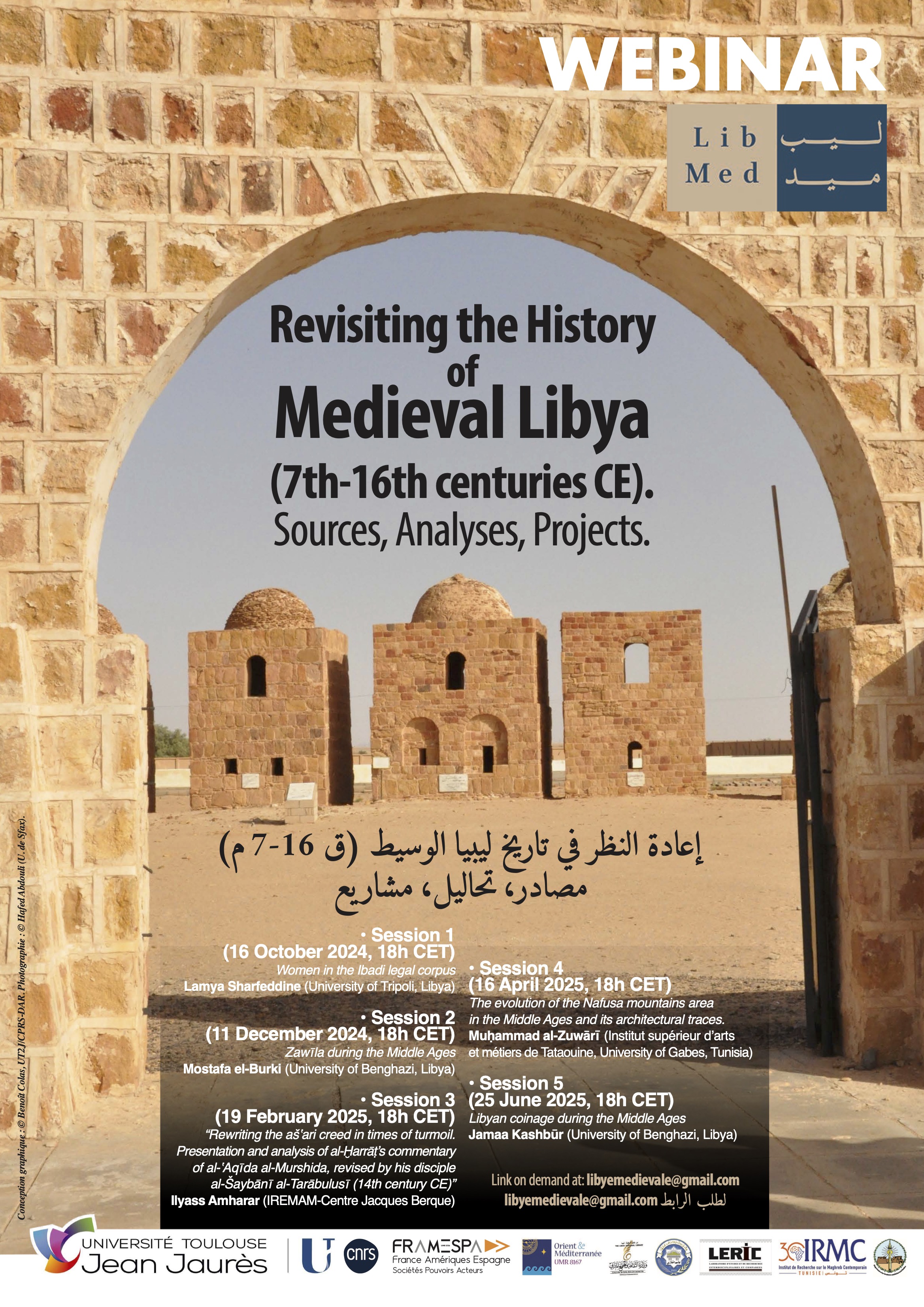
The LibMed Project (Medieval Libya / La Libye médiévale) has an open lecture series for 2022-2023 entitled Revisiting the History of Medieval Libya (7th-16th centuries CE) / نظرة جديدة في تاريخ ليبيا خلال العصر الوسيط (ق 7- 16م) which will include monthly lectures by a variety of Libyan and European scholars. The lecture schedule is available in English and Arabic.

Despite being well-known for the Greek and Roman era, Libya remains rather unknown for the tenth centuries of the Islamic era, that began with the Islamic conquest of the 1st/7th century and ended with the progressive establishment of the Ottoman rule in the 10th/16th century. Thus, this webinar aims at reactivating the academic interest toward this space, that can be conceptualized as a crossroad within the global Islamic world, connecting the Maghrib with the Mashriq, the Mediterranean Sea and Saharan Africa. Following the first conference cycle (2021-2022), in 2022-2023 we will continue to explore the sources available to the historians to write, reshape and reconsider the history of medieval Libya. A special emphasis will be put on new corpuses, especially material documentation.


The organizers of the LibMed project have also announced a new book series called Libya Islamica:

Libya Islamica is a peer reviewed book series that focuses on the different historical, geographical and cultural aspects within the borders of present-day Libya, from the Islamic conquest (1st/7th century) until the establishment of the Ottoman rule (10th/16th century). The series covers a range of topics, such as the study of autonomous powers, networks and prosopography, local and regional histories, popular memories, intellectual productions, documents and deposits, linguistic variety, archaeology and epigraphy, material cultures and heritage, etc.

In fact, the first volume of the Libya Islamica series has already been announced, an Arabic work by Hafed Abdouli to appear in 2023 entitled من تريبوليتانيا إلى أطرابلس: المشهد التعميري خلال العصر الوسيط المتقدّم بين التواصل والتحوّلات [From Tripolitania to Tripoli: The Settlement Landscape during the Early Medieval Period between Continuity and Change].


Book: Najwa Bin Shatwan’s The Slave Pens | زرايب العبيد لنجوى بن شتوان

The latest work of Benghazi-born writer Najwa Bin Shatwan, The Slave Pens (زرايب العبيد) has been garnering praise across the Arab literary world. She was recently shortlisted for the 2017 International Prize for Arabic Fiction, and a translated excerpt from her book is featured in the current issue of Banipal magazine (#58 ‘Arab Literary Awards’).

The novel is set just outside of downtown Benghazi in the early 20th century. In this part of the city, known as al-Sabri (الصابري), both enslaved and free people lived in a dense network of rudimentary palm-leaf dwellings, essentially a ghetto. Bin Shatwan is the first writer or scholar to attempt to address this aspect of Benghazi’s history in particular, perhaps the first Libyan writer to deal deeply with slavery and its legacy in Libya.

Summary: The Slave Pens lifts the lid on the dark, untold history of slavery in Libya, of which the effects can still be felt today. Slave owner Mohammed and his slave Ta’awidha have fallen in love, but their relationship is considered taboo. Living in a community where masters take female slaves as lovers as they please, Mohammed’s father sends him on a trading mission in an attempt to distance him from Ta’awidha. During his absence, his mother forces her to miscarry by serving her a spiked drink, and she is married off to another slave. On his return from his trip, Mohammed learns of his family’s activities and he begins searching for his beloved.

Interviews with the author:

http://en.qantara.de/content/libyan-author-najwa-binshatwan-on-the-slave-pens-confronting-a-dark-chapter

The Leader by Nouri Zarrugh

The latest working title of The Massachusetts Review is a prizewinning novella entitled The Leader by Libyan-American writer Nouri Zarrugh. The novella follows three generations of a Libyan family during the reign of Muammar Gaddafi and the aftermath of the revolution, and is introduced by Khaled Mattawa. Check it out at http://massreview.org/node/787.
An extract is below:

That last February before the war and the hard years that were to follow it, forty-one years after the Leader’s revolution, Laila woke to the sound of explosions in the street. She sat clutching the blanket, eyes darting, half expecting to find herself buried in dust and rubble, her vision slowly adjusting to the familiar sight of the armoire and the floral cushions piled beside it, the matching nightstand and the ceramic lamp and on the other side of them, undisturbed, the sheets tucked and folded, Hajj Yunus’s empty bed, glowing in the faint moonlight like a preserved artifact. Finding everything intact, she lay down, thinking the sound a remnant of some already fading dream,  a trace of that April night a quarter century earlier when the walls had shaken and the neighbors had cried out in terror, and she had buried her face in her father’s arms, whispering with him: “I seek refuge in the Lord of the dawn.”

It was when she heard the laughter that she finally understood, voices in the alley giving way to the pop and scatter of what she now recognized as firecrackers, to the exclamations of the boys who lit and tossed them and to the nasal cries of the youngest among them, who begged to spark the fuses. She lay there a long time listening as they tried out their bottle rockets and smoking black snakes, eager for the coming mawlid, when they would march down Sharaa Fashloum and Ben Ashour, the older boys bearing makeshift torches and singing, the younger boys relegated to harmless sparklers and pouting. She waited for the footsteps of the other women but had by then learned that only the morning prayer call could draw them from their beds to wash and dress in the darkness. Theirs was a sleep of boundless exhaustion, all of them foreigners, maids and nannies, and it seemed at times that all that kept them awake was their duty to Allah and to the task he’d given them of surviving. . .

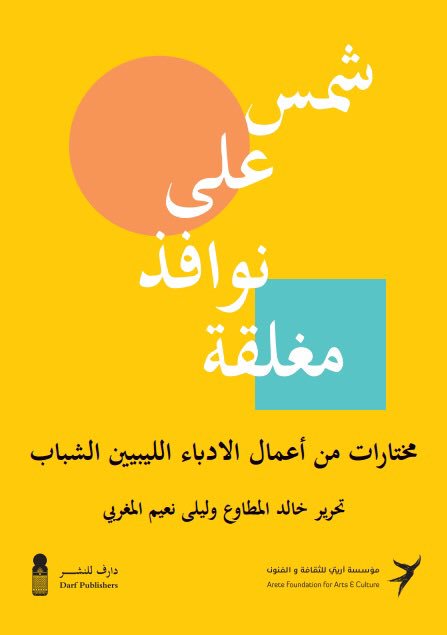
ادب ليبي جديد: شمس على نوافذ مغلقة

شمس على نوافذ مقغلة هو كتاب جديد من دار المنشورات المشهورة “دار الفرجاني” الليبية يضم نصوص ادبية لخمسة و عشرين كاتباً و كاتبةً من ليبيا تحت تحرير خالد المطاوع و ليلى المغربي.

من الغلاف:

في خطوة غير مسبوقة تقدم لنا مختارات “شمس على نوافذ مقلقة” نصوصاً غير اعتيادية لا يحدّها سقف، مختلفة الأجناس لشباب في أعمار طرية العود. لكن نصوصهم جذورها عميقة نصطاد كلماتها الماء العذب الصافي، تنبعث منها روائح متفاوتة تتقارب لتكوّن عطراً دافقاً بمحبة الوطن.، عطراً متمرداً على واقع وجدوا أنفسهم مغمورين فيه دونما ارادتهم، لاهثاً خلف وجود صنعه تاريخ الاجداد. –فريدة المصري

في هذا الكتاب مسح للحالة الابداعية الليبية للشباب الذين نشروا نتاجهم في الفترة ما بعد ثورة فبراير الليبية. انه يمثل المشهد الشبابي الابداعي في ليبيا كما يحب … ان هذه الكتابات السردية و الشعرية تتميز عن الكتابة الليبية السابقة بأنها كُتبت في زمن الثورة و الحرب الاهلية الناتجة عنها، و هي حرب مدن و شوارع وقودها جيل الكتاب من اخوتهم و جيرانهم و زملائهم و اصدقائهم و احبتهم، لذا تمجس للفجيعة في وقت القتل و المجان و الصدفة و العبث. –احمد الفيتوري

Sun on Closed Windows is a new collection of Libyan literature written mostly during and after the revolution of February 2011. Edited by Khaled Mattawa and Laila Moghrabi in conjunction with the Arete Foundation and the British Council, this book promises to continue to fulfill Darf (Dar al-Firgiani) Publishers’ goal of making Libyan literature available to a wider audience. With a few novels by Libyan authors available in English translation, Sun on Closed Windows expands Darf’s already extensive catalog of Arabic literature by Libyan authors.