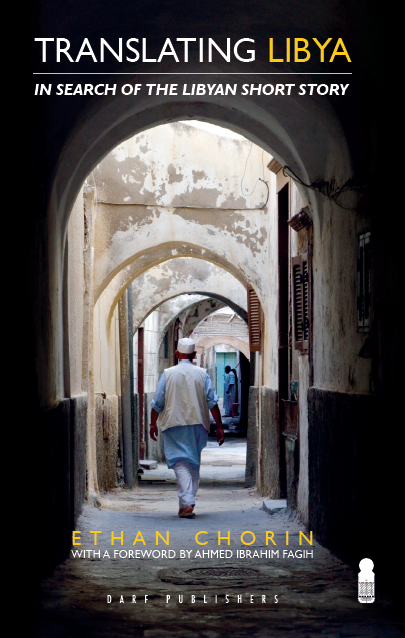
 Darf Publishers has just released the second edition of Translating Libya, a collection of short stories by Libyan authors selected and translated from Arabic by Ethan Chorin. The first edition was published in 2008 with Saqi Publishers at a time when there existed essentially no Libyan literature in English or other European languages. Since then, two things have happened: the book has become hard to find, and Darf Publishers have begun to publish Libyan literature in translation. It is thus perfectly appropriate that these two things come together and that a new edition of Translating Libya appears with Darf.
‘The immediate idea for the book came from a desire to get deeper into Libyan culture, which seemed to hold the foreigner at a distance. I was curious about the local literature—was there any, to speak of? What made this vast, lightly populated country, tick? All of this gradually led me into a world, not simply of ‘stories’, but of stories crafted to communicate in an environment in which one could not communicate, at least not in obvious, blatant ways—lest one face consequences.’
Order it directly from Darf Publishers, or your nearest bookstore.
Update! Read here a recent interview with author Ahmed Fagih about the book.

 The most recent publication is my friend and colleague
  Anyone who wants to get a feel for what Libya looked like during the height of the colonial period should read Brian McLaren’s beautifully-illustrated study
  A landmark contribution to the study of North African urban history, the history of Tripoli, and the history of Ottoman Libya is “A North African City between ancien regime and Ottoman reforms: the birth of municipal institutions in Tripoli 1795-1911” [مدينة في المغرب بين العهد القديم و التنظيمات العثمانية: تكوين المؤسسات البلدية في طرابلس الغرب] by
  Ahmida, Ali (ed.) 2009. Bridges Across the Sahara: Social, Economic and Cultural Impact of the Trans-Sahara Trade During the 19th and 20th Centuries. Cambridge Scholars Publishing.
 Political Culture in Libya appeared in 2001 as a welcome contribution to Libyan political studies. Few empirical studies of Arab countries have dealt with political culture and political socialisation or focused on people’s beliefs, values, and attitudes towards the government or political leaders, mainly because the regimes have been reluctant to allow opinion to be tested. The significance of this book is that it assesses the influence of state ideology on the new generation of Libyans, and examines their political culture. Reviews are
  From the
 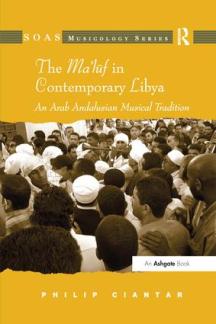 Two studies on a type of traditional Libyan music called nawba (النوبة) appeared in 2012. The first is by a Maltese academic who conducted fieldwork in Libya and interviewed many well-known musicians (such as Hassan al-Areibi حسن العريبي).

