Tag Archives: literature

Translation: Excerpts from novels by three Libyan women

Words Without Borders just published a short collection entitled Political Fictions: Contemporary Novels by Libyan Women, with translated excerpts from three recent novels—Box of Sand by Aisha Ibrahim, The Colonel by Kawther Eljehmi, and Concerto by Najwa Bin Shatwan.

The traditional stereotypical narrative about the Arab world tends to exclude the participation of women in the progression of the nation’s politics. This collection presents excerpts from three novels by women writers grounded in Libyan political history.

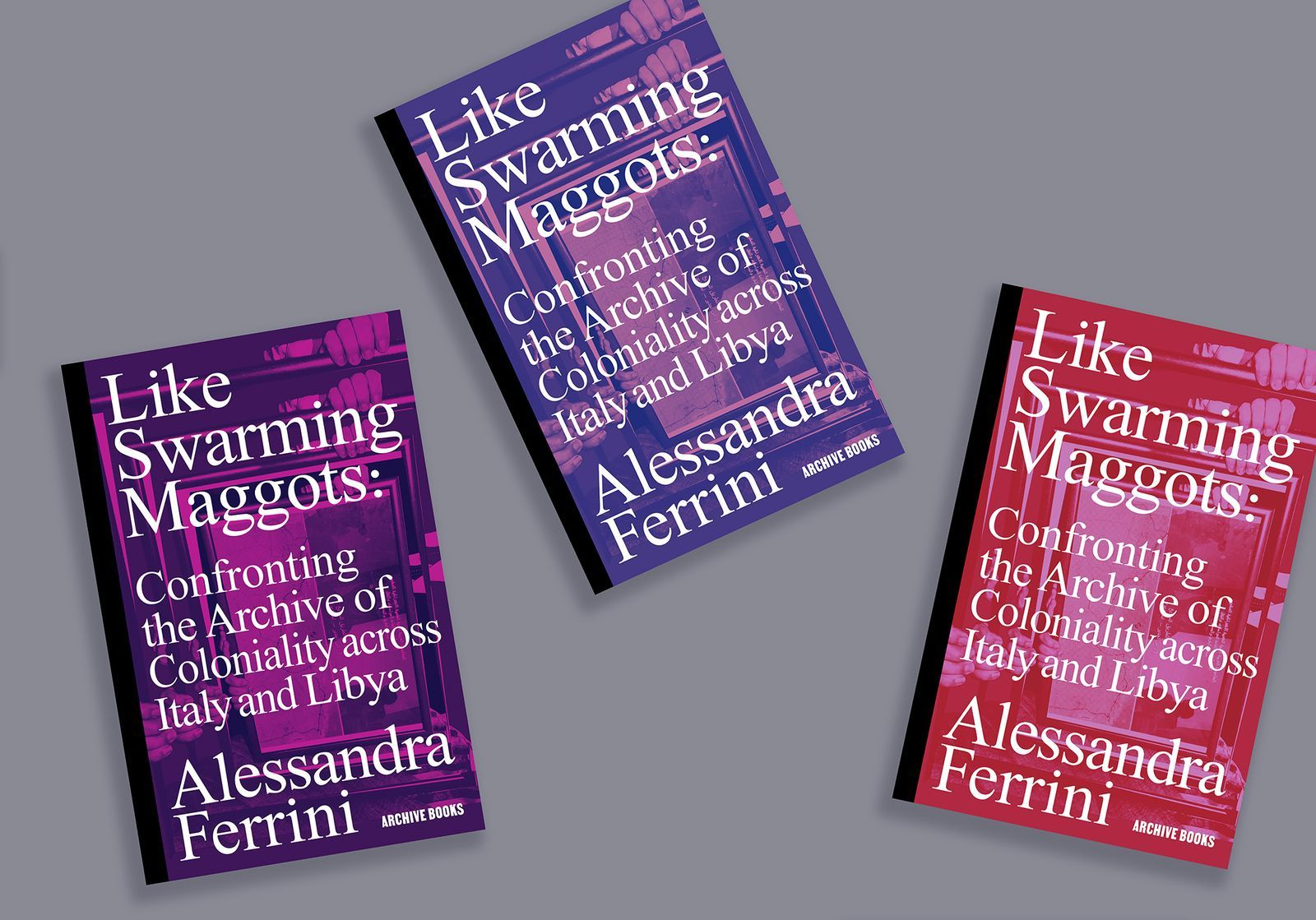
Book: Confronting the Archive of Coloniality Across Italy and Libya

A new book by artist Alessandra Ferrini, entitled Like Swarming Maggots: Confronting the Archive of Coloniality Across Italy and Libya with contributions from a number of artists and writers (including yours truly), has just been published by Berlin-based Archive Books.

Featuring Ferrini’s long-term research on the colonial and neo-colonial relations between Italy and Libya through a critical engagement with the Italian ‘archive of coloniality’ and its structural violence. The book includes documentation of Ferrini’s major project Gaddafi in Rome, whose last iteration is currently exhibited at the 60th International Art Exhibition of La Biennale di Venezia curated by Adriano Pedrosa, as well as a series of works reflecting on positionality, censorship, and the erasure of the genocide perpetrated by the Italians in Libya.

Building on the artist’s interest in writing, translation, and collaboration as forms of resistance practice, it brings together different voices and visual materials, putting forward a reflection on the ethical dimension of cultural work. As a result, the book includes original contributions, reprints, and translations by writers, scholars, curators, and practitioners pivotal to the development of Ferrini’s work and thinking.

Like Swarming Maggots: Confronting the Archive of Coloniality Across Italy and Libya includes a preface by Bassam El Baroni and contributions by: Tewa Barnosa, Adam Benkato, NiccolòAcram Cappelletto, Chiara Cartuccia, Sarri Elfaitouri, Amalie Elfallah, Khaled Mattawa, Maaza Mengiste, Barbara Spadaro, Daphne Vitali.

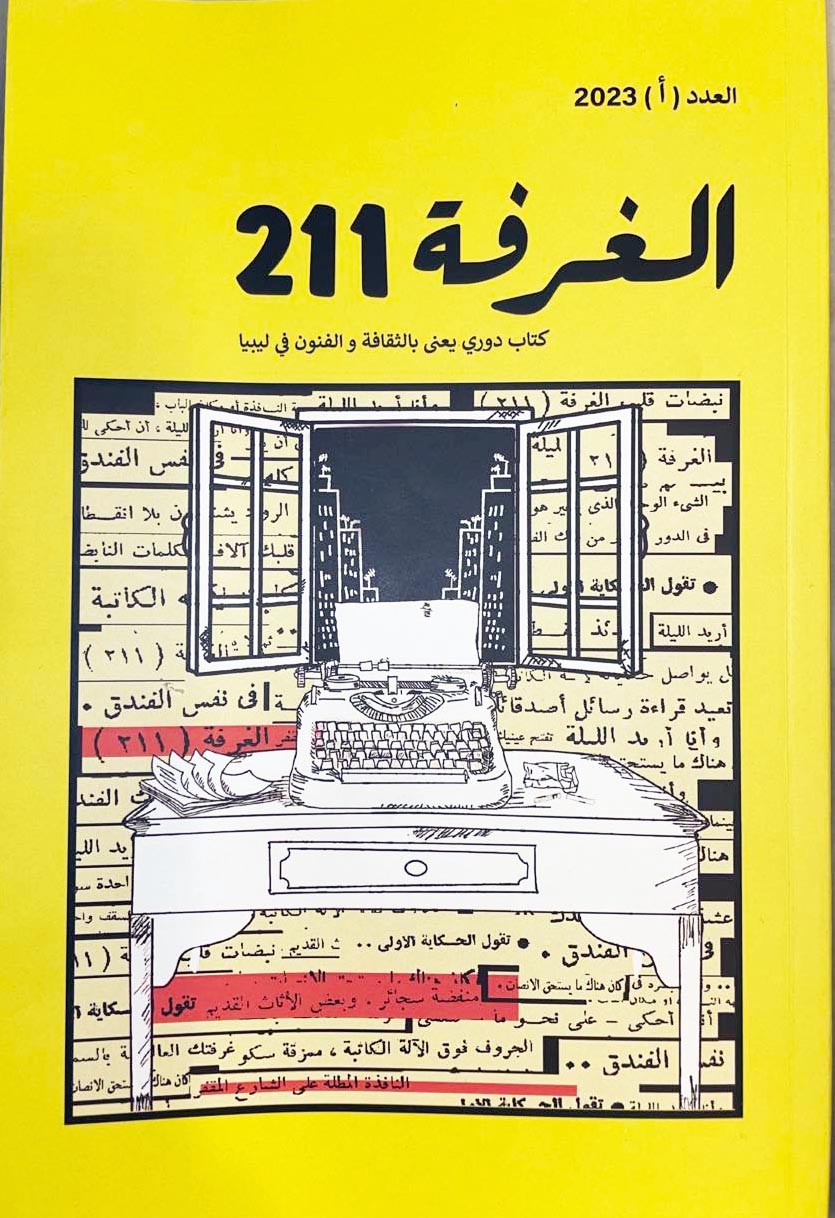
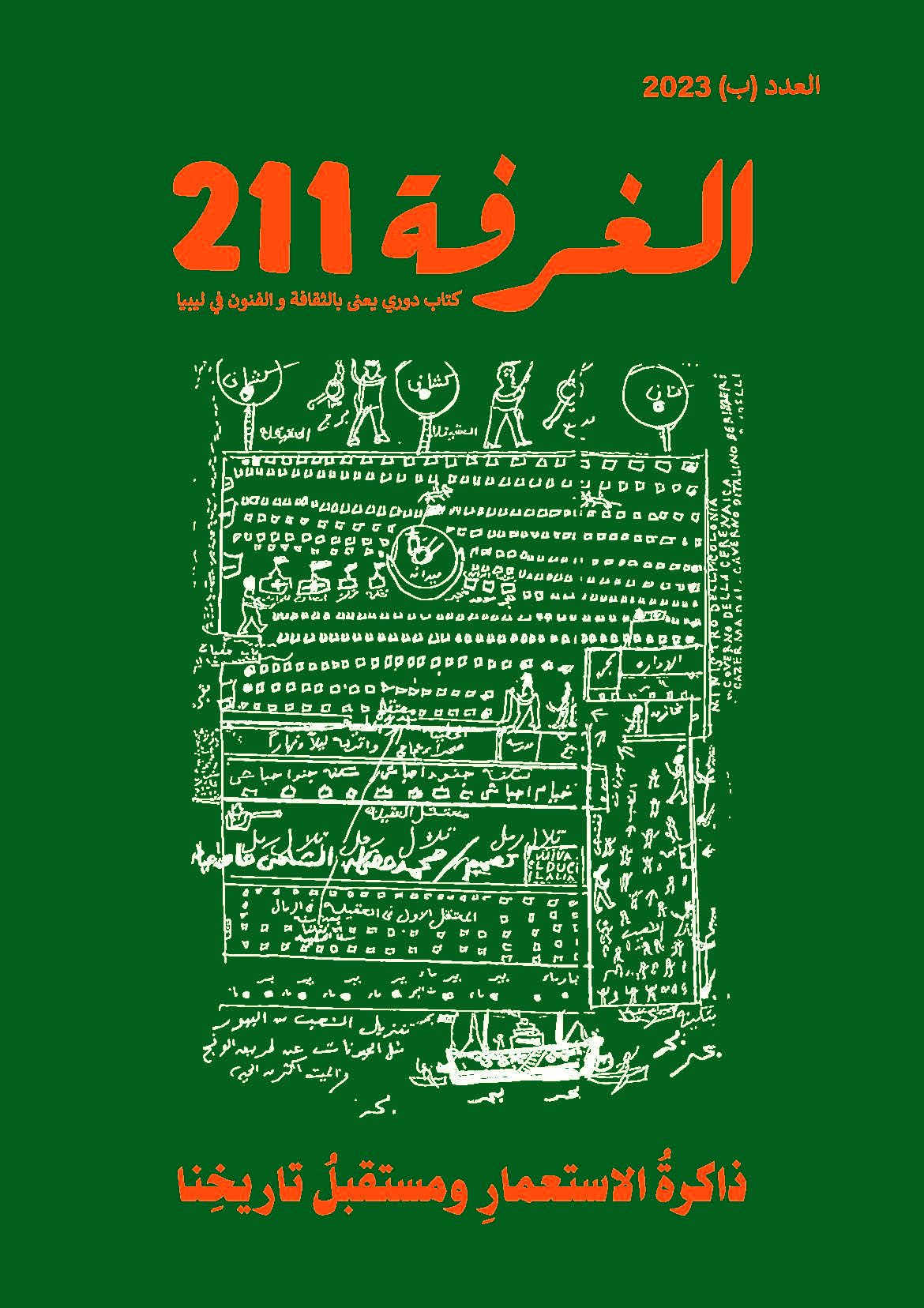
Ghurfa 211 / الغرفة 211

Ghurfa 211 is a new Arabic-language periodical focusing on arts and culture published by the Arete Foundation for Arts and Culture in Libya.

Its name comes from the work “Season of Stories” by Khalifa al-Fakhri, in which “he writes that Room 211 is a refuge during the night-time winter rains. When the cafes shake off their patrons and the sitting-rooms their guests, “the only thing you have is to return to Room 211″ where there is loneliness and the gathering words pulsating in the chest until a charge that sifts the feelings fills the body and from it writing begins.”

The first two issues appeared in 2023, containing poetry, short fiction, commentary, essays, and letters by Libyan writers (some translated from English and other languages into Arabic).

See also their facebook site.

Research Roundup Summer 2021

Here is my occasional roundup of published research on Libya in the humanities and social sciences which I find interesting or useful. I’ll also slowly be gathering some of the older individual posts on this blog into collective roundup posts.

Ali Ahmida, Genocide in Libya: Shar, a Hidden Colonial History (Routledge, 2020)

This original research on the forgotten Libyan genocide specifically recovers the hidden history of the fascist Italian concentration camps (1929–1934) through the oral testimonies of Libyan survivors. This book links the Libyan genocide through cross-cultural and comparative readings to the colonial roots of the Holocaust and genocide studies.
     Between 1929 and 1934, thousands of Libyans lost their lives, directly murdered and victim to Italian deportations and internments. They were forcibly removed from their homes, marched across vast tracks of deserts and mountains, and confined behind barbed wire in 16 concentration camps. It is a story that Libyans have recorded in their Arabic oral history and narratives while remaining hidden and unexplored in a systematic fashion, and never in the manner that has allowed us to comprehend and begin to understand the extent of their existence.
     Based on the survivors’ testimonies, which took over ten years of fieldwork and research to document, this new and original history of the genocide is a key resource for readers interested in genocide and Holocaust studies, colonial and postcolonial studies, and African and Middle Eastern studies.

There is an illuminating interview with the author on Jadaliyya, in addition to one on the New Books Network. Continue reading

Two Essays on Hisham Matar’s Novels

Tasnim Qutait, “Like His Father Before Him”: Patrilineality and Nationalism in the work of Hisham Matar, Jamal Mahjoub and Robin Yassin-Kassab, Postcolonial Interventions 2/2, 2017, pp. 129–160.

Abstract: Despite recent increased attention to the study of masculinities in the Middle East, discussions of gender and nationalism in the Arab world tend to focus on the impact of the patriarchal nation-state on women. This focus, in part reflecting the persistence of essentialist discourses about the disempowered Arab woman, elides the centrality of masculinity and patrilineality to the narratives of the nation-state. In this article, I consider the implications of patrilineality in the work of three Arab British authors, identifying the centrality of the absent or distant father to the examination of nationalism and exile in this emerging literature. The article examines two novels by Hisham Matar, In the Country of Men (2006) and Anatomy of a Disappearance (2011), alongside Jamal Mahjoub’s Travelling with Djinns (2003) and Robin Yassin-Kassab’s The Road from Damascus (2008). Matar, Yassin-Kassab and Mahjoub are three writers settled in Britain and writing in English, with backgrounds in Libya, Syria and Sudan respectively. I argue that all three writers employ a narrative of failed filial relationships in order to dramatize a sense of distance from the post-independence generation, and the growing awareness of the discontinuities between an emancipatory national project and the reality of state violence.

Christopher Micklethwait, “Zenga Zenga and Bunga Bunga: The Novels of Hisham Matar and a Critique of Gaddafi’s Libya”, in The Edinburgh Companion to the Arab Novel in English: The Politics of Anglo-Arab and Arab-American Literature and Culture, edited by Nouri Gana, Edinburgh University Press, 2013, pp. 171–196.

From the essay: “The two novels of Anglo Libyan author Hisham Matar, In the Country of Men (2006) and Anatomy of a Disappearance (2011), center on the abduction of their respective protagonists’ fathers at the hands of revolutionary dictatorships. In the former, the father, Faraj el Dewani, is seized by members of the Revolutionary Committee during the reign of political terror in Libya in 1979, viciously tortured in custody, and then released to his family after confessing and revealing the names of his co-conspirators. In the latter, the father, Kamal Pasha El-Alfi, an ex-minister and exiled dissident of an unnamed Arab country, is kidnapped from the home of his mistress in Geneva in the winter of 1972, never to be seen or heard from again. The thematic similarities of these plots have made it difficult not to relate them to the author’s family and personal experiences with the regime of Colonel Gaddafi, which ruled Libya from 1969 until 2011. As Matar has reported in several public interviews, his father, political dissident Jaballa Matar, vanished from Cairo in 1990 where he had been living in exile; he had been abducted by Libyan agents with the cooperation of Egyptian security forces and clandestinely repatriated to Libya where he was held, for a time, in Libya’s infamous Abu Salim prison, only to disappear completely in 1996…”

The Leader by Nouri Zarrugh

The latest working title of The Massachusetts Review is a prizewinning novella entitled The Leader by Libyan-American writer Nouri Zarrugh. The novella follows three generations of a Libyan family during the reign of Muammar Gaddafi and the aftermath of the revolution, and is introduced by Khaled Mattawa. Check it out at http://massreview.org/node/787.
An extract is below:

That last February before the war and the hard years that were to follow it, forty-one years after the Leader’s revolution, Laila woke to the sound of explosions in the street. She sat clutching the blanket, eyes darting, half expecting to find herself buried in dust and rubble, her vision slowly adjusting to the familiar sight of the armoire and the floral cushions piled beside it, the matching nightstand and the ceramic lamp and on the other side of them, undisturbed, the sheets tucked and folded, Hajj Yunus’s empty bed, glowing in the faint moonlight like a preserved artifact. Finding everything intact, she lay down, thinking the sound a remnant of some already fading dream,  a trace of that April night a quarter century earlier when the walls had shaken and the neighbors had cried out in terror, and she had buried her face in her father’s arms, whispering with him: “I seek refuge in the Lord of the dawn.”

It was when she heard the laughter that she finally understood, voices in the alley giving way to the pop and scatter of what she now recognized as firecrackers, to the exclamations of the boys who lit and tossed them and to the nasal cries of the youngest among them, who begged to spark the fuses. She lay there a long time listening as they tried out their bottle rockets and smoking black snakes, eager for the coming mawlid, when they would march down Sharaa Fashloum and Ben Ashour, the older boys bearing makeshift torches and singing, the younger boys relegated to harmless sparklers and pouting. She waited for the footsteps of the other women but had by then learned that only the morning prayer call could draw them from their beds to wash and dress in the darkness. Theirs was a sleep of boundless exhaustion, all of them foreigners, maids and nannies, and it seemed at times that all that kept them awake was their duty to Allah and to the task he’d given them of surviving. . .

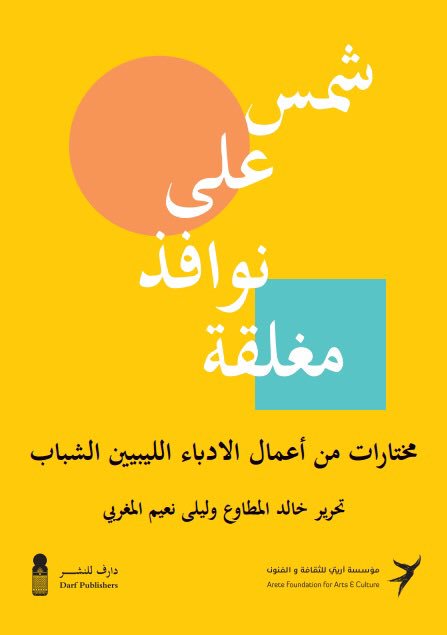
ادب ليبي جديد: شمس على نوافذ مغلقة

شمس على نوافذ مقغلة هو كتاب جديد من دار المنشورات المشهورة “دار الفرجاني” الليبية يضم نصوص ادبية لخمسة و عشرين كاتباً و كاتبةً من ليبيا تحت تحرير خالد المطاوع و ليلى المغربي.

من الغلاف:

في خطوة غير مسبوقة تقدم لنا مختارات “شمس على نوافذ مقلقة” نصوصاً غير اعتيادية لا يحدّها سقف، مختلفة الأجناس لشباب في أعمار طرية العود. لكن نصوصهم جذورها عميقة نصطاد كلماتها الماء العذب الصافي، تنبعث منها روائح متفاوتة تتقارب لتكوّن عطراً دافقاً بمحبة الوطن.، عطراً متمرداً على واقع وجدوا أنفسهم مغمورين فيه دونما ارادتهم، لاهثاً خلف وجود صنعه تاريخ الاجداد. –فريدة المصري

في هذا الكتاب مسح للحالة الابداعية الليبية للشباب الذين نشروا نتاجهم في الفترة ما بعد ثورة فبراير الليبية. انه يمثل المشهد الشبابي الابداعي في ليبيا كما يحب … ان هذه الكتابات السردية و الشعرية تتميز عن الكتابة الليبية السابقة بأنها كُتبت في زمن الثورة و الحرب الاهلية الناتجة عنها، و هي حرب مدن و شوارع وقودها جيل الكتاب من اخوتهم و جيرانهم و زملائهم و اصدقائهم و احبتهم، لذا تمجس للفجيعة في وقت القتل و المجان و الصدفة و العبث. –احمد الفيتوري

Sun on Closed Windows is a new collection of Libyan literature written mostly during and after the revolution of February 2011. Edited by Khaled Mattawa and Laila Moghrabi in conjunction with the Arete Foundation and the British Council, this book promises to continue to fulfill Darf (Dar al-Firgiani) Publishers’ goal of making Libyan literature available to a wider audience. With a few novels by Libyan authors available in English translation, Sun on Closed Windows expands Darf’s already extensive catalog of Arabic literature by Libyan authors.

Book: Libyan Fairytales | خراريف ليبية

Perhaps the only such collection to be published in Libya in recent years, خراريف ليبية (Libyan Fairytales) is an anthology of fairytales collected in the Jabal Akhdar region of eastern Libya by the folklorist and short-story writer Ahmad Yusuf ‘Agila.

The book presents thirty-four fairytales, many of which— such as ام بسيسي or نقارش or عويشة بنت السلطان—are well-known to Libyans. ‘Agila also includes a lexicon of the more unusual words used in the tales; some are truly uncommon, while some (such as شرز for سرج ‘saddle’) are simply the local pronunciation of a common word.

Many younger-generation Libyans, or those who grew up in the diaspora, may not have heard many fairytales as children. This book is particularly useful for those groups, who may want to familiarize themselves with the tales their parents grew up hearing but no longer remember. Also, because ‘Agila attempts to render the eastern Libyan dialect as accurately as possible, the tales can be read aloud to friends and family members—thus keeping at least some Libyan fairytales alive.

‘Agila’s introduction to the book, as well as samples of some of the fairytales can be found at this link.

A few verses by Ahmad Rafig al-Mahdawi

The ‘national poet’ of Libya, Ahmad Rafig al-Mahdawi (احمد رفيق المهدوي), wrote a poem entitled أنا ساكت “I am silent” during the de-colonization of Libya and the struggle for nationhood. A few verses from it have been going around Libya social media, since they are as applicable to the situation today as they were sixty-odd years ago. Such is great poetry, I suppose. Here are the verses and my attempt at a somewhat literal translation:

قلبي يحدّثني بان ممثلا     خلف الستائرللحقائق يمسخُ

اما الذي هو في الحقيقة واقع     وطن يباع و امة تتفسّخُ

ماذا اقول و ما تراني قائلا     انا ساكت لكن قلبي يصرخُ

ابكي على شعبٍ يسيّر امره     متزعّمون و جاهلون و افرخُ

My heart tells me that behind the curtains, an actor distorts truths,

But the reality is this: a country is sold and a nation broken apart.

What is there to say? I am silent, but my heart cries out;

I weep for a people whom false leaders, the ignorant, and the bastards guide about.