We continue our look at the Fezzan with the following work, a study of the Arabic spoken in different parts of the Fezzan by noted Arabist Philippe Marçais. Both he and his father, William Marçais, were participants in the French scientific missions to the Fezzan in the 1940s; they collected linguistic information in places in and around Sebha and Brak. In colonial French prisons in Algeria, he also met many people from the Fezzan and was able to interview them. Yet Philip Marçais’ work on these materials from the Fezzan was not completed in time to be published with other research from the French scientific mission, and ended up never being published. Only recently were his remaining papers edited and his work on Arabic in the Fezzan published posthumously.
Marçais, Philippe. 2001. Parlers arabes du Fezzân. Textes, traductions et éléments de morphologie, rassemblés et présentés par Dominique Caubet, Aubert Martin et Laurence Denooz. Geneva: Librairie Droz.
The texts gathered in the volume include i) prose recordings from everyday life, ii) poetry pertaining to special occasions, iii) epic poetry, and iv) songs. Much of this folk literature is no doubt hard to find these days. Then a second section gives a brief grammatical sketch of the dialects represented in the material and a lexicon. The material is exceedingly rich and full of interesting themes and words. Here is my dire attempt at translating an example of a camel-herders song (the ‘her’ refers to the camel):
طبّي المسارب و اشربي الرياحة و ان شاء الله بعد الشقا ترتحي
انا اللي انورّدها و انا اللي ما علَي انا اللي انورّدها في الفجّ اللي خالي
Follow the tracks and drink the winds, God-willing you’ll find rest after tribulations
I’m the one who waters her without worry, the one who waters her in the empty desert
 Mattingly, D. J., Daniels, C. M., Dore, J. N., Edwards, D. and Hawthorne, J.
  Hawthorne, J.
  Ines Kohl. 2009.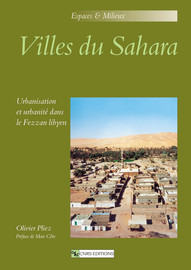
 “The Tripolitanian Annals” is a work written by Laurent-Charles Féraud, a French Arabist and statesman, while he was consul general in Tripoli from 1879 to 1884. The work contains extremely important historical information about the region of Tripolitania, pertaining not just to the 19th century, but to the region’s history since the Arab conquest. Originally published posthumously in 1927, then largely forgotten, the manuscript was recently re-edited and published by
 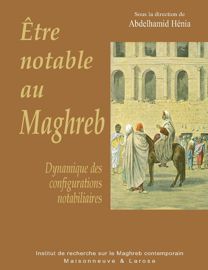 In the edited book
 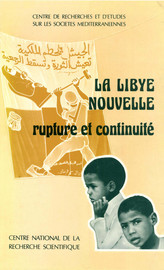 Although some essays are outdated or rather simplistic, a few are still interesting reads. I recommend “La Libye des origines à 1912” by Robert Mantran; “Introduction à la connaissance de la littérature libyenne contemporaine” by Noureddine Sraieb is still one of the very few essays in a Western language addressing Libyan literature; “Chronologie libyenne” by Béatrice de Saenger is a handy timeline of events (obviously till 1975).
